Tehran's 40-day war: what Ghalibaf is selling, and to whom
Iran's parliament speaker is reframing a 40-day war as a national victory. The framing matters more than the war itself, because it tells you who the regime still needs to convince.
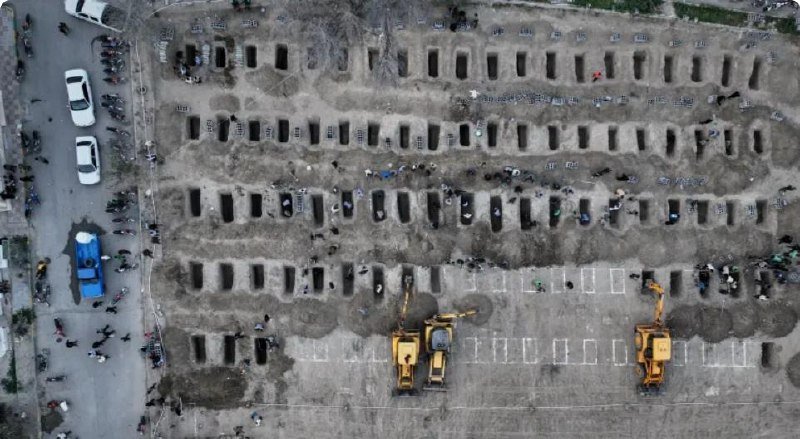
On 24 June 2026, Iran's parliament speaker Mohammad Bagher Ghalibaf stood before the cameras and called the recent 40-day war with the United States and Israel a "criminal act" — and a victory, in the same breath. The framing was deliberate. It had to be. A regime that has spent the better part of a year trading missiles, uranium enrichments, and strategic patience is now in the business of selling the bill. Telegram channels Farsna and ClashReport both carried the speaker's remarks within minutes of each other, 07:29 UTC and 07:42 UTC respectively, the first flagging an upcoming Baku summit where the post-war story will be re-narrated, the second delivering the rhetorical payload: "the era of imposing one's will on independent nations has ended." The line is not new. But the timing tells you everything about who it is for.
The substance of the claim matters less than the architecture of the claim. Forty days is a number. It is also a countdown. Forty days is how long a besieged city is expected to hold. Forty days is the duration of a mourning cycle in parts of the Shia liturgical calendar, though that particular resonance is not in the source material. The number gives the war a shape, and a shape is what Tehran most needs to deliver to two distinct audiences: the domestic street, which has absorbed real economic and military costs, and the non-aligned chancelleries that Ghalibaf is about to traverse at the Baku summit.
The Baku play
The regional summit that Ghalibaf is preparing for is a diplomatic recovery operation. The 07:29 UTC Farsna dispatch is explicit: the Baku summit is an "opportunity to explain the developments after the war." Translation: Tehran wants the post-war story told in rooms where Western wire reporting is not the dominant frame. Azerbaijan, with its own complicated history with Tehran — and with Israel — is a deliberately chosen venue. So is the broader post-Soviet and South Caucasus diplomatic circuit that converges on Baku. The audience for this story is the bloc of states that did not sign up to the maximum-pressure sanctions architecture, that did not treat the Iranian nuclear file as a casus belli, and that the regime still hopes to pull toward a "resistance" reading of the conflict.
The mechanics of this are old. The interesting question is whether the script has been updated. Twelve-Day-War-era framing positioned Iran's retaliatory strikes as a deterrent success. The post-war framing now — per Ghalibaf — positions the war itself as a crime and the survival as the victory. That is a softer, more diplomatic frame. It is also a frame that does not require Tehran to claim it won militarily. It only requires the rest of the world to agree that the war should not have happened in the first place.
What the framing conceals
Ghalibaf's claim that "the world admired this steadfastness and victory" should be read against a stocktake. The source material for this article is three Telegram dispatches from Iranian state-adjacent outlets. None of them specifies Iranian military losses. None of them specifies the status of the nuclear programme after the conflict. None of them names the dead. The framing works precisely because the operational details are not on the table. A "40-day war" delivered to a domestic audience that has seen funerals, fuel queues, and censored casualty counts is a usable narrative only if the operational ledger is never opened.
A skeptical read: the speech is also a warning to the reformist and civil-society current inside Iran that the post-war moment will not be a moment of accounting. The "steadfastness" frame is a prophylactic against a domestic reckoning. A more charitable read: Tehran's leadership is doing what leaderships do after defeat, partial victory, or stalemate — re-packaging the outcome for the next negotiation. Both reads can be true at the same time.
What the rest of the world actually thinks
The source material does not include any Western-wire characterisation of the war's outcome. That is itself a fact about the wire climate. In Israeli and US-government framing, the conflict was, broadly, a degrading operation against Iranian proxy infrastructure and a demonstration that direct strikes on Iranian territory were operationally feasible. In Iranian state-media framing, the same war was an American-Israeli crime, a national steadfastness test, and a moral victory. The two stories do not share a common evidentiary baseline. They share a casualty list, but the casualty list is not yet public on the Iranian side.
That gap is where the next phase of the conflict will be fought. If Ghalibaf returns from Baku with a regional consensus — even a polite, non-binding one — that the war was an imposition, Iran's bargaining position on the nuclear file, the sanctions architecture, and the post-war regional order improves measurably. If he returns to a polite-but-empty set of bilateral meetings, the "steadfastness" narrative is left without external validation and the bill is paid domestically.
Stakes, and what remains unclear
Who wins if the Ghalibaf frame holds: Tehran's diplomatic corps, the non-aligned middle powers that have refused to sign up to the Western framing, and a sanctions architecture that is already showing fatigue. Who wins if the frame collapses: the governments that conducted the war and want it called what it was in their own framing. The time horizon is short. The Baku summit will set the post-war template for at least a quarter.
What remains genuinely unclear from the source material: the operational status of Iran's nuclear and missile programmes after the 40-day war; the actual casualty counts on both sides; whether the Baku summit produces a joint statement, a side-deal, or a photo opportunity. The Telegram dispatches are the speech. The full ledger is not yet on the table.
Desk note: Monexus's editorial line on this conflict does not adopt the Iranian state-media framing as a stand-alone factual basis. Ghalibaf's remarks are reported here as the political text they are — a domestic-rally speech packaged for export, in rooms where the other side of the story will also be told.
Wire provenance
This editorial synthesis draws on the following public wire/social posts:
- https://t.me/farsna/
- https://t.me/farsna/
- https://t.me/ClashReport
Follow the event.
These dated source records provide context. They do not retrospectively verify this archive article.
Separate what the nuclear watchdog reported from what it could not determine after the June 2025 strikes.