The Hadada shelling and the quiet arithmetic of southern Lebanon
Israeli artillery struck Hadada and Yater on 24 June 2026. The pattern matters more than the headlines.
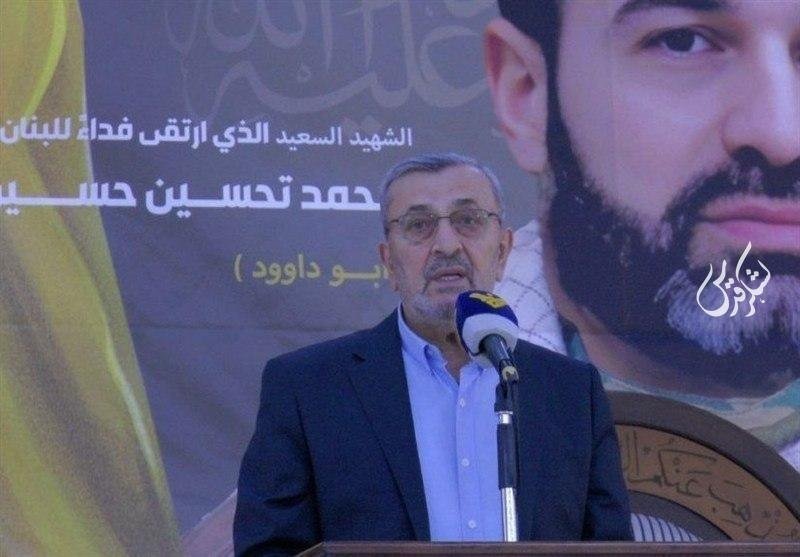
On the afternoon of 24 June 2026, residents of Hadada, a small town in Lebanon's Bint Jbeil district near the southern border, heard artillery again. According to two alerts carried by Al Alam Arabic on Telegram — at 14:52 UTC and 15:03 UTC — Israeli forces fired shells into Hadada and the neighbouring town of Yater; a third alert at 15:33 UTC described follow-up shelling and sweeps in the same area.
What the alerts actually say
Strip the urgency markers out and the picture is narrow but specific. The reporting is sourced to "Lebanese sources" relayed through Al Alam, the Arabic-language satellite channel affiliated with Iran's state broadcasting apparatus. That provenance matters. It is not the language of an IDF spokesperson or a UNIFIL press officer; it is the language of one side of a long fight, transmitted quickly, edited for emphasis. Monexus treats it as a real first-order signal — Lebanese civilians in those villages say they were shelled — but not as a stand-alone factual basis for casualty figures, intent, or operational outcome.
The geography that explains the pattern
Hadada sits roughly three kilometres from the Blue Line in the Bint Jbeil cluster — the same cluster that saw some of the most intense cross-border fighting of the 2023-2024 war. Yater is adjacent. These are not arbitrary targets. They are towns from which projectiles were fired into northern Israel during the war, and they sit on ridgelines that an Israeli force defending nearby communities will want suppressed. That is not an endorsement of any specific salvo; it is an observation about why this map keeps lighting up. When the underlying political agreement is unsteady, the same coordinates recur in the morning bulletins.
What the wire is not telling readers
The mainstream Western reporting on southern Lebanon tends to flatten this into "Israeli strikes" or "Hezbollah exchange" without naming the villages. That shorthand erases the people on the receiving end — Lebanese civilians, including families with no militia affiliation, who live with the sound of artillery as a recurring fact of life. It also erases the parallel fact that residents of Metula, Kiryat Shmona and the northern Israeli border towns have spent parts of the last three years displaced from their homes by rockets and drones launched from these same ridgelines. Both truths are first-order. Neither is more important than the other; coverage that omits one is not neutral, it is partial.
The stakes if the pattern holds
If the cycle continues — a shell here, a rocket there, a UNIFIL statement, a quiet night, then another shell — the political ceiling for a wider settlement drops. Each episode widens the constituency that argues the only durable answer is either reoccupation of the border strip or a security arrangement on Hezbollah-model lines that no Lebanese government can openly accept. Beirut's calculation is fiscal and political: the south cannot be rebuilt while it is being periodically shelled, and the state cannot credibly negotiate from a posture of permanent domestic displacement. Israel's calculation is operational: the calculus that tolerated a quiet border for eighteen months does not survive the first intercepted projectile from a familiar coordinate. Neither side benefits from a slow grind, but neither has yet paid the price that forces a faster one.
What remains uncertain
The reporting available to Monexus at this hour does not specify whether the 24 June fire was retaliatory, pre-emptive, or part of a deliberate escalation. It does not name the unit that fired, the munitions used, or whether there were Lebanese-fired projectiles earlier in the day that triggered the response. It does not confirm civilian casualties. Until an Israeli, UNIFIL, or independent wire report corroborates the sequence, the Lebanese-sourced alerts should be read as an accurate description of what residents experienced — shelling, audible and physical — rather than as a definitive reconstruction of the day's military logic.
This article treats the Lebanese-sourced alerts as a primary signal of what happened to civilians on the ground, while reserving the operational interpretation for the cross-checked wire record. Where the Western wires have not yet filed, Monexus will update rather than fill the silence with conjecture.
Wire provenance
This editorial synthesis draws on the following public wire/social posts:
- https://t.me/alalamarabic
- https://t.me/alalamarabic
- https://t.me/alalamarabic
- https://en.wikipedia.org/wiki/Bint_Jbeil_District