Hammon holds the line on Brunson — and walks back just enough
After watching Jalen Brunson carry the Knicks to a title, Becky Hammon softened her stance — but only at the edges, keeping her wider argument about small guards intact.
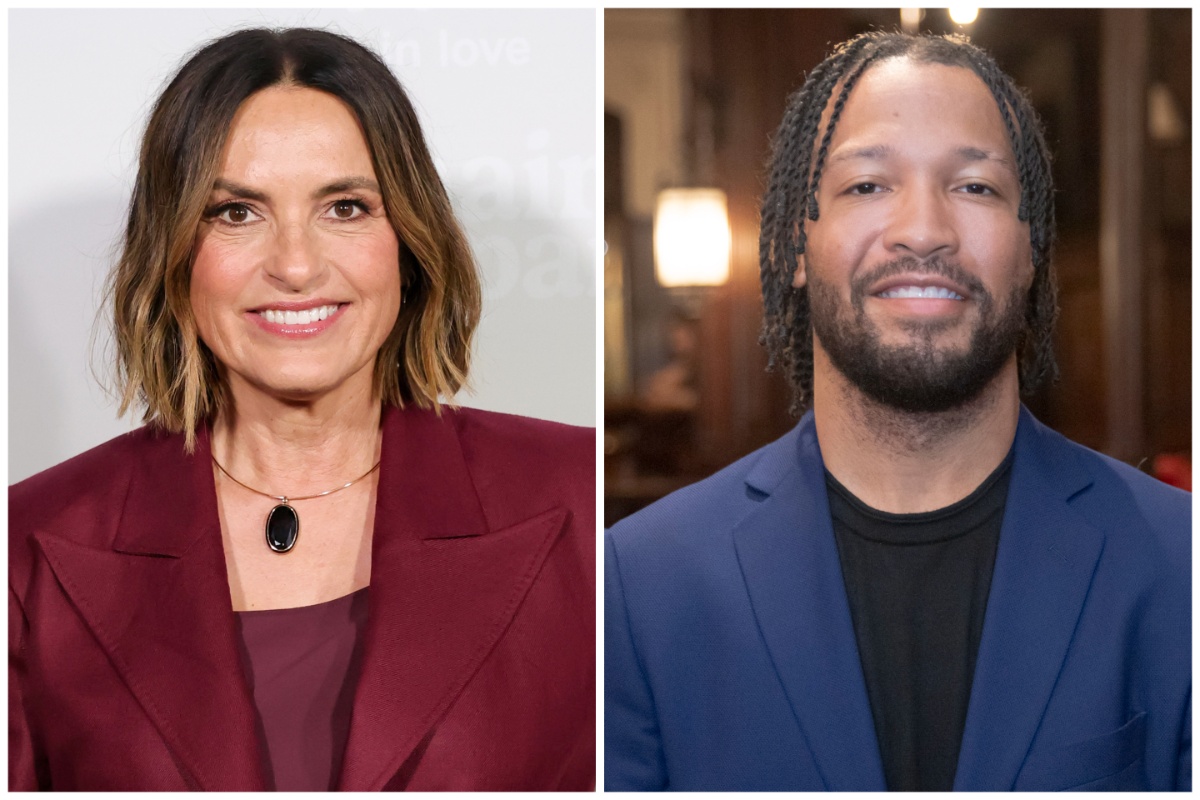
Becky Hammon spent most of the 2025–26 NBA season arguing that small guards cannot, as a rule, be the best player on a championship team. On the night of 23 June 2026, after watching Jalen Brunson drag the New York Knicks to the title, the Las Vegas Aces head coach conceded a single point: she was wrong about him.
The original sin, in Hammon's telling, was technical. Earlier this spring she had placed Brunson in a "1A" tier alongside larger guards and wings who can dictate playoff games on both ends of the floor. The remark landed as a slight in a league where Brunson, listed at 6-foot-2, had spent three seasons carrying the heaviest usage burden in the conference. The Knicks' Game 7 win over the Oklahoma City Thunder removed the need for anyone to argue the case in the abstract: the case had been made on the floor.
What Hammon actually conceded
Speaking to reporters on Tuesday at 22:35 UTC — six hours before the Aces' next WNBA tip — Hammon acknowledged that Brunson has separated himself from the positional pack. "He's an outlier," she said, according to CBS Sports. "I'm never gonna apologize for having an opinion."
The framing matters. Hammon did not retract her underlying thesis that small, lead-guard-initiated offences face structural limits in postseason basketball, where switches grow longer, half-court sets harden, and shot quality tightens. She moved Brunson from "1A" to "outlier," a category that, by construction, exists outside the rule she is trying to articulate. ESPN's follow-up, filed at 23:04 UTC, made the same distinction: Hammon treated Brunson as an exception, not as evidence against her premise.
It is the narrowest possible apology, and it was issued under conditions where refusing to concede would have looked tin-eared. A player who wins a Finals MVP while taking the bulk of his team's shots does not leave a critic much room. That Hammon issued the caveat in real time, rather than letting the statement sit, suggests she understood the cost of holding out.
The argument underneath the fight
The Hammon-Brunson spat is older than this season. It tracks a debate the league has been having with itself for a decade, since the Curry-era Warriors proved that a guard can be the offensive fulcrum of a title team if the defence around him is built precisely enough. Brunson's Knicks are the latest, and in some ways purest, test case: a heliocentric offence built around a single creator, surrounded by shooting and switchable wings, designed to survive the physical compression of May and June.
The counter-position — that such a system has a ceiling without a second creator or a true jumbo finisher — is not fringe. It is the implicit premise of roughly half the league's roster construction. Hammon's value as a critic is that she has coached at the elite level on both sides of that argument: she ran offence for Gregg Popovich's Spurs, where the late-career model was exactly the one Brunson now runs, and she now runs the Aces, where the WNBA's most physically imposing frontcourt masks the same question.
The "1A" remark, in that light, was not a put-down. It was a categorical claim about roster construction that the postseason has stress-tested in real time. The Knicks' run leaves the categorical claim wounded but not killed: outlier status is, after all, a category most players do not get to occupy.
Why the timing matters
Hammon spoke on the eve of an Aces game, with the WNBA season at its midpoint and her own team's title odds sitting near the top of the league. That is not a context in which a coach benefits from a national news cycle about a man she does not coach. The Knicks' title also resets the league's competitive map heading into the July trade window, where Brunson's confirmation as a top-three player in the world will move the asking price on every comparable guard on the trade block.
It also lands in a media environment where coaches' off-the-cuff comments travel further than they used to. A remark made at a podium in May 2026 is, by June, a TikTok clip, a Reddit thread, and a fixture of the league's discourse. Hammon's decision to revisit the comment, rather than wait for it to fade, is a small piece of media-management craft — the kind of move coaches who survive in the public eye learn to make, or learn to avoid making, depending on temperament.
What this does not settle
The deeper question — whether the small-guard ceiling is real or merely contingent on roster construction — remains open. The Knicks' title argues the contingent case: build well enough around a 6-foot-2 heliocentre, and the ceiling moves. The half-decade of playoff failures by guard-led teams before this one argues the structural case.
Both readings can be true at once, and the league's front offices will spend the next eighteen months arguing about which one to bet on. What is settled is the narrower question of how a respected coach responds when her best public argument runs into a counter-example strong enough to break through. Hammon kept the argument, conceded the player, and framed the concession as a feature of her own thinking rather than a retreat from it. It is the move of someone who plans to keep making the same argument next season, and is preparing the ground for it now.
Desk note: Monexus treated Hammon's remark as a categorical claim about roster construction rather than a personal slight, and read her walk-back as a narrow concession — outlier status, not retraction — rather than a full reversal. The framing tracks the wire coverage from ESPN and CBS Sports filed between 22:35 and 23:04 UTC on 23 June 2026.