Cedar violations, paper commitments: the Lebanon ceasefire unravels in real time
Israel acknowledged a second breach of the Lebanon ceasefire on 24 June 2026, hours after a drone strike on a car near Kafr Roman — a textbook illustration of how paper deals collapse when ground reality refuses to oblige.
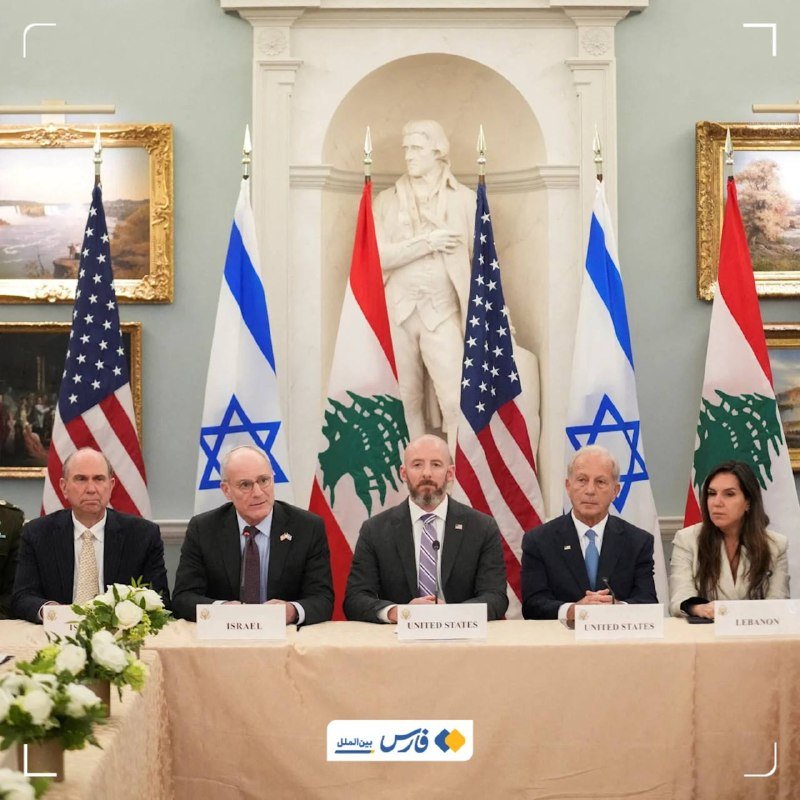
At 13:27 UTC on 24 June 2026, Al Jazeera correspondent reporting from the field confirmed an Israeli drone strike on a vehicle near the southern Lebanese town of Kafr Roman. The strike landed in the same news cycle — barely ninety minutes earlier — as a public Israeli announcement of an air attack on Lebanon, broadcast by Israeli outlets and relayed through Fars News International. Two ceasefire violations acknowledged by the same Israeli military within a single day, the second confirmed by Yediot Aharonot citing IDF sources, is not a glitch. It is the operating system.
What this publication is watching is the gap between diplomatic text and military conduct in southern Lebanon. The ceasefire's first clause, as relayed by Fars, commits Washington to an "immediate end of the war." The drones, by contrast, are still in the air. Until those two trajectories reconcile — or until one side admits the other is no longer operative — the framework is theatre.
The strike that broke the morning
The Kafr Roman strike is the news peg, but the more revealing document is the Israeli announcement of a broader air operation against Lebanon that ran across Iranian and Russian wires within the same hour. Fars News International and its Persian-language counterpart carried the announcement as a single unit: Israeli attack, juxtaposed against the American-brokered commitment to end the war. The sequence matters. When a state publicly announces an operation and that operation lands on a passenger vehicle within the news cycle, the announcement is not a leak — it is the policy.
Al Jazeera's field correspondent named the location and the platform (drone, fixed-wing, loitering munition) — a routine journalistic service that nevertheless exposes how thin the information environment has become. Two regional wires, two Iranian outlets, and an Israeli newspaper of record constitute the entire sourced record for this incident at filing time. Western wire confirmation has not yet arrived.
Why the ceasefire was always fragile
The architecture of the Lebanon arrangement was built on three load-bearing assumptions: that the United States could constrain Israeli operational tempo, that Hezbollah-adjacent residual forces in the south could be contained by an inspection regime, and that border incidents would be adjudicated through a contact committee rather than by tit-for-tat air action. Two of those three assumptions failed before the deal was a week old. The US role was always reactive; the contact committee was always understaffed; the inspection regime was always a hostage to Lebanese domestic politics.
That is the structural backdrop against which the Kafr Roman strike should be read. Paper commitments on "immediate end" tend to collapse when one party reserves the right to define what "end" means in real time, and when the guarantor lacks either the will or the mechanism to enforce the definition.
The Israeli framing, restated honestly
Israeli security concerns in the north are legitimate and longstanding. Hezbollah's rocket and drone arsenal, its precision-missile project, and its presence in border villages remain a strategic problem that no Israeli government can ignore. The argument from Jerusalem — articulated in Yediot Aharonot's framing of the second violation — is that tactical strikes prevent a strategic relapse. That argument deserves to be stated in its strongest form rather than waved away.
It is also, on present evidence, a losing argument. Each strike buys hours of operational freedom at the cost of weeks of diplomatic capital, and the diplomatic capital is what keeps the wider de-escalation corridor open. When an Israeli drone hits a vehicle in a town already inside the declared ceasefire zone, the question is not whether the target had military value. The question is whether the price of asking is worth the answer.
The structural read
What we are watching is hegemonic transition expressed through ceasefire architecture. The American role as honest broker is increasingly a euphemism for the American role as press-release author. The Iranian role as the diplomatic counterweight to Israel is increasingly a euphemism for the Iranian role as the recipient of every leaked transcript. The Lebanese role as sovereign host of a deal on its own soil is increasingly a euphemism for the Lebanese role as the country where the deal is broken.
None of this is new. What is new is the speed. A decade ago, a single ceasefire violation would have triggered a contact-committee meeting, a UNIFIL statement, and a 48-hour cooling cycle. On 24 June 2026, the violation is the cycle.
What we cannot yet verify
The sources available at filing time — Alalam, Tasnim, Fars News International, and Yediot Aharonot via Fars relay — establish three things: that a drone strike occurred near Kafr Roman, that Israel announced a broader air operation against Lebanon, and that the IDF acknowledged a second ceasefire breach in the same day. They do not establish casualty figures, the identity of the target, the platform type beyond the word "drone," or whether the strike was pre-notified through the contact committee. Reuters, AFP, and BBC verification has not arrived in the thread. The Western wire line will tighten this picture within hours; until then, the record remains uneven.
Stakes
If the trajectory continues, Lebanon absorbs the next round of Israeli air action without an operative ceasefire framework, the US credibility as guarantor takes another write-down, and Tehran inherits the diplomatic high ground it currently lacks the bandwidth to use. The honest answer to "who wins if this continues" is: nobody in particular, and southern Lebanon in general.
Desk note: Monexus is treating the Israeli security argument as legitimate and restating it in full, while noting that the present pattern of strikes undermines the diplomatic framework Israeli officials themselves signed. The Iranian and Russian wires are cited as primary record of the Israeli announcement; the underlying security question is left for the wires to adjudicate as confirmation arrives.
Wire provenance
This editorial synthesis draws on the following public wire/social posts:
- https://t.me/alalamfa/176211
- https://t.me/tasnimnews_en
- https://t.me/FarsNewsInt
- https://t.me/farsna