Netanyahu's evening security huddle lands as Israel weighs next moves on the Lebanese and Syrian fronts
Israeli prime minister convenes a security meeting on the evening of 24 June 2026, with Channel 13 flagging the Lebanese and Syrian files as the principal items, hours after Netanyahu declared on the record that Israel 'simply informed' Donald Trump before striking Iran.
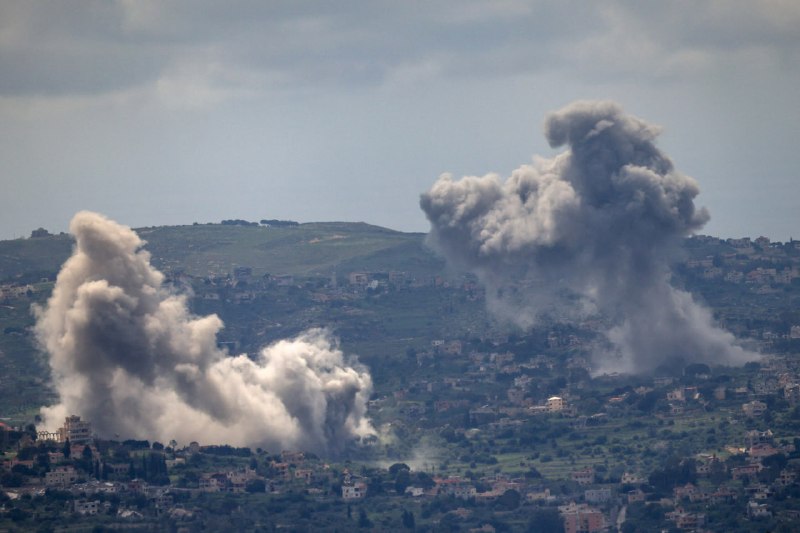
On the evening of 24 June 2026, Israeli prime minister Benjamin Netanyahu scheduled a security meeting to weigh Israel's posture on its northern and north-eastern fronts, according to Israeli Channel 13 reporting relayed by The Cradle Media at 15:45 UTC. The agenda, as the network framed it, is the Lebanese and Syrian files — two theatres that have, in recent months, absorbed a disproportionate share of the Israeli cabinet's attention and a growing share of its war cabinet's bandwidth.
The meeting lands a few hours after Netanyahu publicly declared, in remarks picked up by Iranian state broadcaster PressTV at 15:40 UTC, that Israel "simply informed" US president Donald Trump before waging war on Iran, and that he "did not ask for permission." Read together, the two items sketch a government in motion: one minister publicly reasserting Israeli freedom of action against a regional heavyweight, another preparing the ground for the kind of cross-border operations that such a posture tends to enable.
The northern file, reloaded
Israel's confrontation with Hezbollah along the Lebanese border has not followed the trajectory the security cabinet mapped out in late 2024. The ceasefire framework that paused open hostilities has held in its narrow, technical sense — no large-scale exchanges, no mass-casualty barrages — but the underlying political dispute over northern Israel's security has not been resolved. Tens of thousands of Israeli residents remain displaced from towns just inside the Galilee panhandle, and the cabinet's working assumption, repeated in successive briefings, is that a return to those communities is contingent on a security architecture Hezbollah does not currently accept.
Channel 13's decision to flag Lebanon as a principal item of the evening meeting, rather than a routine agenda entry, suggests the discussion is not merely procedural. Israeli outlets have, in the past weeks, carried reporting on efforts to broker a more durable arrangement through US and French intermediaries. The fact that a security meeting is being convened in parallel, with a public-emphasis on the security track rather than the diplomatic one, reads as an effort to keep military options live while the back-channels continue.
The Syrian file, and the wider pressure surface
The Syrian file is the more ambiguous of the two. Israel's posture toward the post-Assad transitional government in Damascus has been, since the change of power in late 2024, deliberately under-articulated. Jerusalem has not formally recognised the new authorities, has continued to strike what it describes as Iranian-aligned assets on Syrian territory, and has tolerated — at minimum — a US-brokered understanding under which Israeli air activity over southern Syria is not contested.
Netanyahu's public line on Iran, delivered hours before the meeting, sharpens that posture. The framing — that Israel informed Washington rather than consulted it — is the language of a government preparing its domestic audience for unilateral action, and the timing is difficult to read as coincidental. Strikes on Iranian assets, or on the transit routes that run through Syrian and Lebanese territory toward Israel, are not symmetrical decisions: they are easier to authorise politically when the prime minister has just placed on the record that he reserves the right to act alone.
What the Iranian readout adds
The PressTV item that frames Netanyahu's Iran remarks is, on its face, the work of an adversarial outlet quoting the Israeli prime minister at the most pointed end of his public repertoire. Iranian state media's interest in amplifying the "we informed, we did not ask" line is structural: it serves Tehran's own framing of the war, and of the regional order that emerged from it. That said, the underlying statement is Netanyahu's, and the divergence between Iranian and Israeli sourcing on what he actually said is not, on the material points, a wide one. Israeli and Western wires have not, in recent days, pushed back on the substance of his position — only on its diplomatic tone.
The honest reading is that both the Iranian and the Israeli accounts are, in their own way, true. Netanyahu does believe Israel reserved the right to act on Iran without prior American consent. Iranian state media also believes that this fact is damaging to the US-Israel relationship, and is publishing it accordingly. The contested ground is not the quote but its weight.
The structural picture
What is emerging, in the second quarter of 2026, is a regional security order in which Israel acts, in its own telling, as a sovereign operator on multiple fronts simultaneously, with Washington as a backstop and occasional honest broker rather than a co-belligerent. That posture has real costs: it obliges the Israeli cabinet to convene security meetings on weekday evenings, it obliges the prime minister to spend political capital on the legitimacy of action rather than its conduct, and it obliges the defence establishment to plan against contingencies the diplomatic track is not, in the moment, foreclosing.
For Lebanon, the immediate risk is the familiar one — that a security-cabinet meeting held in public view raises the cost of doing nothing, and lowers the threshold for action. For Syria, the more interesting question is whether the new authorities in Damascus can remain a tolerable interlocutor for Jerusalem while Israel continues to operate, openly, in its airspace. The evening's meeting is unlikely to resolve either question. It will, however, set the terms on which the next round of decisions is taken.
Stakes and what remains uncertain
The principal uncertainty is the agenda itself. Channel 13, as relayed by The Cradle Media, names the Lebanese and Syrian files. It does not name the agenda items within those files, the participants beyond Netanyahu, or the outcome. Iranian state media's framing of the Iran remarks is not, on its own, evidence of an imminent escalation — it is evidence of an adversarial outlet publishing a statement that was, in substance, made on the Israeli side. A serious reading holds the meeting as preparation for pressure, not as the moment of decision.
The downstream stakes are easier to sketch. A government that has just told its public that it informed rather than consulted Washington, and that is convening its security cabinet hours later, is signalling to its adversaries and its allies that it intends to keep its options open on more than one axis. Whether that posture produces a new operation, a sharper diplomatic exchange, or a quiet resumption of the technical status quo, is a question the next forty-eight hours will answer more clearly than the available sourcing can.
Desk note: Monexus is framing this against the wire by holding the structural read — Israeli freedom of action on multiple fronts, with Washington as backstop rather than co-belligerent — at the same weight as the immediate news of the meeting itself, and by treating the Iranian readout of Netanyahu's Iran remarks as a primary source for what was said rather than for what it means.
Wire provenance
This editorial synthesis draws on the following public wire/social posts:
- https://t.me/thecradlemedia
- https://t.me/presstv
- https://t.me/TheCradleMedia
Follow the event.
These dated source records provide context. They do not retrospectively verify this archive article.
Separate what the nuclear watchdog reported from what it could not determine after the June 2025 strikes.