A strait in the public domain: Oman's Hormuz gamble and the architecture of a new deal
Oman has opened toll-free shipping lanes through the Strait of Hormuz while Iran and Washington prepare to sign a framework accord in Geneva. The corridor, not the communiqué, is where the new architecture is being written.
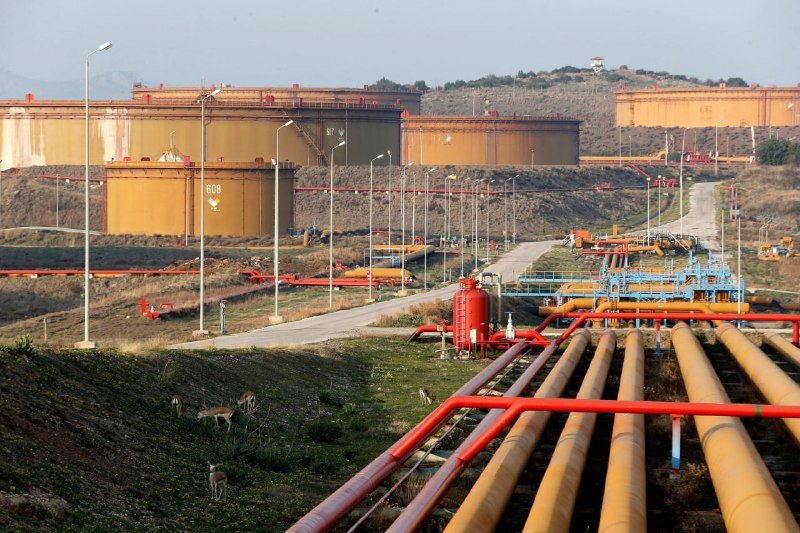
At 08:28 UTC on 24 June 2026, Oman announced it had opened temporary shipping routes through the Strait of Hormuz with no transit tolls, a procedural gesture that, in the language of the Gulf, is rarely procedural at all. Hours earlier, a UN-coordinated operation had begun evacuating roughly 11,000 sailors stranded in the waterway. The moves land on the same week that Iran, the United States, and a clutch of regional intermediaries are reportedly preparing to sign a peace framework in Geneva. The pattern matters more than the press release: the corridor itself is being redesigned in real time, and the toll structure is where the new political economy will live.
The strait has always been the most consequential narrow body of water most readers will never see. A non-trivial share of seaborne crude and a larger share of liquefied natural gas transits it. Whoever sets the rules of passage effectively sets the price of insurance, the price of bunkering, and the price of patience for governments from Tokyo to New Delhi. Oman's decision to declare its routes toll-free, even temporarily, is a way of inserting itself into that rule-setting from the position of a mid-sized Gulf state that, by virtue of its coastline, controls the southern shore of the chokepoint.
Reading Oman's move
The headline — no tolls, temporary lanes — is the easy part. The harder question is what the lanes actually mean in legal terms. Reporting on 23 June flagged that Iran and Oman are negotiating a framework to jointly manage navigation and shipping fees through the strait, a phrasing that, on the face of it, contradicts the toll-free announcement made less than 24 hours later. The cleanest reading is that Muscat is using the toll-free window to establish a fait accompli on its side of the waterway before the bilateral architecture is locked in. By moving first, Oman gets to define the default — free passage through its own corridors — and then negotiates upwards from that baseline rather than down from a tolled one.
That is the kind of move smaller states make when great-power diplomacy is moving faster than they can keep up with. It is not philanthropy. It is market share. The world's shippers are watching where insurance is cheapest, where the coast guard is most predictable, and where the rules of the road are written in a language they can read. For a few days at least, the answer to all three is Muscat.
The Iran-US framing problem
Western wire coverage of any Iran-US framework tends to default to a particular shape: a face-saving American climbdown, a face-saving Iranian climbdown, a few technical concessions on the nuclear file, and a vague commitment to de-escalation. Reporting around a prospective Geneva signing on 24 June has not deviated from that template. The frame is not wrong, exactly, but it is narrow. It treats the deal as a bilateral settlement between two estranged governments, when the material consequences will be felt by every tanker that transits Hormuz, every importer of Gulf LNG, and every government whose navy has been running escort missions in the Gulf for the better part of two years.
The strait itself is a multilateral object. It cannot be administered bilaterally without one side of the shore effectively being treated as a sovereign extension of the other. That is why Oman's move matters: it is the first time in the current crisis that a third party has used concrete shipping policy, rather than diplomatic language, to insert itself into the deal's architecture.
A toll-free window is also a power move
There is a structural pattern here worth naming in plain terms. When a transit corridor is contested, the side that can offer predictable, low-cost passage tends to set the terms for everyone else, including the parties to the underlying dispute. The British Empire in the 19th century understood this when it promised free passage through the Suez route; the United States understood it after 1945 when it secured de facto control of sea lanes across the Pacific. The logic is not about who owns the water. It is about who can credibly underwrite the traffic.
A toll-free Omani lane, even a temporary one, does something similar at a smaller scale. It makes the Iranian offer of jointly managed fees harder to frame as a benevolent concession, because the regional baseline is now free. It also gives Oman a seat at the table it would not otherwise have had at Geneva, by making clear that the deal on paper and the deal in the water need not be the same deal.
Stakes and what to watch
If the toll-free window holds through the Geneva signing, the immediate winners are the shippers — and by extension, the energy importers of South and East Asia, where Hormuz exposure is highest. The immediate losers are the insurance markets, which have been pricing in premium risk for months, and the regional naval presences that have justified their forward deployments partly on the assumption that transit was a contested service rather than a free public one. The longer-term question is whether the Oman-Iran framework collapses the Iranian ability to use the strait as a coercive instrument, or whether Tehran carves out a separate lane, tolled, that compels shippers to choose. The sources available on 24 June do not yet settle that. They describe a negotiating process, not a concluded one.
What is worth watching over the next week is procedural rather than dramatic: which side of the waterway issues the next notice to mariners, which flag-state registry publishes a revised advisory, and whether the UN evacuation operation for stranded sailors is folded into a longer-term humanitarian corridor arrangement. Those are the documents in which the real deal will be legible, long after the Geneva communiqués are stale.
This article distinguishes itself from the wire treatment by reading Oman's toll-free announcement and the reported Iran-Oman fee framework as a single move, rather than as parallel diplomatic events.
Wire provenance
This editorial synthesis draws on the following public wire/social posts:
- https://t.me/aljazeeraglobal
- https://x.com/polymarket/status/1795349210000000000