Rubio courts the Gulf as Washington tries to keep Iran talks inside an American frame
Marco Rubio's 24 June pledge of 'complete alignment' with Gulf partners signals a US strategy of binding Saudi Arabia and the UAE closer to Washington before any nuclear settlement with Tehran is locked in.
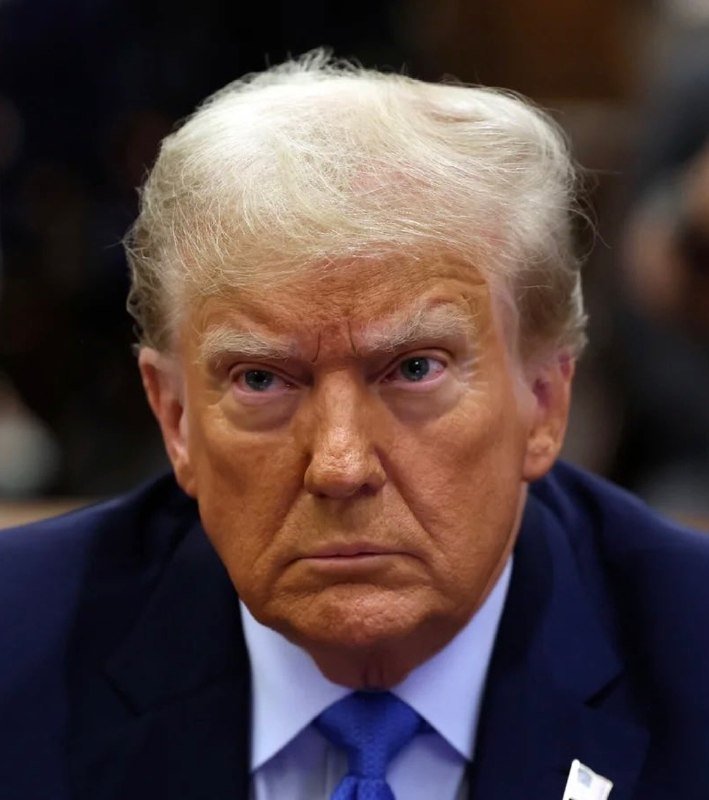
US Secretary of State Marco Rubio told reporters on Wednesday, 24 June 2026, that Washington would be "completely aligned" with its Gulf partners as it pursues negotiations with Iran aimed at finding a permanent settlement to the long-running dispute over Tehran's nuclear programme. The remarks, delivered during a regional stop on Wednesday afternoon local time, were intended to reassure Saudi Arabia and the United Arab Emirates that the United States would not trade their security for a deal in Vienna or Muscat.
The timing is not incidental. Two parallel diplomatic tracks are moving at once — a US-Iran nuclear channel that has produced cautious progress in recent months, and a separate conversation about whether the Gulf states themselves should hedge by talking to Tehran without Washington in the room. Rubio's message is meant to shut that second track down, or at minimum to keep it firmly under American management.
What Rubio actually said
The Secretary of State's core pledge, as relayed by Middle East Eye's coverage of his 24 June remarks, was alignment. "Completely aligned," in his formulation, was not a rhetorical flourish but a contract with his hosts: Gulf priorities — shipping lanes through the Strait of Hormuz, the security of Saudi eastern oil infrastructure, missile defence over the UAE, and the political containment of Iranian proxies from Hezbollah to the Houthis — would be Washington priorities too. A Telegram feed of the press availability, posted by the channel Our Wars Today, captured the operational content: the United States will not take any action that would undermine Gulf security.
That second formulation matters more than the first. "Aligned" can mean consultative. "Will not undermine" is a more binding pledge: it forecloses the kind of grand bargain — sanctions relief in exchange for enrichment caps — that Gulf capitals have long feared Washington might strike over their heads.
The Gulf counter-narrative: talk to Tehran anyway
The frame Rubio is pushing against is not theoretical. France 24's coverage of the same Wednesday press cycle cited analyst commentary describing a sense of "panic" in Washington at the prospect of Gulf states going it alone with Iran — opening their own channels, trading energy and security arrangements, and effectively telling the United States that the era of exclusive US-managed regional security is over.
That fear is not new. Saudi Arabia and the UAE both restored diplomatic ties with Iran in 2023 under Chinese mediation, a development that rattled US planners who had spent two decades treating the Gulf as a managed American security perimeter. The current moment sharpens the worry: with the United States preoccupied by Ukraine, with US presidential politics pulling in competing directions on Iran, and with the economic cost of any new regional war intolerable to Gulf planners preparing for a post-oil horizon, the incentives for the GCC states to act independently have rarely been higher. Rubio's Gulf tour is, in part, a damage-limitation exercise — a reminder that Washington still holds the cards on missile defence, on F-35 sales, on the disposition of CENTCOM, and on the dollar-cleared oil trade that underpins Gulf sovereign wealth.
What the structural picture looks like
The pattern here is familiar from other moments when a dominant power felt its regional order fraying: a senior official flies in, pledges alignment, takes questions, and leaves. The pledges are real, but they are also a way of buying time. The underlying question is whether the Gulf states still need the United States more than the United States needs them, and on present evidence the answer is closer than it was a decade ago.
Three things have shifted. First, the Gulf states now possess sovereign wealth funds large enough to underwrite their own defence industrial base, and the UAE in particular has been a consistent buyer of advanced Chinese and French systems alongside US hardware. Second, the energy transition is rewriting the strategic value of Gulf oil: less critical by volume, more critical as a swing supplier in a tighter market, which gives Riyadh and Abu Dhabi leverage they did not previously have over Washington. Third, the Iran file itself is increasingly a global-South diplomatic question, with Beijing hosting the Saudi-Iranian rapprochement and Moscow maintaining working relations with Tehran, leaving Washington as one node in a multipolar conversation rather than its centre.
None of that means the United States is being pushed out of the Gulf. The hardware dependencies, the dollar clearing system, and the intelligence relationships run too deep. What it means is that the cost of keeping the Gulf inside an American-led frame is rising, and the price of failure is a regional order in which Iran, Saudi Arabia, the UAE and China settle the security architecture of the world's most important energy corridor without Washington at the table.
The counter-read: alignment is enough
The optimistic case, which is the case US officials are now actively making, is that Rubio's pledge reflects a substantive policy choice rather than a rhetorical bandage. The argument runs that the Biden-era pattern of arms-length Gulf engagement has been replaced by a more transactional and more attentive posture, and that Gulf capitals — having tested the waters of Chinese-mediated engagement with Iran — have concluded that they still need the US security umbrella for hard cases. Under that reading, the recent Saudi-Iranian rapprochement was a confidence-building measure rather than a strategic pivot, and the UAE's deepening ties with Beijing are commercial rather than geopolitical.
There is some evidence for this. Gulf defence budgets remain heavily denominated in US equipment, and the political cost in Washington of any Gulf state visibly breaking from the US camp would be severe. But the optimistic case rests on the assumption that the next crisis — a serious Iranian nuclear breakout, a Houthi strike on Gulf shipping, an Israeli operation that drags in Gulf infrastructure — will be managed inside the existing framework. That is an assumption Rubio's trip is, in effect, trying to underwrite.
What remains contested
The sources do not specify the precise contents of the bilateral meetings Rubio held on 24 June, the names of the officials he met, or whether any new defence or intelligence arrangements were announced. Press reporting describes the public message but not the private deliverables, and Gulf state media have not (as of the reporting window covered here) published a joint communique. A second open question is whether the Iran track is in fact close to a settlement — Rubio spoke of a "permanent" resolution, but US and Iranian public statements have diverged for years on what that would entail, and a Gulf-aligned US position is not the same as a US position Iran will accept. Until those questions are answered, Wednesday's alignment pledge is best read as a marker of US intent rather than a settlement of any underlying dispute.
Desk note: Monexus has framed this as a contest between a US-led regional order and an emerging Gulf-centred one, rather than as a routine reassurance tour. The wire coverage led on Rubio's language; the structural story is the hedging that language is designed to prevent.
Wire provenance
This editorial synthesis draws on the following public wire/social posts:
- https://x.com/middleeasteye/status/2069906966256721920
- https://t.me/ourwarstoday
Follow the event.
These dated source records provide context. They do not retrospectively verify this archive article.
Separate what the nuclear watchdog reported from what it could not determine after the June 2025 strikes.