Sánchez, the Cerdán File, and the Price of Spanish Stability
As Prime Minister Pedro Sánchez publicly breaks with collaborators dragged into a widening graft inquiry, Madrid's political class is being forced to ask whether his grip on office can survive a scandal that reaches into his own family.
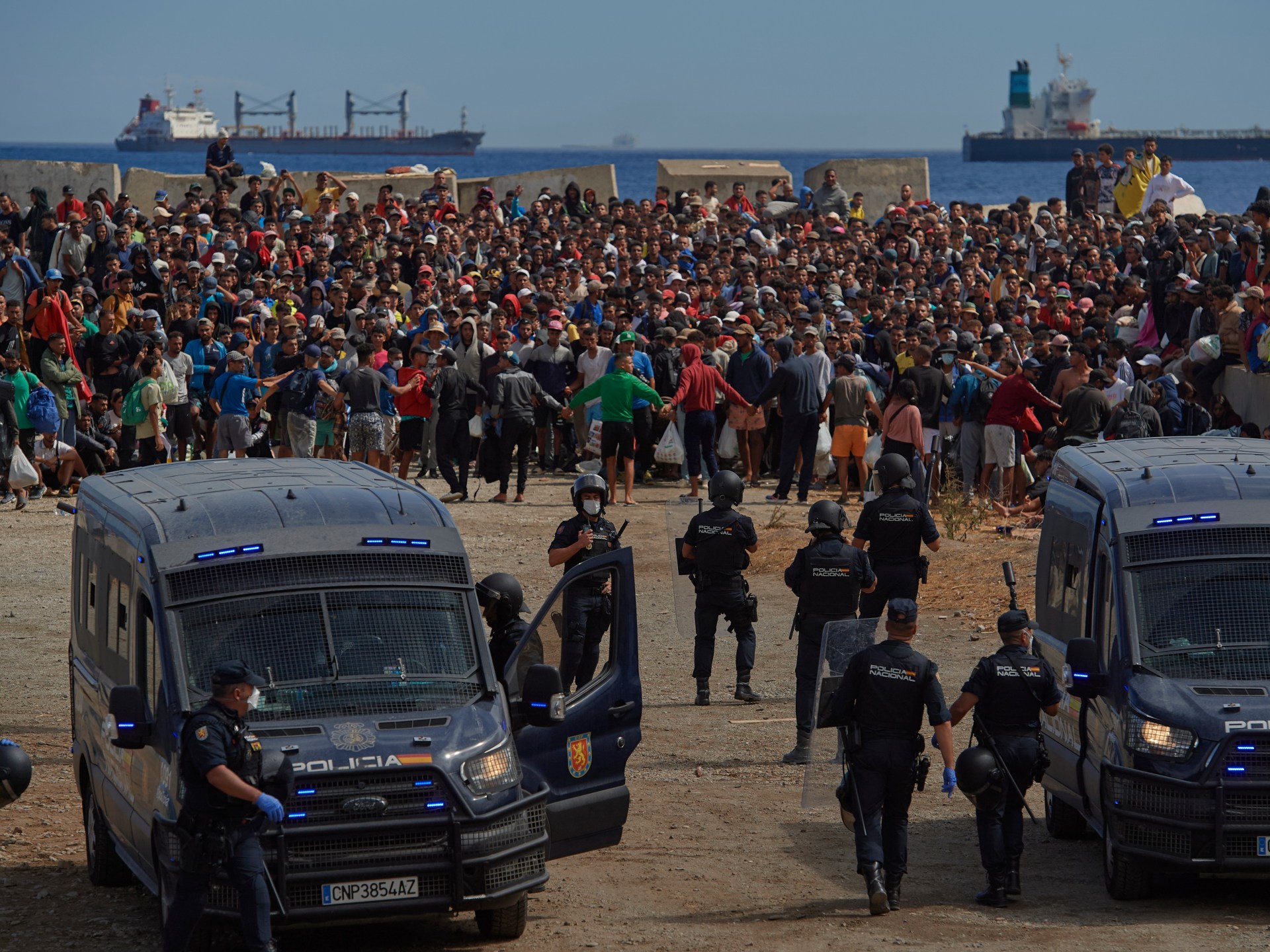
On the morning of 24 June 2026, Spanish Prime Minister Pedro Sánchez walked into a hostile chamber and chose attack over apology. According to a Telegram wire summary of Corriere della Sera's frontline reporting, Sánchez publicly "discharged" former collaborators caught up in a corruption investigation, and reacted with visible anger to allegations that have reached his wife and brother. His message was short, in keeping with the conventions of a prime minister under siege: "We will move forward." That phrase is now the political weather vane in Madrid. Whether Spain's first coalition government of the post-Franco era can survive the season depends, in large part, on whether the public believes him.
The Cerdán file, named after the former Socialist Party official at its centre, has metastasised with unusual speed. What began as a probe into party contracting has spread to include allegations touching the prime minister's family — the kind of accusation that, in any other European democracy, would be sufficient to end a premiership within a week. Sánchez's response has been the inverse of the conventional Spanish reflex: rather than retreat into institutional silence, he has gone on the offensive. He has denied the allegations, restructured his inner circle, and is gambling that a combative posture will restore his authority before the autumn budget cycle. Whether that bet pays off is the question the rest of this piece tries to answer.
The shape of the scandal
The political crisis unfolding in Spain is, on its surface, a familiar European story: a long-ruling centre-left party caught in a procurement-and-kickbacks dragnet, with the prime minister's office implicated only obliquely. Its texture, however, is more volatile than the genre suggests. Spanish corruption cases tend to unfold in slow motion — judges leak, parties deny, prosecutors accumulate, and only after years does the political bill come due. The Cerdán file is moving faster because the Spanish judiciary, since the 2010s, has been progressively insulated from executive influence, and because the wire that has done much of the public reporting has been willing to publish excerpts of audio recordings that the investigating magistrate had kept under seal. The visual of a prime minister publicly severing ties with former collaborators on live television is, in that sense, the product of a justice system that has stopped waiting for permission to do its work.
What distinguishes the current episode from earlier Spanish political crises is the range of the allegations. Sánchez's family is no longer peripheral to the story. His wife, Begona Gómez, has faced judicial scrutiny in a separate inquiry into her professional dealings. His brother, David Sánchez, has been the subject of reporting about his use of a publicly funded position at a regional cultural body. Neither allegation has resulted in charges, and both have been contested. But the cumulative effect is to make the prime minister personally the centre of the story, rather than the party. This is the configuration most likely to break a leader — not a guilty verdict, but the slow attrition of having to answer for relatives, in a media environment that treats silence as confirmation. Sánchez's choice to fire collaborators in public, on 24 June, is best read as a defensive perimeter drawn around his own family.
The counter-narrative
The opposition's reading is straightforward and, in the structure of Spanish politics, conventional. The People's Party (PP) and Vox argue that a prime minister who cannot control his own party's finances cannot govern the country. They have called, with varying degrees of formality, for fresh elections. Vox has used the more absolute language of "regime" collapse; the PP has stayed closer to procedural language about parliamentary confidence. Both parties are aware that the Sánchez government's hold on the Congress of Deputies is fragile. The current coalition rests on a Catalan independence party, Junts per Catalunya, whose support is transactional rather than ideological; and on a Basque nationalist party whose price for confidence-and-supply has been a regional fiscal settlement that the central government can ill afford to repeat. A confidence vote is winnable, but only narrowly, and only if every coalition partner turns out.
The less reported counter-narrative, which appears in sympathetic Spanish and Latin American outlets, frames the Cerdán file as a politically motivated operation. The argument runs that Spain's anti-corruption prosecutors have, over the last decade, become a parallel centre of power — one that the right has learned to use against the left more effectively than the left has learned to use it against the right. The PP's own corruption cases, from the Bárcenas affair to the Kitchen operation, took years longer to result in political consequences. The implicit claim is not that the allegations are invented, but that the speed of the leak cycle is itself a partisan artefact. This is a harder case to make in a country where the judiciary is now formally independent, and where the investigating magistrate is widely respected. But it lives in the background of Sánchez's combative posture, and helps explain why he has chosen to frame his defence as an assault.
What the structural picture looks like
Spain sits inside a European pattern that is worth naming in plain terms. Across the continent, long-tenured centre-left governments — Scholz in Berlin, Macron in Paris, Sánchez in Madrid — have entered a phase in which accumulated governance fatigue, post-pandemic fiscal strain, and a more muscular judiciary combine to produce regular shocks. The centre-left's hold on power depends on coalitions that include parties to its left and to its regional periphery. Those coalitions can deliver legislative majorities, but they cannot deliver ideological coherence, and they cannot absorb personal scandal without rupturing. The political technology required to govern in this configuration — the constant negotiation with Junts, the reliance on Sumar to discipline the left flank, the dependence on EH Bildu for arithmetic — leaves no margin for a Cerdán-class crisis.
Underneath the political mechanics lies a slower shift in the Spanish media economy. The outlets that broke the Cerdán file are, increasingly, digital-native and financially independent of the PSOE-aligned press groups that once set the terms of Spanish political coverage. Audio leaks that would once have been carefully managed by party communications now reach the public within hours, through platforms that the government cannot lean on. The result is a sharper, faster, less negotiable scandal cycle. Sánchez's instinct to fight rather than wait is, in part, an adaptation to that new media environment. He cannot rely on sympathetic editors to slow the story down; he has to take the story to the public himself.
What is at stake for Spain and for Europe
The immediate stakes are constitutional. If Sánchez's coalition loses its working majority in the autumn — a scenario the PP and Vox are openly preparing for — Spain faces either a snap election or a minority government dependent on confidence-and-supply from parties that have no interest in keeping the current cabinet intact. Either outcome would produce a delay in the disbursement of European Recovery and Resilience Facility funds, which Madrid has so far administered with unusual efficiency. Spanish beneficiaries of those funds — regional governments, mid-sized industrial firms, the renewable-energy supply chain — would feel the delay before anyone in Brussels did.
The medium-term stakes are geopolitical. Spain is, in demographic and economic terms, the southern anchor of the eurozone. A government in permanent crisis is a less reliable partner for Paris on Mediterranean policy, for Berlin on fiscal coordination, and for Brussels on the southern neighbourhood. The Sánchez government has, by most independent assessments, run a competent macroeconomic course: inflation has fallen faster than the eurozone average, employment is at record levels, and the public deficit is shrinking on the planned path. Whether the political class can preserve that record through a corruption-driven crisis is a question that will be answered in Madrid, but felt across the union.
What remains uncertain
The sources do not specify the contents of the sealed audio recordings that have driven the most damaging headlines. Until those recordings are entered into evidence in open court, the public version of the case rests on excerpts whose authenticity has not been independently adjudicated. The investigating magistrate's eventual indictment — if one comes — will be the first document with the legal force to settle the factual record. Until then, the political contest will outrun the judicial one. Sánchez's gamble is that his combative posture will hold public attention until the legal calendar catches up. The opposition's gamble is the opposite: that the legal calendar will catch up faster than his posture can survive. Between those two bets, the autumn budget and the autumn confidence vote will arrive at roughly the same moment. That collision, more than any leaked audio, will determine who governs Spain into 2027.
Desk note: Monexus has framed the Cerdán file as a political-institutional crisis shaped by Spain's now-independent judiciary and a faster, leak-driven media cycle, rather than as a personal morality play about Sánchez. We have given the opposition's procedural case and the left's structural critique roughly equal weight, and held the structural European pattern — centre-left coalition fragility — as the explanatory frame.
Wire provenance
This editorial synthesis draws on the following public wire/social posts:
- https://t.me/CorriereDellaSera
- https://t.me/CorriereDellaSera
- https://t.me/CorriereDellaSera
- https://en.wikipedia.org/wiki/2024_Spanish_political_crisis