Senate Moves to Rein in Trump's Iran War Powers as Hormuz Deal Takes Shape
The Senate has passed a symbolic resolution demanding the withdrawal of US forces from the Iran conflict, hours after President Trump announced a 'historic peace agreement' over the Strait of Hormuz. The two-track diplomacy exposes the gap between the White House and Capitol Hill.
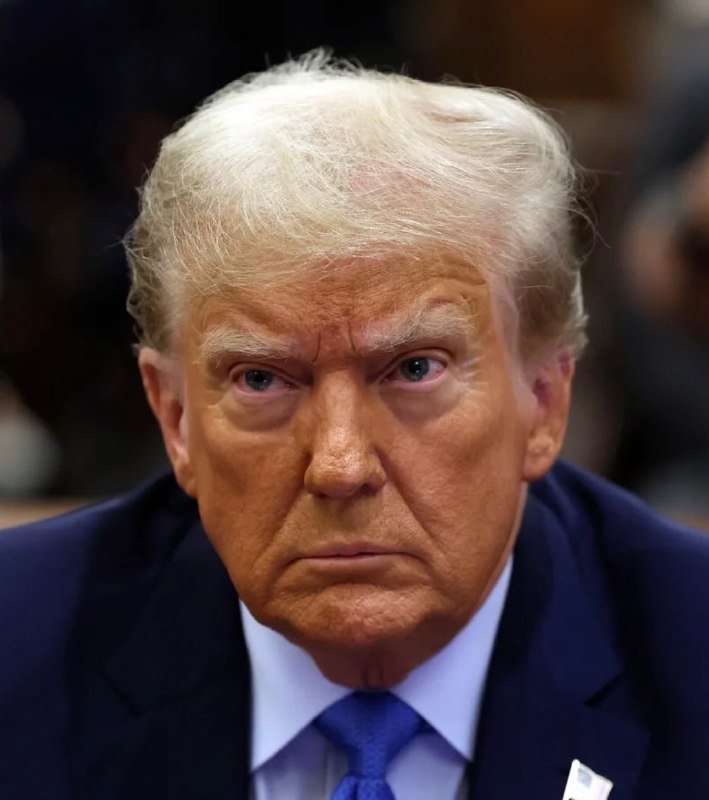
The United States Senate on Tuesday evening local time passed a resolution demanding that President Donald Trump withdraw US military forces from the conflict with Iran, the clearest legislative rebuke of a war that the White House simultaneously declared effectively over. Lawmakers backed a measure framed as a rebuke of the military campaign Trump launched against Tehran, even as the president claimed from the podium that a "historic peace agreement" had been struck over the Strait of Hormuz and that 19 million barrels of oil moved through the waterway in a single day.
Two tracks of American statecraft are now visibly running in opposite directions. The executive branch is negotiating in the Gulf, claiming a diplomatic breakthrough and an oil-market windfall. The legislative branch is voting to curtail the commander-in-chief's authority to keep fighting. The result is a moment of unusual constitutional friction — one that will define how the United States winds down, or fails to wind down, its second major Middle East war in three years.
What the Senate actually did
The resolution, reported by Iranian state-affiliated outlets and Telegram channels on 23 June 2026, calls on Trump to pull US forces out of hostilities and to end the campaign without further escalation. According to a Telegram channel linked to the Iranian state-aligned Al-Alam network, the upper chamber passed the measure on Tuesday evening local time — a procedural moment that, under US war-powers law, has historically been the principal lever Congress can use to interrupt a presidential military operation abroad.
The text of the resolution, as described in the wire materials, offers a symbolic rebuke rather than a binding statutory halt. The US Constitution assigns Congress the power to declare war and to fund or defund military operations, but it gives the president broad authority as commander-in-chief to direct forces already in the field. A resolution of this kind lacks clear legal enforceability without the president's signature, and the White House has given no indication Trump will sign it.
That legal asymmetry is the point. Senators who backed the measure are using the vote to put on the record their view that the war has gone on long enough, that the public has not been given a clear exit, and that the executive's claims of imminent peace are not yet credible enough to justify continued operations. The vote is a political instrument, not a jurisdictional one — pressure on the administration to negotiate seriously, and a base marker for voters in November.
The Hormuz breakthrough, and what is missing from it
In the same news cycle, Trump told reporters that the central goal of his Iran policy is to guarantee that Tehran is "permanently denied nuclear weapons capability," and claimed that Iran has now accepted the framework. He boasted of a "historic peace agreement" governing the Strait of Hormuz and pointed to 19 million barrels of oil moving through the chokepoint in a single day — a figure, if accurate, that would represent a near-full restoration of pre-crisis traffic through the narrow waterway between the Persian Gulf and the Gulf of Oman.
The gap between the White House narrative and the verifiable record is wide. Al Jazeera's breaking-news wire on 24 June 2026 reports that the US and Iran are offering conflicting public statements on the status of nuclear inspections and on the shape of a final, comprehensive deal. Negotiators are pushing, in the language of the wire, "towards reaching a final, comprehensive deal" — present-continuous, conditional, with the headline terms still in dispute. There is no joint communique, no signed annex, and no third-party verification (from the International Atomic Energy Agency or from Gulf state mediators) cited in the open-source material that the 19-million-barrel figure or the "permanent denial" claim can be checked against.
Two readings of the same news are therefore simultaneously defensible. The first, favoured by the administration and by some Gulf bourses, is that the war is functionally over, that the oil market is being repriced for a Hormuz at peace, and that what remains is a tidying-up exercise. The second, which better fits the conflicting-statement pattern reported by Al Jazeera and the explicit Senate rebuke the same evening, is that the executive is talking up a framework that the Iranian side has not yet signed, the inspectors have not yet verified, and Congress is not yet willing to underwrite.
The structural frame: war powers, oil, and the imperial presidency
The dispute is not really about Iran. It is about who decides when American wars end — and who pays the bill while the question is unresolved. The resolution sits inside a long-running tension in US constitutional practice: since the early 1990s, presidents of both parties have launched and sustained large military operations without a formal declaration of war, relying on authorisations passed in 2001 and 2002, on UN Security Council resolutions, or simply on the claim of inherent executive authority. Congress has, with rare exceptions, declined to use its statutory levers to force a withdrawal.
What makes this moment different is the price tag now attached to the silence. The 19-million-barrel claim, if even roughly accurate, signals that the Hormuz disruption has eased — but it also implies that for a period measured in weeks or months, a chokepoint handling roughly a fifth of seaborne global oil trade was operating below capacity, and that the United States bore much of the military cost of keeping even reduced traffic moving. That cost is paid in carrier deployments, in munitions expenditure, and in the political exposure of a president who told the country the war would be short.
Iran's negotiating position, as glimpsed through the state-aligned Telegram channels, is to insist on a deal that delivers sanctions relief and recognition of its enrichment programme under strict monitoring, in exchange for caps and a longer rollback period than the United States is publicly willing to accept. Tehran has, in parallel, cultivated a multi-front diplomatic posture — engaging Gulf states, China, and Russia as separate channels — to ensure that no single US administration can collapse the negotiation by walking away. The structural pattern is a hedging strategy, and it works only if Washington is also divided against itself.
Stakes — and what the next 30 days will tell
The immediate stakes are concrete. If the Hormuz deal holds and inspectors are admitted, oil benchmarks will settle lower, Gulf shipping insurance will fall, and the administration's claim of a clean win will become harder to challenge in the November midterms. If the deal collapses or the inspections dispute hardens, the Senate's symbolic vote acquires a tactical edge — a pre-recorded justification for cutting off supplemental funding, and a template for further resolutions that constrain the use of force against Iranian oil installations or shipping.
Who wins and who loses on the present trajectory is becoming legible. The administration wins a short-term market rally and a foreign-policy headline. Iranian negotiators, if they can lock in sanctions relief and a monitored enrichment path, win the strategic prize of surviving the war with their nuclear infrastructure largely intact. Gulf monarchies win the absence of an active shooting war on their coastline. The US Senate, by passing the resolution, wins the ability to say it tried — though it has not, on the available evidence, yet converted the symbolic vote into a binding prohibition.
What remains uncertain is whether the "historic peace agreement" exists in any document that both governments have signed, whether IAEA inspectors will be readmitted to sites that were struck during the war, and whether the oil-flow figure is a single peak day or a sustained run-rate. The wire materials do not yet resolve any of these questions. The Senate's vote suggests that, on Capitol Hill at least, the administration's own framing has not yet been taken at its word.
Desk note: Monexus has framed the Senate vote and the Hormuz announcement as a single news event because the open-source materials place them in the same 24-hour cycle. The two-track dynamic — executive diplomacy on the Gulf, legislative pushback in Washington — is itself the story, and any reading that treats either track in isolation will miss the constitutional friction the sources describe.
Wire provenance
This editorial synthesis draws on the following public wire/social posts:
- https://t.me/wfwitness
- https://t.me/wfwitness
- https://t.me/alalamfa
- https://t.me/epochtimes
Follow the event.
These dated source records provide context. They do not retrospectively verify this archive article.
Separate what the nuclear watchdog reported from what it could not determine after the June 2025 strikes.