Power cuts in Sevastopol as Ukrainian strikes hit Russian-held Crimea
Overnight strikes on Sevastopol knocked out electricity across parts of the Russian-occupied city, while Ukrainian intelligence alleges mishandled burial of anthrax-infected livestock in occupied Kherson.
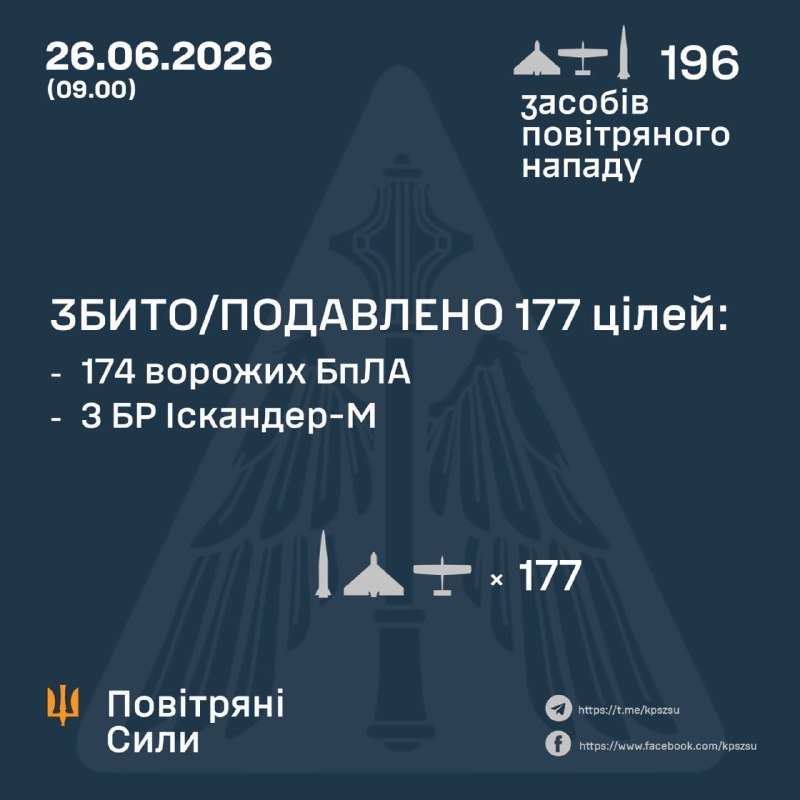
Overnight strikes on the Russian-occupied port of Sevastopol knocked out electricity across parts of the city, the Moscow-installed governor said on the morning of 24 June 2026, in the latest Ukrainian campaign to push the war's pressure back onto territory Russia has held since 2014. Reporting from monitoring channels cited by the BBC at 09:48 UTC described thick black smoke rising over the city; a separate post from the open-source outlet WarTranslated at 09:23 UTC relayed the same on-the-ground account, with smoke visible after explosions were heard through the night.
The strikes underline a tactical pattern that has hardened over the past year: with the ground line on the mainland essentially static, Kyiv is escalating the cost of occupation for civilians living under Russian administration and for the military infrastructure that depends on them. Crimea is the deepest test of that logic. It is also the most politically loaded target on the map — annexed in 2014, fortified since 2022, and treated by Moscow as Russian sovereign territory rather than a battlefield.
What the sources say happened
The Moscow-installed governor of Sevastopol warned residents at 09:48 UTC on 24 June 2026 that electricity would be unavailable in some areas until the evening, according to a BBC News item dated to that timestamp. The BBC's reporting was consistent with a Telegram post from the Ukrainian channel TSN at 09:14 UTC earlier the same morning, headlined "The Russian nightmare in Crimea is becoming a reality," which framed the strikes as a lever to force Russian troop withdrawals. WarTranslated's own monitoring summary at 09:23 UTC described overnight explosions and black smoke over the city, sourcing the description to unspecified monitoring channels and the account of a Sevastopol resident shared on social media.
Three independent strands — a wire outlet citing the Russian-installed authority, a Ukrainian press summary, and an open-source aggregator — converged on the same broad picture: an attack, a city partly blacked out, and visible damage. None of the source items specify the weapon used, the precise target, or the number of launches. Russian authorities did not, in the materials available to this publication, claim an interception rate or attribute the strike to a particular Ukrainian formation; Ukrainian officials have not, in the same materials, formally claimed the operation.
The counter-narrative
Two readings are available. The first, advanced by Russian-installed spokespeople and Russian state-aligned channels, treats strikes on Sevastopol as terrorist attacks on civilians — Russian Crimea, in this framing, is being hit on purpose by a regime that has been supplied long-range weapons by Western partners. That account is not made in the source items reviewed here, but it is the predictable line from Moscow and would carry weight with audiences who take the 2014 annexation at face value.
The second reading, closer to Kyiv's framing, treats Crimea as a legitimate military target: a launchpad for strikes on southern Ukraine, a logistics node for the Black Sea fleet, and a site of rotating Russian air-defence assets. The argument, set out in the TSN piece linked above, is that the only way to make the peninsula too costly to hold is to degrade the infrastructure that sustains the garrison. The two readings are not reconcilable in real time; they are contested in the press of every strike. What can be said is that, in this reporting, the strike happened, the power went out, and the Ukrainian outlet claimed credit in framing — even where it stopped short of a formal military statement.
The structural frame
The deeper story is not one battle but a strategic posture. With the ground front in southern Ukraine largely frozen, both sides have spent eighteen months reaching deeper into the other's rear. For Russia, that has meant glide-bomb strikes on Kharkiv, Sumy and the Dnipro region, and a steady drumbeat of Shahed-type drone attacks on Ukrainian cities. For Ukraine, it has meant long-range drone and missile work against Russian energy sites, military airfields, and the Crimean peninsula. The result is a war of attrition fought, in part, through civilian-side infrastructure: power, water, rail.
The reports from Russian-occupied Kherson fit the same pattern, with a different texture. Kyiv Post, citing Ukrainian military intelligence (HUR), reported at 08:46 UTC on 24 June 2026 that Russian occupation authorities were burying anthrax-infected livestock in the occupied part of Kherson region without proper sanitary measures, a claim that, if verified, points to a parallel crisis of public-health governance on territory Russia controls. Ukrainian intelligence services are not neutral parties; their framing favours Kyiv. But the basic fact of an anthrax outbreak in livestock — and the obligation of any occupying authority under the Geneva Conventions to maintain public health in occupied territory — is one that can be checked against veterinary authorities in the wider region, and that this publication has not been able to independently verify in the materials available.
Stakes and what comes next
If Sevastopol's power remains fragile and the strikes on Crimea continue at the present tempo, three things follow. First, the cost of running a garrison on the peninsula rises, which strengthens Kyiv's negotiating position on the southern axis. Second, the political pressure on Moscow from Crimean residents — many of whom relocated after 2014 — to either harden the air-defence envelope or accept the strikes as the new normal increases. Third, the risk of escalation rises with it: the deeper the strike, the louder the Russian framing of NATO-supplied weapons striking "Russian" soil, and the harder it becomes for Western governments to maintain the present line between defensive aid and offensive enablers.
What remains uncertain is whether the overnight strikes were a one-off, a deliberate campaign, or the consequence of a Ukrainian weapons system arriving at scale. The source items do not specify. They also do not specify the scale of the power outage, the number of substations affected, or the casualty count, and the standard caveats apply: monitoring channels on Telegram are faster than the wire services but less accountable, and the BBC's item is a developing story rather than a confirmed picture. The reporting available on 24 June 2026 supports a confident description of the event and a careful description of its meaning. It does not, on its own, support a confident prediction of what comes next.
Desk note: Monexus treats Ukraine as the invaded party and Sevastopol as occupied territory; Russian-installed authority statements are reported as such, not as the voice of a sovereign government. Claims sourced to Ukrainian intelligence are flagged as such rather than reported as neutral fact.
Wire provenance
This editorial synthesis draws on the following public wire/social posts:
- https://t.me/TSN_ua
- https://t.me/Kyivpost_official
- https://t.me/s/osintlive
Follow the event.
These dated source records provide context. They do not retrospectively verify this archive article.
A dated voting record is evidence of one decision. Use the original UN record before turning it into an alignment label.
Visual explainer · historical vote of 2022-03-02 →