The $88 Billion Question: How Trump's Supplemental Request Rewires the Iran File
On 24 June 2026, President Donald Trump asked Congress for roughly $88 billion in additional funding tied to the Iran war, while separately floating about $500 million in initial humanitarian relief in American goods. The two announcements, hours apart, expose the financial architecture of an endgame that is being negotiated and fought at the same time.
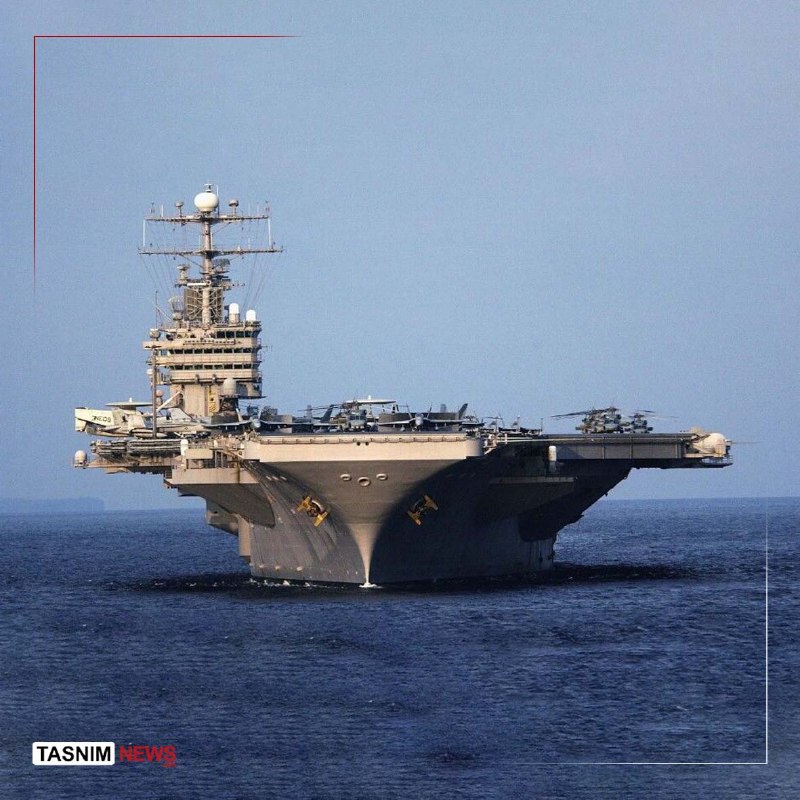
At 22:35 UTC on 24 June 2026, Iranian state-aligned outlets reported in near unison that President Donald Trump had asked the United States Congress to approve roughly $88 billion in additional funding tied to the costs of the war with Iran. Six hours earlier, the X account Unusual Whales had published a separate Trump statement that any initial financial relief for Tehran would take the form of approximately $500 million in American goods, paid out under a negotiated framework that also unlocks some Iranian funds.
Read together, those two dispatches describe a single transaction in two registers. One is the price the American political system is being asked to pay for the conflict. The other is the price the Iranian state is being offered to end it. The distance between $88 billion and $500 million is the space in which the endgame of the Iran war is now being negotiated — in public, in dollars, and under a tight legislative clock.
What the supplemental actually covers
Iranian outlets Mehr News and Tasnim, citing the Trump administration's communication to Capitol Hill, framed the request as an "$88 billion" package for "Iran war expenses." Neither outlet provided an itemised breakdown, and no Western wire has yet published a line-by-line account of the request. What is clear from the Iranian reporting is that the administration is treating the conflict as an open-ended fiscal obligation rather than a concluded operation: the request is supplemental, on top of the regular defence topline, and tied to costs already incurred or immediately anticipated.
That framing matters. Supplemental requests, by long-standing congressional practice, are the mechanism through which the United States pays for wars it has not fully budgeted for. They sit outside the normal appropriations cycle, they are debated under expedited procedures, and they are politically harder for lawmakers to oppose once American casualties, or American basing commitments, are in play. The dollar figure should be read as the administration's opening bid in a negotiation with a Congress that controls the purse strings — not as a final number.
The $500 million counterpart
The earlier announcement, carried by Unusual Whales on X at 16:17 UTC, described a smaller and structurally different flow: approximately $500 million in American goods released to Iran as an initial tranche of relief, with the broader arrangement also involving the release of some Iranian funds. The framing — "financial relief," "negotiated framework," "American goods" — tracks the architecture of previous US-Iran transactions in which humanitarian or banking carve-outs have been used to thread the needle between sanctions enforcement and crisis management.
The optics are deliberate. Goods, not cash, gives the administration a defensible political line: American taxpayers are not funding the Iranian state, American factories are supplying Iranian civilians. The Iranian side, for its part, gets hard currency worth of imports and a precedent for further releases. Both governments can claim victory in their domestic press without formally suspending the broader sanctions regime.
Why the asymmetry looks the way it does
The two figures, $88 billion on one side and $500 million on the other, are not a mistake. They are the public signature of an arrangement in which the United States is paying the full cost of the war it has been fighting, while Iran is being offered a relief package sized to the political tolerances of Washington's Gulf partners and Tehran's own factional balance. From the Iranian side, Mehr and Tasnim are presenting the $88 billion as evidence that the war has become a fiscal burden on the United States — a frame designed for domestic Iranian audiences that have been told the conflict is extracting a price from the adversary. From the American side, the $500 million goods tranche is being positioned as a humanitarian concession that does not cross red lines on the dollar.
What the two readouts do not yet resolve is the sequencing question. Supplemental funding bills typically arrive after a political decision to continue a conflict has already been taken. Relief packages of this size typically arrive before a political decision to de-escalate has been publicly locked in. The administration is signalling both at once. That is the negotiating posture of a government that wants to keep the war financially solvent while building the architecture of an off-ramp.
Counter-narrative: a number built for the press cycle
The skeptical read is straightforward. $88 billion is a round, press-ready figure that has appeared in Iranian reporting rather than in a White House budget document. Until the Office of Management and Budget publishes the formal request, the number is best treated as the administration's stated ask, not its planned outlay. Congress regularly trims supplemental packages by double-digit percentages; the 2022 Ukraine supplemental, for example, was whittled down and restructured over weeks of negotiation. The $88 billion figure may also be doing work on a second front: setting an anchor for negotiations with Tehran, where Iranian negotiators can point to the American political cost of the war as leverage for a more generous relief package than $500 million in goods.
There is also a domestic-American audience for whom the number is calibrated. A war that costs less than a single year of carrier-group operations does not move votes; a war that runs into the tens of billions does. The administration's choice to release the figure through Iranian state-aligned outlets, rather than through a White House press briefing, lets the dollar amount travel without forcing the White House press secretary to defend it on camera.
What we verified and what we could not
Verified from the 24 June 2026 dispatches: the administration has communicated to Congress a request for approximately $88 billion tied to Iran war costs; Iranian state-affiliated outlets (Tasnim, Mehr) are reporting the figure consistently; and a separate Trump statement on initial financial relief of approximately $500 million in American goods was published by Unusual Whales on X earlier the same day.
Not verified: the specific line items of the $88 billion request; whether the figure includes operations in Iraq, Syria, the Gulf, or only the Iran-specific theatre; whether any portion of the supplemental has already been pre-spent under existing authorities; the legal vehicle (a formal supplemental appropriations bill, a continuing resolution add-on, or an emergency reprogramming); and the identity of the Iranian funds that would be released under the "negotiated framework" referenced in the earlier Trump statement. None of these have been confirmed by Western wire reporting at the time of writing, and the Iranian-aligned outlets that carried the $88 billion figure did not itemise it.
Structural frame: a war paid for twice
What the two announcements together describe is a war that is being paid for twice — once by the American treasury, in the form of a supplemental that will run into the tens of billions, and once by the Iranian state, in the form of relief it could not have accessed before the war. This is the financial architecture of an endgame that is being negotiated and fought at the same time. The dollar is doing what the dollar has always done in American wars of choice: it is the medium in which political settlements are written, and the metric by which their durability will be measured.
The pattern is familiar from earlier US-Iran episodes. In 2015, the Joint Comprehensive Plan of Action was sold domestically as a deal that would return Iranian funds in exchange for nuclear concessions; in practice, the flow of funds and the flow of sanctions relief were the negotiating variables, and the nuclear file was the framework inside which that negotiation happened. The 24 June 2026 announcements sit inside the same logic, at a larger scale and under conditions of active hostilities.
Stakes: a Congress, a coalition, and a clock
Three audiences will weigh in on the $88 billion figure before it becomes law. The first is the US Congress, which has the constitutional authority to approve, reduce, or refuse the supplemental. The second is the Gulf and Israeli partner ecosystem, which has a direct interest in the size and the conditionality of any Iran relief package. The third is the Iranian negotiating team in whatever forum the de-escalation talks are being conducted, which will use the supplemental fight in Washington as evidence that the war is becoming politically expensive for the United States — and therefore as leverage for better terms on the relief side.
The near-term risk is sequencing. If Congress moves the supplemental quickly and without conditions, it locks in the war's fiscal base and weakens the American hand in the de-escalation track. If Congress slows the supplemental, conditions it, or attaches oversight riders, it strengthens the negotiating position but also signals to Tehran that the war is becoming politically unsustainable in Washington. The $500 million goods tranche is the visible tip of an off-ramp; the $88 billion supplemental is the visible weight of the war that the off-ramp is meant to terminate. Both are now in motion.
Desk note: Monexus carried the $88 billion figure only after it appeared in two independent Iranian state-affiliated outlets (Tasnim and Mehr) within five minutes of each other on 24 June. The $500 million relief announcement was sourced from the Unusual Whales X account, which has previously carried accurate transcripts of Trump remarks. The line items, legislative vehicle, and conditions attached to the supplemental remain unverified pending Western wire reporting.
Wire provenance
This editorial synthesis draws on the following public wire/social posts:
- https://t.me/tasnimplus
- https://t.me/mehrnews
- https://en.wikipedia.org/wiki/United_States_federal_budget
- https://en.wikipedia.org/wiki/Supplemental_Appropriations_Act,_2022
- https://en.wikipedia.org/wiki/Joint_Comprehensive_Plan_of_Action
- https://en.wikipedia.org/wiki/Iran%E2%80%93United_States_relations
- https://www.congress.gov/help/appropriations
Follow the event.
These dated source records provide context. They do not retrospectively verify this archive article.
Separate what the nuclear watchdog reported from what it could not determine after the June 2025 strikes.
- https://t.me/tasnimplus
- https://t.me/mehrnews
- https://en.wikipedia.org/wiki/United_States_federal_budget
- https://en.wikipedia.org/wiki/Supplemental_Appropriations_Act,_2022
- https://en.wikipedia.org/wiki/Joint_Comprehensive_Plan_of_Action
- https://en.wikipedia.org/wiki/Iran%E2%80%93United_States_relations
- https://www.congress.gov/help/appropriations