Trump's Iran deal talk meets a Pentagon that isn't on the same page
Two days of presidential triumphalism about Tehran "making very big concessions" sit awkwardly next to a global oil market that is still pricing in a war the White House insists is being won by a lot.
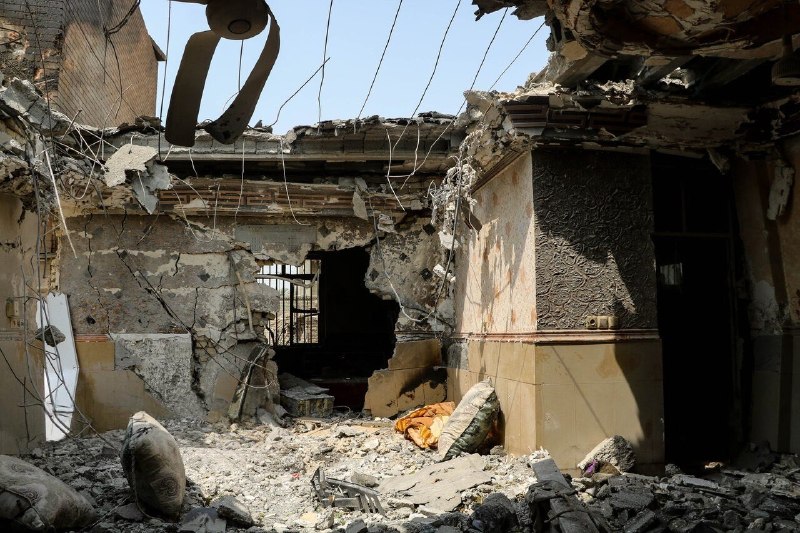
Late on the afternoon of 24 June 2026, somewhere over the continental United States, Donald Trump was telling reporters that the war with Iran was going very, very well. We are winning by a lot, he said at roughly 17:29 UTC. Iran is making very big concessions. Two hours later, the framing tightened: Iran is being very nice. They are agreeing to everything that I want, and they have to. Otherwise we just go back and do what we have to do. The remarks, captured on the cabin microphone of Air Force One and circulated by Clash Report and Disclose TV within minutes, were a striking blend of victory lap and threat — delivered, by his own description, while a kinetic campaign against the Islamic Republic was still active.
The thesis those two statements put into circulation is that a diplomatic off-ramp is being constructed in real time, on Trump's terms, with Tehran moving toward a deal that the administration can credibly present as a victory. The problem with that thesis is not that it is implausible on its face. Presidential pressure on a sanctions-battered economy has produced concessions before. The problem is the gap between the language coming off Air Force One and the language coming out of every other part of the US government — the oil market, the domestic price watchdog, and the Iranian side itself.
The presidential frame: a concession machine in motion
The optics from the presidential compartment on 24 June were unambiguous. Trump delivered three distinct claims within roughly two hours, each more declarative than the last. At 17:29 UTC, as carried by Clash Report and corroborated by OSINT Live, he asserted the war was going very well and that we are winning by a lot. By 18:33 UTC, the framing had shifted from battlefield supremacy to negotiation leverage: Iran is agreeing to everything that I want, and they have to. Otherwise we just go back and do what we have to do. At 17:31 UTC, in remarks about immigration policy that also touched on the broader political mood, he framed the domestic stakes in civilisational terms — they want a lot of communists to come in — language that signalled the White House is not yet in a deal-making register as much as a posture-maintaining one.
The sequencing matters. Concession talk in a presidential statement is one thing; concession talk that pairs a happy-face diplomatic narrative with an explicit return-to-war conditional is another. It is closer to an ultimatum than to an agreement in principle. Whether that reflects negotiating instinct or simply the rhythm of a president who speaks in absolutes is one of the genuinely open questions of the moment.
The market frame: oil is not convinced
The most useful counter-narrative is not coming from the Iranian foreign ministry, which has predictable incentives to project strength. It is coming from the petroleum spot market and from the White House's own domestic price rhetoric. The BBC reported earlier on 24 June that Trump had announced a federal probe into petrol price gouging claims — a move that would be incoherent if global benchmarks were already falling in response to a deal the administration controlled. The framing inside the BBC report is delicate: global oil prices have fallen but remain higher than before the Iran war. In other words, the market has priced some de-escalation in. It has not priced in a settlement.
That gap — between the presidential claim of decisive US advantage and the residual risk premium sitting in Brent and WTI futures — is itself a piece of information. Energy traders are not ideological actors; they price probability. The fact that they have not yet treated the president's remarks as a credible deal signal suggests that those remarks, on their own, are not enough to move serious capital. Indian commentary captured in the Firstpost thread on the same day used the phrase "new deal or illusion" to describe exactly this gap between Washington's rhetoric and the underlying economic picture. Firstpost's framing — that the Iranian economy is at an economic crossroads and any deal is currently as much illusion as substance — captures how non-Western financial press is reading the moment.
The structural frame: coercive bargaining without a negotiating table
What this moment resembles, in plain editorial terms, is the oldest pattern in coercive diplomacy: a stronger party escalates economically and militarily, then waits for the weaker party to bend, then claims the bending as a victory. The pattern works when the stronger party's escalatory steps are credible, when the weaker party's internal costs are high enough to force compromise, and when there is a venue — a third-party mediator, a formal channel, a working group — in which the compromise can be codified.
The third leg of that stool is the one that is currently missing. The president is publicly claiming Iranian concessions. No channel has been named. No Iranian negotiator has been identified. No text has been leaked. The "everything that I want" formulation is, in diplomatic terms, the language of unilateral demand, not of joint drafting. That does not mean a deal is not coming. It means the deal that the White House is currently describing exists, at the moment of speaking, as a presidential narrative rather than as an agreement.
This matters because in the modern sanctions-and-strike economy, the market does not move on narrative alone. It moves on documents, on shipping manifests, on banking compliance letters, on the actual unfreezing of escrow accounts. Until those appear, the residual premium in oil is the market's honest assessment that the current talking points are reversible on a single tweet.
The Iranian frame: state media, signal and noise
The sources available to this publication for direct Iranian reaction on 24 June are limited to the Firstpost India synthesis and the wire imagery from the broader conflict. Iranian state outlets have, throughout this period, alternated between defiance framing and selective openness to de-escalation, depending on which faction of the security establishment is being quoted. What can be said with the sourcing available is that there is no public Iranian confirmation, as of the UTC window covered here, that the concessions Trump is claiming are actually on the table in Tehran. Iranian-aligned commentary in regional press has, in earlier phases of the conflict, framed any US negotiating posture as a precursor to renewed escalation once domestic US political pressure subsides — a reading the White House's own conditional rhetoric does little to dispel.
The honest assessment is that until an Iranian foreign ministry briefing or a named Iranian negotiator confirms substantive movement on a nuclear file, an enrichment-cap discussion, or a sanctions-release schedule, the "very big concessions" claim rests on the testimony of a single principal. That is not unusual in high-pressure negotiations — but it is also not the same thing as a deal.
Stakes: who wins and who loses if the gap closes, or doesn't
If the gap between presidential rhetoric and a real, codified agreement closes in the next thirty to sixty days, the beneficiaries are clear. US consumers, whose petrol bills are the political pressure Trump is currently addressing through the gouging probe, would see meaningful relief at the pump. The Iranian rial, which has been under sustained pressure through the sanctions regime, would find a floor. Regional Gulf states, heavily exposed to both the war's energy-supply risk and Iran's capacity for retaliatory disruption, would regain predictability in their export logistics. A demonstrable diplomatic win would also consolidate Trump's domestic political position heading into a midterm cycle in which the immigration-and-communism frame he invoked at 17:31 UTC suggests the campaign message is already being built around cultural grievance rather than around foreign-policy triumph.
If the gap does not close — if the Iranian side cannot or will not deliver the concessions the White House is publicly claiming, and the conditional "go back and do what we have to do" is triggered — the costs concentrate in three places. The US consumer, already paying the gouging-probe tax, would face the full re-imposition of the wartime premium. Iran's civilian economy, already under severe strain, would absorb a further escalation cycle. And the credibility of US coercive bargaining as a strategy — the idea that economic and military pressure produces predictable diplomatic yield — would take another hit in the long ledger of post-2018 sanctions episodes. That credibility loss would extend well beyond Iran, into every other sanctions file Washington is currently running, from Venezuela to Russia to North Korea.
What remains genuinely uncertain
Three things the available sources do not settle. First, the existence of any actual back-channel between the two governments in the window covered here — Trump's remarks are consistent with there being one, but also consistent with there not being one and the president simply declaring a desired outcome. Second, the specific concessions being claimed, if any. "Everything that I want" is not a list. Without a list, the market cannot price, allies cannot calibrate, and Iranian domestic politics cannot absorb. Third, whether the Pentagon, the State Department, and the intelligence community are all reading from the same sheet music as the presidential compartment. The sources here do not include any senior administration official, uniformed or civilian, publicly corroborating the "winning by a lot" framing on the record. That silence is itself a data point — but a soft one, and one the next seventy-two hours of reporting will either harden or dissipate.
The story, in other words, is less about whether a deal is coming than about whether the language coming out of Air Force One on 24 June 2026 will be borne out by documents, by verified Iranian concessions, and by an oil market that, for now, is not yet ready to call it a victory.
Desk note: Monexus has framed this piece around the gap between presidential rhetoric and market behaviour, rather than the question of who is winning the war, because the wire coverage on 24 June — BBC's petrol-gouging report, the Firstpost synthesis, and the Telegram-captured remarks — gives us more traction on that gap than on battlefield claims. The Iranian-side sourcing in this article is necessarily thin; readers should treat direct Iranian confirmation of any concession as not yet established.
Wire provenance
This editorial synthesis draws on the following public wire/social posts:
- https://t.me/ClashReport/
- https://t.me/disclosetv/
- https://t.me/FirstpostIndia/
- https://t.me/ClashReport/
- https://t.me/osintlive/
Follow the event.
These dated source records provide context. They do not retrospectively verify this archive article.
Separate what the nuclear watchdog reported from what it could not determine after the June 2025 strikes.