Trump's Iran moment: a self-congratulatory strike, an oil-gouging order, and a fund that the US says it will control
Three signals in 24 hours — a self-congratulatory claim of neutralising Iran's nuclear programme, a directive to the Justice Department over pump prices, and a demand that any unfrozen Iranian funds be spent on US goods — sketch a transactional architecture that rewires the deal around American leverage.
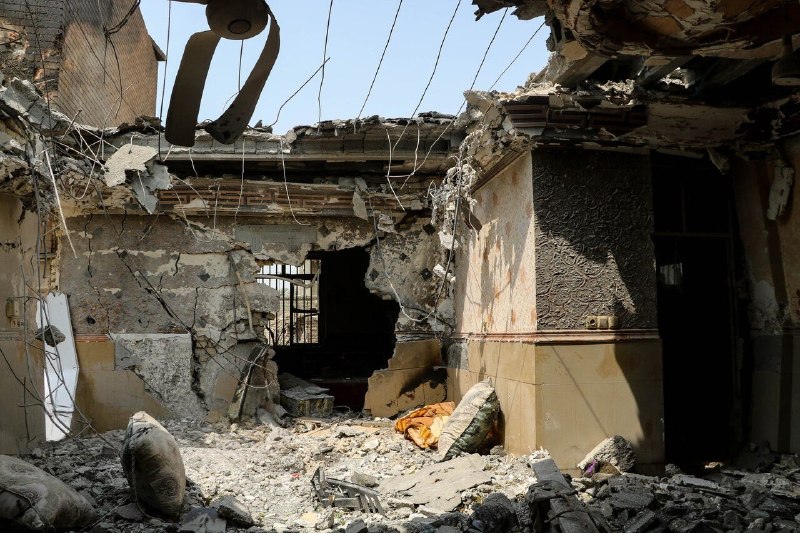
At 07:39 UTC on 24 June 2026, a channel that closely follows the White House posted footage of President Donald Trump speaking the previous day at a truck manufacturing plant. The substance, in the channel's telling, left little that needed unpacking: Trump framed the outcome of the latest US-Iran confrontation as a personal victory, a position he reiterated in a separate post at 08:01 UTC in which he thanked himself for "neutralising the Iranian nuclear threat." By 07:20 UTC, a Reuters wire had added a second, more prosaic front to the same news cycle: Trump said he had instructed the US Department of Justice to look into oil companies for not lowering gasoline pump prices in line with falling crude costs, accusing them of "gouging" consumers. Later in the day, at 15:36 UTC on 23 June, the prediction market Polymarket captured a third, more structural claim — that any Iranian funds unfrozen as part of a settlement would be "controlled by the U.S.A." and used only to purchase US goods.
Three signals in roughly twenty-four hours. Taken together, they do not describe a normal press cycle. They describe a transactional architecture being sketched in real time: military leverage converted into a self-administered claim of triumph, a populist strike at domestic fuel margins, and a design for the financial plumbing of any thaw that explicitly routes Iranian money through American vendors. Whether each piece is a real policy or a negotiating posture is the question this publication is asking.
The self-administered victory lap
The 08:01 UTC post from the Abu Ali Express channel reproduces the most arresting formulation of the moment. Trump, the channel reports, "congratulates himself — and thanks himself for neutralizing the Iranian nuclear threat." The phrasing matters because it collapses the usual division of labour between a head of state and his press operation. There is no attribution to an unnamed senior official, no third-party "according to people familiar." The president is the source, the spokesman and the recipient of the credit. The 07:39 UTC English-language version of the same channel provides the stage: a truck manufacturing plant, an audience the channel suggests did not need further explanation. The video frames the Iran question as settled, and the settlement as a function of personal will.
For a reader in Washington, Tehran or Dubai, the operational question is what "neutralising" actually means. The source items do not specify whether the claim refers to strikes on nuclear infrastructure, the disruption of a specific facility, the collapse of an enrichment programme, or a political deal that has paused work in exchange for sanctions relief. The channel-level reporting is a recording of the claim, not a forensic account of what was struck or what was deferred. Any reading of the moment that depends on the underlying physical reality of Iran's nuclear programme — how much enrichment capacity remains, what has been destroyed, what has been dispersed — has to be sourced elsewhere. The Abu Ali posts, on the evidence here, are documenting the framing, not verifying the substrate.
That distinction is not pedantic. Self-congratulatory presidential rhetoric is part of the public record; the factual basis on which the rhetoric rests is a separate ledger, and the two are routinely confused in the first twenty-four hours of any kinetic episode. This publication is flagging the gap rather than collapsing it.
The pump-price directive
The Reuters wire at 07:20 UTC is the day's only item grounded in a named outlet with a stated attribution chain. Trump, the wire reports, said he instructed the Department of Justice to look into oil companies that have not lowered gasoline pump prices in line with falling crude costs, and accused them of "gouging." The mechanism — Justice Department inquiry — is consistent with a populist playbook that has surfaced periodically since the 1970s, in which a White House uncomfortable with retail fuel prices uses antitrust or consumer-protection language to pressure refiners and retailers, even when the gap between crude and pump prices has structural explanations (refining capacity, regional distribution, taxes, retail margins).
The political logic is straightforward. Pump prices are a household-level issue with disproportionate salience, and the gap between a falling crude benchmark and a stubborn retail number is the kind of discrepancy that lends itself to a "someone is taking a cut" narrative. The policy logic is more equivocal. A Justice Department inquiry does not by itself change the price at the pump; it can change the political weather around the price. The sources do not specify which companies are under review, what statute the inquiry would invoke, or what the expected timeline is. The wire, in other words, is reporting a directive, not a case.
For the oil industry, the predictable response is a combination of compliance signalling and quiet pushback — a public note that refining margins are tight, that retail prices reflect a stack of costs beyond crude, and that the crude-to-pump gap is a familiar artefact of the US fuel market. For the White House, the directive is a way of inserting itself into a story it does not directly control. The Iran deal, on the evidence here, is upstream of the oil price; the pump-price directive is downstream of it. The two are connected by politics more than by mechanism.
The Polymarket signal and the architecture of unfrozen funds
The third thread — Polymarket's 15:36 UTC post on 23 June — is the most structurally interesting of the three, because it is the closest the day's news comes to a public statement of the financial design of any settlement. Trump, the post reports, says unfrozen Iranian funds will be "controlled by the U.S.A." and used only to purchase US goods.
That is a specific claim with a specific shape. It is not "sanctions will be lifted." It is not "Iran will receive access to its reserves." It is: Iran receives access to a quantity of its own funds, on terms where the United States controls the disposition of those funds, and the counterparty for the resulting spend is a US exporter. The mechanism implied is some combination of escrow, dedicated accounts, letter-of-credit arrangements, and end-use verification — the same architecture that has been used, in different forms, for Iraqi oil-for-food, for Afghan central bank balances frozen in 2021, and for a series of hostage-and-detainee deals in which release is tied to confirmed transfer of funds to a specified beneficiary.
Two consequences follow. First, the United States would be in the position of a clearing house for a portion of Iran's external trade, which is an unusual posture for a sovereign and a heavy operational lift for the Treasury and Justice departments that would administer it. Second, the claim collapses the distinction between sanctions relief, which the Iranian side frames as a return of sovereignty over its own assets, and managed access, which the US side can frame as a controlled concession. Both readings are inside the same sentence.
The Polymarket post is short. It does not specify the dollar amount of the funds in question, the legal authority under which they would be held, the mechanism by which an Iranian counterparty would receive goods, or the dispute-resolution regime if the two sides disagree over what counts as a US good. The post is the seed; the architecture is yet to be built.
What the framing leaves out
There is a counter-narrative worth naming, and it is not the reflexive one. A reader in Tehran looking at the same three signals sees a president claiming a win on a battlefield that is not yet a battlefield, threatening his own oil industry on the way to the podium, and announcing a financial arrangement that treats Iranian money as American money. From that vantage, the "deal" is not a deal at all. It is a structure in which the United States takes credit for restraint, takes a cut of the resulting flow, and retains the right to define what counts as acceptable use. The Iranian negotiating position, on the evidence available, has not been articulated in the source items reviewed here. That absence is itself a signal: the framing of the moment is being set in Washington, in English, and in formats (Truth Social-adjacent channels, wire copy, prediction markets) that travel well into Western news feeds and poorly into Farsi-language media.
A second counter-narrative, more technical, sits inside the oil question. The gap between crude and pump prices is not exclusively a function of refiner or retailer behaviour. US fuel markets carry a structural premium for refinery configuration, summer-grade transitions, regional pipeline constraints, and federal and state taxes. A Justice Department inquiry that targets conduct rather than structure is unlikely to move the retail number by more than a rounding error. If the goal is to give consumers a number they can recognise, the mechanism on display is the wrong tool; if the goal is to give the president a story he can tell about the number, the mechanism is fit for purpose.
The structural frame
None of this is novel in form. The pattern is a familiar one: a kinetic or quasi-kinetic episode is converted, at the speed of a press cycle, into a presidential narrative of personal resolution; the domestic economic consequences of that episode are then managed through a separate, populist-fronted channel; and the financial settlement, if there is one, is constructed so that the United States remains the clearing party, the gatekeeper and the named beneficiary of any restored flow. The three pieces — the self-administered victory, the pump-price directive, the controlled-funds claim — are not three separate policies. They are three pressure points on the same negotiation, each addressed to a different audience: the domestic base, the US consumer, and the Iranian counterpart.
What is distinctive in the present moment is the speed at which all three are being aired in public, on channels that are themselves part of the negotiating theatre. The Abu Ali posts, the Reuters wire, the Polymarket snapshot are not just reporting the negotiation; they are instruments of it. A prediction-market post on the terms of a deal is, among other things, an attempt to lock in a public expectation of those terms, which is itself a negotiating asset.
Stakes and what to watch
The actors with the most at stake are the ones least visible in the source items. Iranian negotiators, if and when the public posturing gives way to a private exchange, will be weighing whether any structure that preserves US control of Iranian money is a structure they can sign. US refiners and retailers will be calculating the cost of being named in an antitrust or consumer-protection inquiry against the cost of being out of step with a White House that has shown a willingness to use the Department of Justice as a price-signal tool. Treasury and Justice, if the controlled-funds architecture becomes operational, will inherit an administrative burden that does not exist in any current sanctions regime at this scale. And consumers, in the United States and in any country whose fuel market is sensitive to the Brent-WTI spread, will be reading pump prices against a backdrop of falling crude that the sources suggest is not yet flowing through.
What remains uncertain, on the evidence reviewed here, is the physical and operational basis of the "neutralisation" claim, the specific instrument the Justice Department will use against the oil companies, and the dollar amount, legal authority and end-use verification regime that would attach to the unfrozen funds. Each of those is a separate reporting stream, and each is the place where a real story can be told, rather than a real story being claimed.
This publication treats the 24 June 2026 cycle as three signals inside a single negotiating architecture, rather than three separate stories — and treats the self-congratulation as a data point about framing, not as a conclusion about the underlying fact.
Wire provenance
This editorial synthesis draws on the following public wire/social posts:
- https://t.me/abualiexpress
- https://t.me/englishabuali
- https://en.wikipedia.org/wiki/Iran%E2%80%93United_States_relations
Follow the event.
These dated source records provide context. They do not retrospectively verify this archive article.
Separate what the nuclear watchdog reported from what it could not determine after the June 2025 strikes.