Trump says Iran will forgo Hormuz tolls, floats release of Iranian funds for US farmers
President Donald Trump claims Tehran has agreed not to levy transit fees in the Strait of Hormuz and that Iran's frozen funds will be redirected to American agricultural producers, in a rapid-fire pair of statements his own administration has yet to detail.
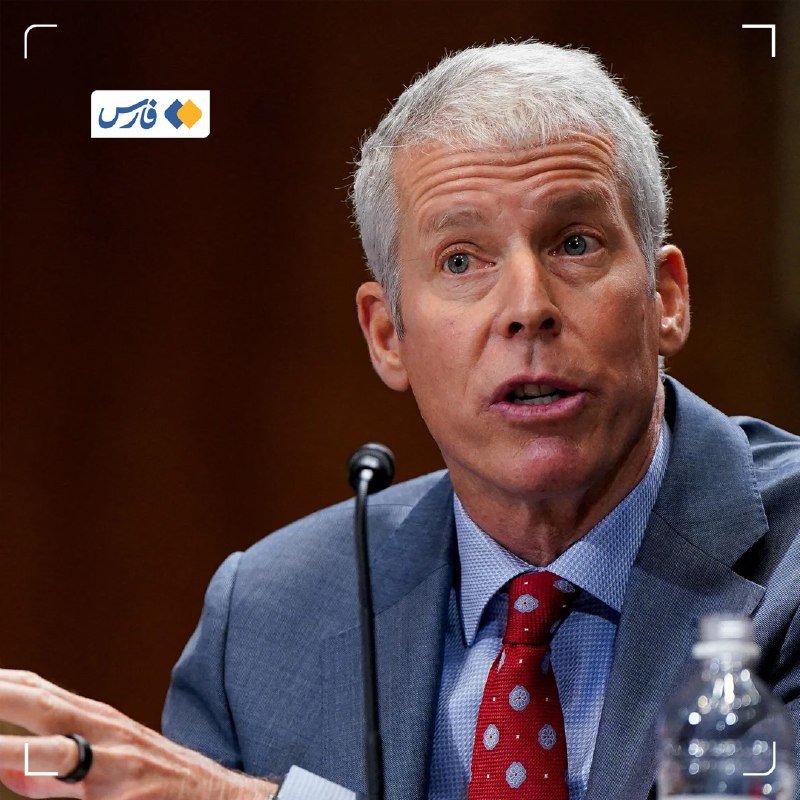
President Donald Trump announced on 24 June 2026 that Iran had informed the United States it would not impose tolls on commercial shipping in the Strait of Hormuz, framing the assurance as a diplomatic concession delivered directly to Washington. Reporting by Lebanon-based outlet The Cradle, carried on its Telegram channel at 14:20 UTC, logged the statement alongside a parallel claim from Trump that Iranian funds held under US sanctions would be released and redirected to American farmers and ranchers. The remarks, delivered in the cadence of a Trump social-media post rather than a formal White House readout, are the latest signal that the two sides are attempting to convert the still-unannounced nuclear understanding into a wider economic exchange — one in which maritime security, frozen assets, and US domestic constituencies are being bundled into a single transactional package.
The pairing matters. Hormuz is the narrow corridor through which the bulk of Gulf crude reaches Asian and European refineries; any unilateral levy on transit traffic would have functioned as a tax on the global oil trade and, in effect, a sanction imposed by a sanctioned state on the system that finances it. Iran's reported decision to forgo that lever — if it holds — is less a goodwill gesture than a recognition that choking the strait would isolate Tehran from the very customers whose demand sustains its budget. The accompanying promise to repurpose Iranian funds for US agricultural producers, meanwhile, transforms a sanctions-relief question into a politically resonant domestic one: money that was previously frozen as punishment becomes money that is recycled, in Trump's telling, to a voting bloc already strained by trade frictions and tighter margins.
What Trump actually said, and what was not said
The two statements were posted within a window of roughly an hour on 24 June 2026. The first, captured by The Cradle's Telegram feed at 14:20 UTC, asserts that Iran has told the United States it will not impose tolls in the Strait of Hormuz. The second, captured by Iran's Fars News Agency Telegram channel at 13:14 UTC, reproduces Trump's claim that Iranian funds will be released for the benefit of American farmers and ranchers, and includes a denigrating reference to "false and seditious reports by fake media" — language consistent with Trump's framing of any skeptical coverage. Fars, a news outlet affiliated with Iran's Islamic Revolutionary Guard Corps, treated the statements as worth carrying verbatim, which suggests Tehran regards the announcements as advancing its own narrative of diplomatic parity with Washington.
What neither statement includes is detail. No mechanism for the toll waiver was named; no specific Iranian revenue source was identified as a substitute for the waived transit fees; no figure was placed on the funds to be released; no timetable was offered for either the maritime arrangement or the disbursement. The White House did not, as of the time of reporting, publish a formal readout, and the State Department did not put out a corresponding briefing cable that Monexus could independently verify. The result is a pair of claims that operate, for now, as headline-level assertions rather than as documented policy.
Reading the framing — and the counter-frame
The dominant Western wire frame in such moments is that Iran is yielding under pressure: sanctions have bitten, the strait is patrolled, and Tehran has chosen accommodation over escalation. The structural reality is more uneven. Iran retains the capacity to disrupt Hormuz traffic through fast-boat and mine warfare even without a formal toll regime, and the toll itself would have been a novel assertion of sovereignty rather than a continuation of past behaviour. Foregoing it costs Tehran less than the diplomatic price of triggering a coalition naval response, and it preserves the option of more covert interference. The release of Iranian funds, for its part, would represent a concession from Washington that the existing sanctions architecture is, at least partially, negotiable on Washington's own terms — a precedent that extends beyond this negotiation.
A second read, more sympathetic to Iran's negotiating position, is that Tehran has secured a managed re-entry into the dollar-based financial system without making the unilateral concessions that the Trump administration initially demanded. Under that reading, the no-tolls pledge is the price Iran agreed to pay for the larger prize of partial sanctions relief, and the funds earmarked for US farmers are a politically marketable way for Trump to present what is, in effect, a partial return of frozen Iranian liquidity. The structural dynamic is one in which a sanctioned state is bargaining not from weakness but from the simple fact that it controls the geographic chokepoint the global economy cannot route around.
Structural frame — what this sits inside
The episode belongs to a wider pattern in which the architecture of dollar-based sanctions is being tested at its edges. For two decades, the United States has used its control over correspondent banking and oil-settlement systems to enforce policy on adversaries; the cost of that leverage has been the slow construction of alternative payment rails by the same states under pressure. A negotiated arrangement in which Iranian funds are routed back into the US financial system — even under the cover of an agricultural transfer programme — is not a defeat of that system so much as a confirmation that it remains the terrain on which the bargaining happens. The strait sits inside the same arrangement: shipping, insurance, and oil pricing are denominated and cleared through Western financial centres, and Iran's forbearance is a recognition of that fact as much as a diplomatic concession.
There is also a domestic-political layer that the dual announcement makes unusually explicit. Trump has linked the Iranian funds to American farmers, a constituency that has been squeezed by his own tariff regime and by the broader reshuffle of global agricultural trade. The framing converts a foreign-policy file into a domestic-distribution story, in which the question "whose money is this and where does it go" becomes a proxy for "who wins from the deal." That is a familiar Trump-era pattern: foreign commitments rendered as delivery to a named domestic audience.
Stakes and what remains unverified
If the statements hold up under scrutiny, the immediate beneficiaries are the Iranian state, which regains partial access to liquidity, and the Trump administration's political coalition, which gains a deliverable to point to. The losers are the credibility of the sanctions regime as a coherent tool — every negotiated exception narrows the line between enforcement and bargaining — and any party, including Gulf neighbours and major oil importers, that relies on the implicit guarantee that Hormuz traffic is governed by stable, transparent rules rather than by ad hoc bilateral understandings between Washington and Tehran. Asian importers, in particular, will watch whether the toll-free commitment is durable or whether it can be revoked as a pressure tool in a future round.
What remains unverified, as of the time of writing, is the actual operational substance of both commitments. Iran's foreign ministry has not, in the items available to Monexus, published a parallel statement matching Trump's; Fars's reproduction of the Trump remarks does not constitute Iranian confirmation. No correspondent-bank mechanism for the farmer-directed transfer has been disclosed. The Strait of Hormuz toll question, meanwhile, has historical precedent in Iranian domestic debate but no implementing instrument has been published by either side. The framing of the announcement, on both sides, is doing more work than the substance — and a reader should treat the headlines as a marker of where the negotiation is headed, not as a confirmed outcome.
How Monexus framed this: where the wire cycle led with Trump's social-media posts and treated them as standalone claims, Monexus paired the Hormuz statement with the parallel farmer-funds announcement, sourced the Iranian-language coverage alongside the English-language coverage, and flagged the absence of an Iranian foreign-ministry readout as the central evidentiary gap.
Wire provenance
This editorial synthesis draws on the following public wire/social posts:
- https://t.me/thecradlemedia
- https://t.me/farsna