Trump's Iran gambit: nuclear inspections, blockade whispers, and a market betting on escalation
A drone hit a ship, Trump said 'you'll find out,' and the U.S. struck Iran. Behind the choreography sits a deeper bet: that ambiguity is leverage, inspections keep slipping, and the market is already pricing the next move.
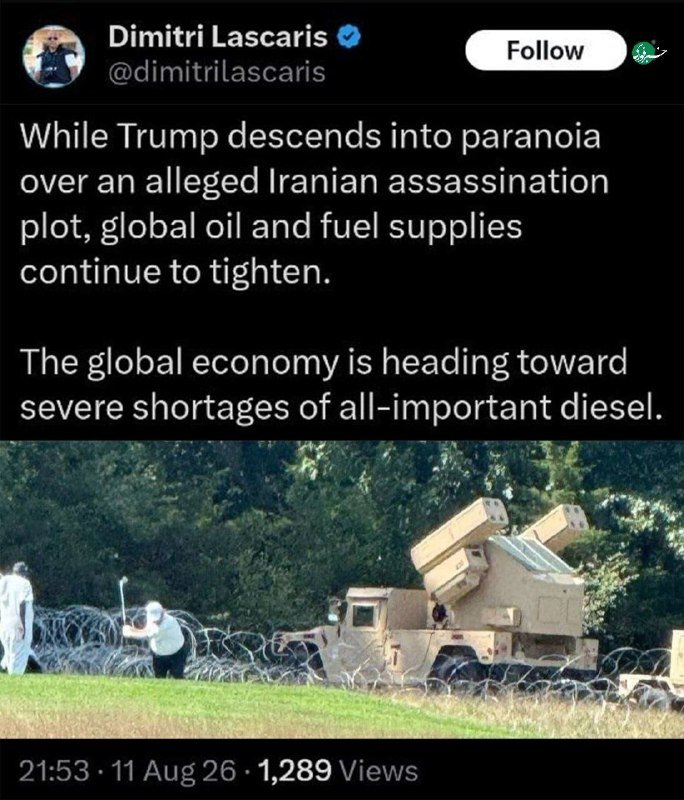
A drone hit a cargo ship in the Strait of Hormuz on Thursday. By Friday afternoon Washington time, Donald Trump was on camera saying the strike violated a ceasefire and promising, when asked what came next, that the United States would respond. Hours later, the U.S. struck Iran.
What sits behind that sequence is a posture, not a press conference: an American president publicly gambling that ambiguity itself is leverage. On Friday, IAEA Director General Rafael Grossi was still publicly pressing for the return of inspectors to Iranian nuclear sites, a reminder that the diplomatic scaffolding around Tehran's atomic file has been paper-thin for months. At the same time, a separate Israel-Lebanon framework agreement, whose full text circulated on Friday, commits both sides to a phased Israeli withdrawal and a formal end to the state of war, a parallel track that suggests the administration is trying to compress several Middle Eastern flashpoints into a single negotiation window. The contradiction is the point: de-escalation with Beirut, escalation with Tehran, all under one presidential banner.
What Trump actually said
The triggering incident was the drone attack on a commercial vessel in the Strait of Hormuz, which Trump publicly described on Friday as a ceasefire violation, the framing a France 24 dispatch attributed directly to the president. Asked by a reporter whether the U.S. would respond, Trump replied "you'll find out," a video clip later circulated by the account @sprinterpress and amplified by OSINTdefender. Within hours, U.S. forces had struck Iran, and France 24 was reporting the operation as a direct response to the cargo-ship drone strike. Epoch Times carried the same presidential characterisation in real time.
It is worth pausing on the choreography. A single presidential remark, recorded on video, set the predicate for a kinetic action whose scope, targets, and authorisation are still being filled in by secondary reporting. That is the structure: assertion first, documentation later. The administration has spent months telegraphing that it considers any Iranian action in or near the Strait of Hormuz a casus belli; the question has never been whether Washington would retaliate, but on whose framing the retaliation would be sold. Friday gave the answer.
The market that is not waiting for confirmation
While cable news chased the strikes, Polymarket, the crypto-based prediction platform, was already trading on the implied trajectory. Contracts tied to the probability of further U.S. military action against Iran moved sharply higher after Trump's remarks and held the bid into the weekend. Read that carefully. Informed money is not waiting on the IAEA, not waiting on a UN Security Council vote, not waiting on a formal Article 51 letter to Congress. It is pricing the next escalation as the base case.
That price action is itself a signal worth dissecting. Prediction markets are not polls and they are not intelligence products; they are aggregates of bets placed by participants with money at risk. When they move on a single presidential soundbite, they are telling the reader what the marginal informed actor already believes about policy intent. In this case, the bet is that the cargo-ship strike will not be the last word. That is not confirmation of anything; it is a forecast that today's escalation is the opening move, not the closing one.
The inspections file keeps slipping
Behind the firing-line footage, the more durable story is the IAEA's slow loss of access to Iran's nuclear sites. Grossi's Friday appeal for inspectors to be allowed back was a restatement of months of quiet pressure, not a new demand. The longer inspectors stay out, the harder it becomes to distinguish a civilian programme from a breakout one, and the easier it becomes for any administration, this one or the next, to justify action on the basis of unverifiable intelligence. Washington does not need certainty about Iranian enrichment levels to strike; it needs the absence of certainty to be publicly legible, and Friday's news cycle made that absence the backdrop.
This is where the Lebanon framework complicates the picture. If the Israel-Lebanon deal holds through its phased withdrawal, the administration will be able to claim it has successfully reduced one front while opening another, a sequencing argument that will be made in op-eds and White House readouts within days. The harder question is what happens if the Iran track escalates faster than the Lebanon track consolidates. Two parallel negotiations, two different time horizons, one president with a documented preference for personal announcement over multilateral process.
What the record actually shows
Friday's reporting is thin in the way first-day reporting always is. The strikes have been attributed to the U.S. in wire copy from France 24, sourced to presidential statements and to British military confirmation of the cargo-ship incident the previous day. The targets, the ordnance, the legal rationale, and the casualty picture inside Iran are not yet on the public record in the sources available. Readers should treat the gap as the story: the U.S. strikes Iran because the president said so, on video, after a drone hit a ship, in a waterway through which a meaningful share of the world's seaborne oil still moves.
Stakes for the next ten days
Three clocks are now running. First, Iran's response: Tehran can absorb a single strike and recalibrate, or it can treat the action as a crossing of a threshold it has signalled it would not tolerate. Second, oil markets: any sustained disruption in the Strait of Hormuz feeds directly into refining margins and freight rates, and the prediction-market move on Friday suggests traders are already positioning for the worse case. Third, the inspections file: if the IAEA is still outside Iranian facilities when the Security Council next meets on the nuclear question, Washington's diplomatic cover thins, and the pressure builds on Grossi to choose between public criticism and quiet cooperation with a White House that has already shown it prefers the latter.
None of this is settled. But the market is not waiting to find out, and that is the lede the cable networks are likely to miss while they replay the strike footage on a loop.
Follow the event.
These dated source records provide context. They do not retrospectively verify this archive article.
Separate what the nuclear watchdog reported from what it could not determine after the June 2025 strikes.