The allies who didn't show up: Trump's NATO complaint and the 5,000-sortie footprint of a one-power war
Donald Trump told NATO's secretary general that he would have liked allied help against Iran. The general, in the same room, had just acknowledged the air war ran almost entirely from American engines.
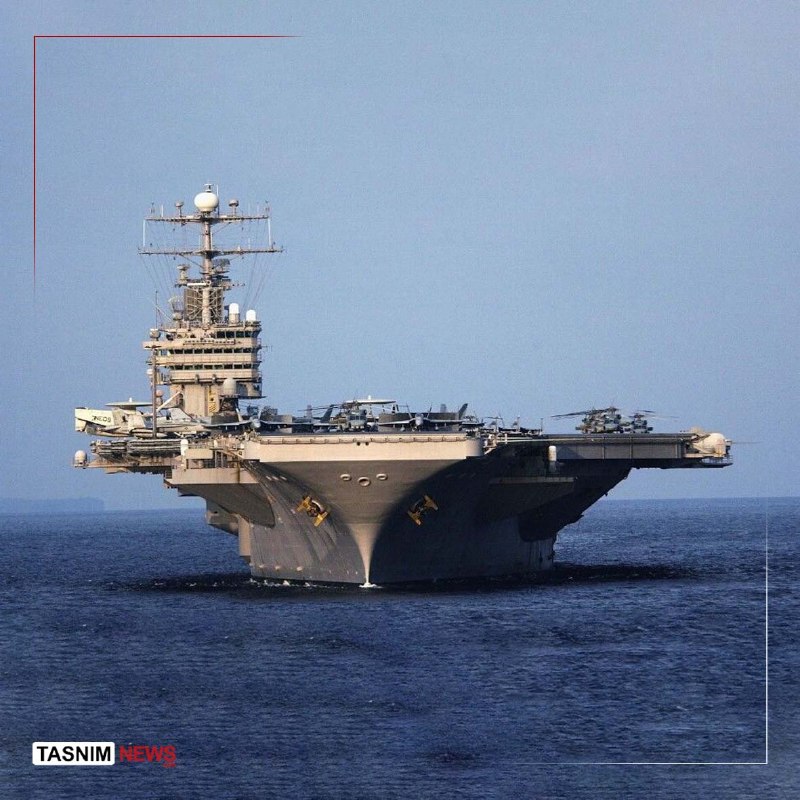
By the time Donald Trump sat down with NATO Secretary General Mark Rutte on the afternoon of 24 June 2026, the air war against Iran had already produced a single, awkward fact that both men had to navigate in the same room. According to Iran's Al-Alam Arabic channel, Rutte acknowledged that roughly 5,000 American air sorties had been launched from bases in NATO territory during the campaign. The number landed like a confession wrapped in a courtesy: the transatlantic alliance had provided the geography, the runways, the fuel, and the airspace management. The bombs, the flight hours, the risk, and the politics were Washington's.
In remarks reported by both the English and Persian services of Iran's Tasnim news agency, Trump used the meeting to register a complaint he has now made several times this year. "I would have liked our allies to help, but they didn't," Trump said, per Tasnim's English wire, adding that "it was good that the allies showed their willingness to help, even if we didn't need." The Persian version of Tasnim sharpened the framing: Trump "again criticized his western allies for not accompanying America against Iran." The choreography of the two statements — American grievance and allied gratitude, delivered in sequence — tells most of the story this article has to tell.
This is not a row about who flew the missions. No European air force has publicly claimed sortie credits in the Iran operation, and the available reporting does not name one. The row is about who owns the political exposure of a war that has now run long enough, and cost enough, that the bill is being passed around a NATO table. The 5,000-sortie figure, even if the precise count drifts in later official tallies, settles the operational question: this was a US air campaign staged from allied soil, with allied acquiescence, and very little allied participation in the cockpit.
The complaint, and what it actually says
Trump's gripe is not new. He has spent the better part of a decade arguing that NATO members underspend on collective defence and over-rely on the United States to underwrite the alliance's security guarantees. What is new is the venue. The Iran operation, by any reasonable read of the public record, has been an American-led air campaign from start to finish: planned in Washington, flown by US Air Force and US Navy crews, supported by US Central Command's task-force architecture, and politically owned by the White House. European governments have not been asked to contribute combat air, and have not offered any. The allied contribution has been infrastructural — bases, overflight rights, intelligence, refuelling access, the unglamorous layer of permissions that turns an airbase into a launchpad.
That is exactly the gap Trump is now naming, in a meeting with the alliance's civilian head, on the record. The complaint is not "you didn't drop the bombs." It is "you let me drop the bombs, and you want credit for letting me drop the bombs, and you did not spend the political capital at home to stand next to me while I dropped the bombs." That is a more uncomfortable claim for European chanceries, because it asks a question their domestic politics are not currently set up to answer: do you want a seat at the table of decisions you currently have no intention of sharing the cost of executing?
The 5,000-sortie footprint
The single most important number in the room on 24 June was the one attributed to Rutte by Al-Alam. Five thousand American air sorties, launched from bases inside NATO's treaty area, over the course of a war against a country that shares a border with four NATO members in spirit if not in law — Türkiye to the northwest, the Gulf states to the south, and the wider Caucasus theatre within unrefuelled range.
Five thousand sorties is a heavy operational tempo. It is the kind of number that, in a different decade, would have generated Congressional hearings in Washington, parliamentary questions in London and Berlin, and at least one front-page in every European capital. Instead, the number was carried, on the day, by an Iranian-state-aligned Arabic channel — not because Iran is the neutral arbiter of transatlantic burden-sharing, but because European wire reporting on the operational details of the Iran war has been thin. European publics know, broadly, that their governments are not at war. They have not been told, in granular terms, what their airspace and their bases have been used for.
That information vacuum is itself the story. An air war of this scale, running out of allied territory, does not get to be politically invisible in the allied capitals whose runways made it possible. The complaint Trump is lodging is, in part, a complaint that the political cover for the war is being consumed almost entirely by Washington.
The European silence, and what it is buying
European governments have reasons for their silence, and they are not all cynical. Several NATO member states have active diplomatic channels into Tehran that they judge worth preserving. Several have sizeable Iranian diaspora communities and live with the domestic-security consequences of any posture change. Several are governed by coalitions that include parties for whom any association with the Iran operation is a guaranteed cost. And several, frankly, would rather not be in the room when the next round of escalation is debated, because the cost of being in the room is high and the upside of staying out is, for now, the absence of Iranian retaliation on European soil.
That is a rational set of reasons. It also produces a steady-state outcome in which the United States does the flying, NATO provides the furniture, and European publics are told, when they are told anything, that the war is happening "with allied support" — language broad enough to mean almost anything and specific enough to mean almost nothing. The 5,000-sortie figure is what "allied support" has actually looked like, in concrete, refueller-orbit terms.
The risk of this arrangement is not theoretical. Iran has, at various points in the past year, signalled that the legal status of strikes launched from neighbouring states is a separate question from the strikes themselves. European capitals have so far been able to claim a useful ambiguity. The longer the air war runs, and the heavier the sortie count grows, the thinner that ambiguity becomes. Trump is, in effect, warning his allies in advance that the ambiguity is not a permanent feature of the arrangement.
What "willingness to help, even if we didn't need" really means
The other half of Trump's reported remark is more telling than the complaint that preceded it. "It was good that the allies showed their willingness to help, even if we didn't need," per Tasnim's English wire. The sentence is a careful piece of public diplomacy. It accepts the allied contribution as real, declines to call it insufficient, and frames the United States as the party that chose to act alone rather than the party that was left to act alone. The phrasing is generous. The underlying signal is not.
A president who wanted to compliment his allies would have said so without the "even if we didn't need" clause. A president who wanted to threaten them would have dropped the "it was good that" opening. Trump has chosen the middle register: gratitude with a receipt attached. The receipt is the 5,000 sorties. The gratitude is the price of continued access to allied bases. Both sides of the exchange know that the next negotiation — over a future Iran operation, over burden-sharing in the next NRF rotation, over a European defence-spending floor — will run on the same ledger.
The structural shape underneath the photo-op
What this episode exposes, in plain terms, is the gap between an alliance that still functions as a logistics network and an alliance that no longer functions as a political community for decisions of this scale. NATO can still provide the runways. It can still provide the overflight rights, the fuel, the AWACS coverage, the maritime escort in the Mediterranean, the diplomatic umbrella at the UN. It cannot, in 2026, provide a shared political decision to go to war against a regional power of Iran's weight — and the consequence is that the United States makes the decision, the alliance provides the platform, and the political ownership of the war sits with the White House alone.
That is not a new problem. It is the problem the alliance has been living with, in various forms, since at least the 2003 Iraq debate, when several European governments concluded that being in the same legal alliance as the United States did not oblige them to be in the same war. Twenty-three years on, the same logic is producing the same outcome, with a different adversary, from a different set of bases, in a different information environment. The difference is that the air war is being run almost entirely from NATO territory, and the NATO secretary general has now put a number on it.
Stakes, and what the next 90 days look like
If the current trajectory continues, three things follow. First, the United States will press, in writing and in public, for European governments to put a flag — operational, not just declaratory — on the air campaign. Expect language about "coalition of the willing" to resurface, and expect European capitals to resist. Second, Iran will continue to test the legal and political distinction between strikes launched from a member state's territory and strikes launched by that member state, with consequences for NATO's collective-defence framing that the alliance's lawyers have not had to think through in two decades. Third, the burden-sharing argument that has been rumbling along the alliance's southern and eastern flanks will acquire a sharper edge, because the new complaint is not about a percentage of GDP — it is about whether the alliance's political ceiling has, in practice, fallen below its operational floor.
What remains uncertain is the durability of the European position. European publics are, at the time of writing, broadly unwilling to be drawn into the Iran operation. They are also broadly unaware of the 5,000-sortie figure. That information gap will not last forever, and when it closes, the politics on the European side of the Atlantic will change. Trump's decision to put the number, and the complaint, on the record in a meeting with the NATO secretary general is, in part, a bet on that closure.
This publication read the available Iranian, Iranian-aligned Arabic, and Iranian-aligned English wires reporting from the Trump–Rutte meeting on 24 June 2026. The 5,000-sortie figure is attributed to Al-Alam's reporting of NATO Secretary General Mark Rutte. Trump's quoted remarks are attributed to Tasnim's English and Persian services. Western wire confirmation of the specific sortie count and the direct quotes had not, at the time of writing, been published; the framing above should be read against that sourcing caveat.
Wire provenance
This editorial synthesis draws on the following public wire/social posts:
- https://t.me/tasnimnews_en/
- https://t.me/JahanTasnim/
- https://t.me/alalamarabic/
- https://en.wikipedia.org/wiki/2026_United_States%E2%80%93Iran_conflict
- https://en.wikipedia.org/wiki/Mark_Rutte
- https://en.wikipedia.org/wiki/North_Atlantic_Treaty_Organization
- https://en.wikipedia.org/wiki/Iran%E2%80%93United_States_relations
- https://en.wikipedia.org/wiki/2026_in_aviation
Follow the event.
These dated source records provide context. They do not retrospectively verify this archive article.
Separate what the nuclear watchdog reported from what it could not determine after the June 2025 strikes.
- https://t.me/tasnimnews_en/
- https://t.me/JahanTasnim/
- https://t.me/alalamarabic/
- https://en.wikipedia.org/wiki/2026_United_States%E2%80%93Iran_conflict
- https://en.wikipedia.org/wiki/Mark_Rutte
- https://en.wikipedia.org/wiki/North_Atlantic_Treaty_Organization
- https://en.wikipedia.org/wiki/Iran%E2%80%93United_States_relations
- https://en.wikipedia.org/wiki/2026_in_aviation