Trump's 'no rush' on IAEA inspectors in Iran tests the limits of a diplomacy already under strain
A reporter's question and a one-line answer on 24 June 2026 reopened the central question of the US-Iran track: whether 'the right time' is a negotiating posture, a delay, or a stand-down.
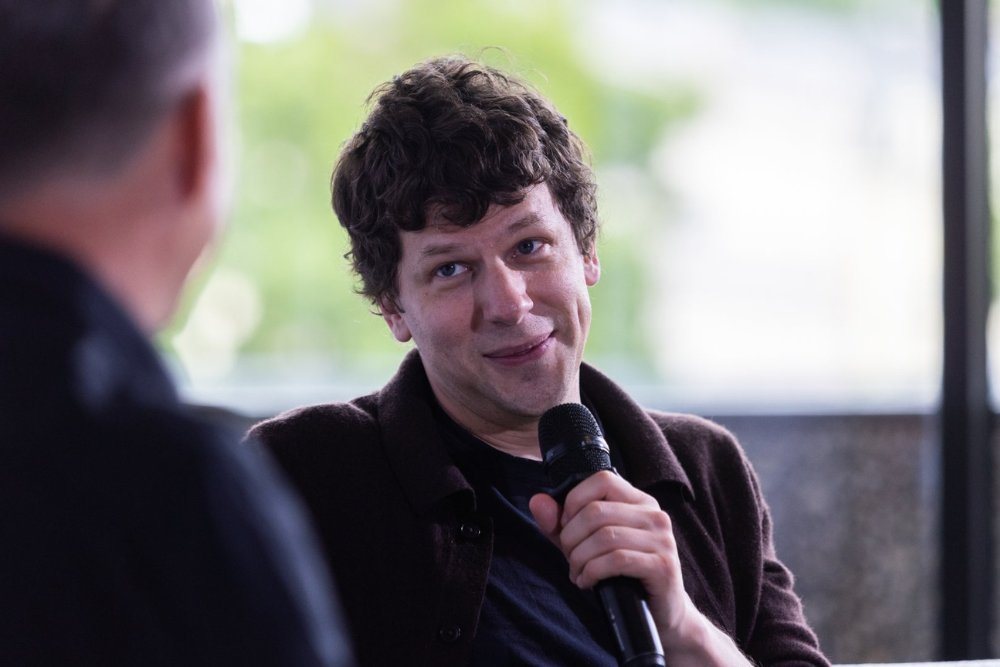
At roughly 09:01 UTC on 24 June 2026, a reporter put a direct question to Donald Trump: when, exactly, will inspectors from the International Atomic Energy Agency (IAEA) be deployed in Iran? Trump's reply, carried in a clip distributed by the Fars-affiliated Telegram channel farsna, was four words. "At the right time. There is no rush."
The brevity of the answer does more work than its length suggests. The IAEA question is the operational core of the US-Iran nuclear track: it is the verifiable, technical, on-the-ground measure of whether a diplomatic arrangement between Washington and Tehran is functioning. A "no rush" from the American side, against a backdrop in which a source close to the Iranian negotiating team has reportedly denied elements of the framing around deployment, is not a policy detail. It is the diplomacy's diagnostic sign.
What was actually said, and on what record
The exchange captured on the farsna channel on 24 June 2026 is short enough to reproduce cleanly. A reporter asks when the agency's inspectors will be deployed in Iran. The US president replies: "At the right time. There is no rush." The clip's caption also flags that the assertion is being made while a source close to the negotiating team has "recently denied" the premise the question presumes.
Three things follow from the exchange. First, the American side is publicly refusing to commit to a deployment calendar. Second, the Iranian side, off-camera, is publicly disputing at least some part of the running narrative. Third, the clip itself has been distributed by an outlet that is structurally part of the Iranian state media ecosystem, which means the framing — including the cut of the exchange, the subtitle choices, and the contextual sentence about denial — has been shaped inside that ecosystem before it reached an English-language audience. None of that disqualifies the clip as evidence. It does mean the article has to treat it as a mediated artefact and not as a neutral transcript.
The counter-narrative from the Iranian side
The most consequential sentence in the caption is the one most readers will skim past: the claim that a source close to the negotiating team has "recently denied" something. The farsna excerpt does not specify what was denied — whether it is the premise that inspectors will deploy at all, the premise that the United States is the party setting the timetable, or some narrower technical point about sites, modalities, or numbers. That ambiguity is itself informative.
Western wire reporting on the US-Iran track over the past quarter has generally assumed an inspector-deployment track as the next concrete deliverable: a defined set of IAEA personnel, a defined set of facilities, and a defined set of access procedures, all of which become the yardstick against which Iran's compliance is measured. If an Iranian source close to the talks is pushing back on that framing — even anonymously, even in a channel whose editorial line favours Tehran — the diplomatic substance is narrower than the public read-out suggests. The "no rush" line from Trump and the denial from the Iranian side are not contradictory. They are the two ends of a gap.
What the structural pattern actually looks like
Step back from the clip and the standard reading is that the United States and Iran are inside a familiar late-stage negotiation: public statements of patience, private disputes about sequencing, and an external verification body — the IAEA, headquartered in Vienna — caught between them. The pattern is not new. The same architecture produced the 2015 Joint Plan of Action, the 2015 Joint Comprehensive Plan of Action, and the 2018 American withdrawal. Each time, the dispute has resolved around the same question: who sets the calendar for inspectors, and on whose definition of "access."
The interesting shift in 2026 is that the calendar is now being publicly described by the American side as unconstrained ("no rush") at exactly the moment when the Iranian side is reportedly contesting the calendar's premise. A negotiating posture of patience can be a gift to a counterpart who needs time, or it can be a stand-down that effectively leaves the verification file in suspension. The two readings are not mutually exclusive, and a careful read of the available material does not let a reader choose between them. What it does say is that the question "when will the IAEA deploy" has stopped being a technical scheduling query and become a political one.
Stakes, and what remains uncertain
If the trajectory continues, three audiences are watching for different things. European capitals and the IAEA secretariat in Vienna are watching for a deployment calendar, because their institutional credibility rests on inspection continuity. Gulf states are watching for the political signal embedded in any deployment, because the same verification architecture that constrains Iran also reassures its neighbours. And a global oil and gas market, already attentive to Strait of Hormuz transit risk, is watching for the next move that would either stabilise or destabilise a price band it has spent eighteen months pricing in.
The honest caveat: the available material on 24 June 2026 is one short clip, distributed by an outlet with a known editorial alignment, with a caption that asserts a denial from a "source close to the negotiating team" without naming the source or specifying what was denied. The clip is real. The exchange is on the record. But the substance that an analyst would need to draw a firm conclusion — the schedule, the sites, the number of inspectors, the modality of access, the chain of command inside the Iranian negotiating team — is not in the available material. The "no rush" line is genuine. Whether it is a tactic, a tell, or a stand-down is the question that the next forty-eight hours of reporting will have to settle.
Desk note: Monexus is running this as a single-source story on a mediated artefact by design. Where Western wire reporting has framed the US-Iran track as a question of inspector deployment timing, the Iranian-side denial embedded in the source is treated here as a co-equal part of the record, with the same caveats about sourcing and channel alignment that any wire piece would carry.
Wire provenance
This editorial synthesis draws on the following public wire/social posts:
- https://t.me/s/farsna
Follow the event.
These dated source records provide context. They do not retrospectively verify this archive article.
Separate what the nuclear watchdog reported from what it could not determine after the June 2025 strikes.