Trump's self-congratulation and Tehran's defiance: a tale of two press conferences
On the same June morning that Donald Trump took credit for neutralising Iran's nuclear programme, Mohammad Bagher Ghalibaf told viewers the era of imposing one's will on independent nations had ended. Both men, in their own way, were claiming victory.
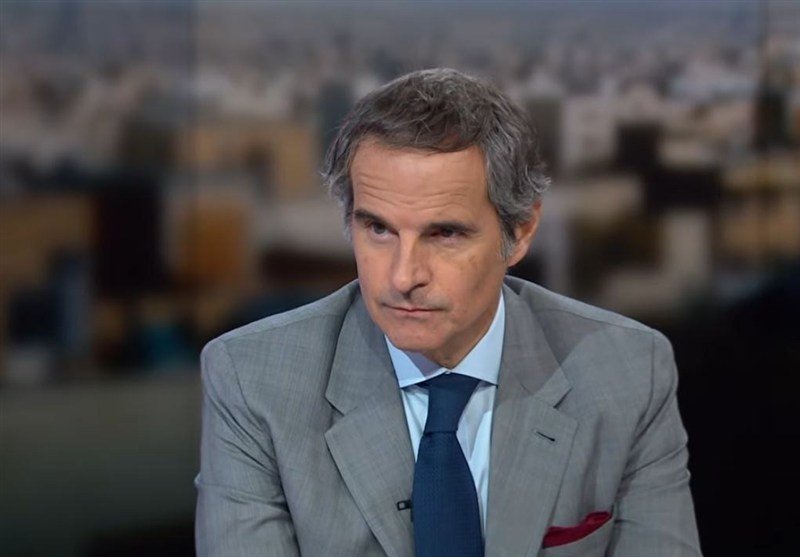
Two press appearances, separated by less than an hour on the morning of 24 June 2026, exposed the deep asymmetry in how Washington and Tehran narrate the same diplomatic moment.
In Washington, Donald Trump publicly praised himself for what he characterised as the neutralisation of the Iranian nuclear threat. In Tehran, Mohammad Bagher Ghalibaf, Speaker of Iran's Parliament and lead negotiator in recent rounds of talks, addressed the Iranian nation with the opposite register: that the era of imposing one's will on independent nations had ended, and that the world had watched with admiration.
The gap between the two statements is not stylistic. It is structural. It tells the reader that whatever arrangement, if any, has been reached over Iran's nuclear file, both governments have already begun competing to define who conceded what.
Two winners, one agreement
The starting point is that an agreement, or at least the framework of one, appears to exist. Trump's self-praise, transmitted on 24 June 2026 by the Telegram channel @englishabuali, rests on a claim of American success. Trump's framing is that the Iranian nuclear threat has been neutralised — language that implies a one-sided outcome in which the United States extracted concessions and Iran capitulated.
Ghalibaf's counter-framing, posted forty-eight minutes earlier by @osintlive under the Open Source Intel brand, refuses that reading. The Speaker's claim is that Iran has demonstrated to the world that no power can dictate to an independent nation, and that the international audience admired the result. The implication is that Tehran negotiated from a position of sovereign equality and walked away with its dignity intact.
A reader who only watched one of the two clips would conclude that Iran lost. A reader who only watched the other would conclude that Iran won. The truth — to the extent that publicly available reporting allows a verdict — lies somewhere both governments are unwilling to admit: an exchange of face-saving language over what is, in all probability, a mutually uncomfortable compromise.
What the Iranian side actually said
Ghalibaf's statement, as carried by Open Source Intel at 07:53 UTC on 24 June 2026, is worth reading precisely. He addressed the Iranian nation, claimed that it had demonstrated that "the era of imposing one's will on independent nations has ended," and asserted that the world admired the outcome. The Speaker also thanked the negotiating team — language consistent with a framing of diplomatic success rather than capitulation.
There is no direct admission of concessions in the published excerpts. There is no reference to specific technical limits on enrichment, no reference to inspection regimes, no reference to sanctions relief sequencing. The statement is calibrated to the domestic Iranian audience: it preserves the maximalist claim of independence while leaving Tehran room to accept whatever technical arrangement the negotiators signed.
This is the standard playbook of Iranian official communications in moments of diplomatic closure. Domestic audiences get sovereignty; technical details go to the International Atomic Energy Agency and to the foreign ministries. The Speaker's role here is to make sure that the parliamentary base and the broader public understand that what has been agreed is, in his telling, the end of dictation rather than the beginning of surrender.
What the American side actually said
Trump's self-congratulation, posted at 08:41 UTC by @englishabuali, took a recognisable form. He praised himself for the outcome and thanked himself for neutralising the Iranian nuclear threat. The phrasing is characteristic: the credit accrues to the principal, the responsibility is absorbed by the principal, and the language of threat neutralisation is preferred to the more diplomatic language of threat reduction or managed competition.
The American framing implies that Iran was the party that moved, that the threat was real and proximate, and that the resolution reflects American leverage rather than mutual compromise. None of that is novel in American presidential rhetoric on Iran — but its timing, on the morning that the Iranian Speaker was broadcasting the opposite message, is what gives the exchange its present interest. Both sides are pre-emptively claiming the same agreement as their own victory.
The structural frame
What this exchange actually reveals is the architecture of how a negotiated settlement is narrated in 2026. There is no neutral press conference in which the terms are read out and credited. Instead, each capital releases its own clip, in its own voice, to its own audience, and the international press picks up whichever clip travels furthest. The negotiation itself — the working-level details of enrichment caps, inspection access, sanctions sequencing — recedes behind the politics of credit-claiming.
This is not unique to the Iran file. It is the standard endgame of late-stage diplomacy between powers that cannot afford to look as though they gave anything away. The American side needs the framing of victory because domestic politics reward strength. The Iranian side needs the framing of sovereignty because the political system cannot survive the optics of capitulation. Both framings are, in their own way, accurate: the United States did extract real concessions; Iran did preserve its negotiating dignity. The problem is that neither side will admit the other half of the story.
The harder question — whether the technical arrangement actually constrains the Iranian nuclear programme over a multi-year horizon, and whether inspection access is durable — is not answered by either clip. It is the question that the international press, if it is doing its job, will spend the next several weeks trying to answer.
Stakes and what to watch
The immediate stakes are domestic in both capitals. In Washington, the President's self-praise will be read by supporters as confirmation of effectiveness and by critics as the absence of substantive detail. In Tehran, Ghalibaf's framing will be tested against whatever technical arrangement the negotiating team has signed, and against the response of hardline outlets inside Iran who will look for evidence of concession.
The medium-term stakes are technical. If the arrangement holds — if enrichment is constrained, if inspections are credible, if sanctions relief is sequenced against compliance — then the press-conference competition of 24 June 2026 will look in hindsight like a healthy sign: both sides felt they had to claim victory, which usually means each had to accept something. If the arrangement does not hold, then the press-conference competition will look like the opening round of a blame game for a deal that was always going to fail.
What remains uncertain, on the evidence available this morning, is the substance. The clips tell the reader how each government wants the deal remembered. They do not tell the reader what the deal actually contains. Until that gap is closed, the only honest editorial line is that both men claimed victory on 24 June 2026 — and that the verifiable record of who conceded what is still being written.
Monexus framed this as a study in competing victory narratives rather than as a verdict on the underlying deal, on the principle that credit-claiming precedes verification in any late-stage negotiation between unequal powers.
Wire provenance
This editorial synthesis draws on the following public wire/social posts:
- https://t.me/englishabuali
- https://t.me/osintlive
Follow the event.
These dated source records provide context. They do not retrospectively verify this archive article.
Separate what the nuclear watchdog reported from what it could not determine after the June 2025 strikes.