Ankara's press gate and the NATO summit Trump is supposed to attend
Turkish authorities have refused accreditation to dozens of journalists covering next month's NATO summit in Ankara, even as President Erdogan prepares to host President Trump for bilateral talks.
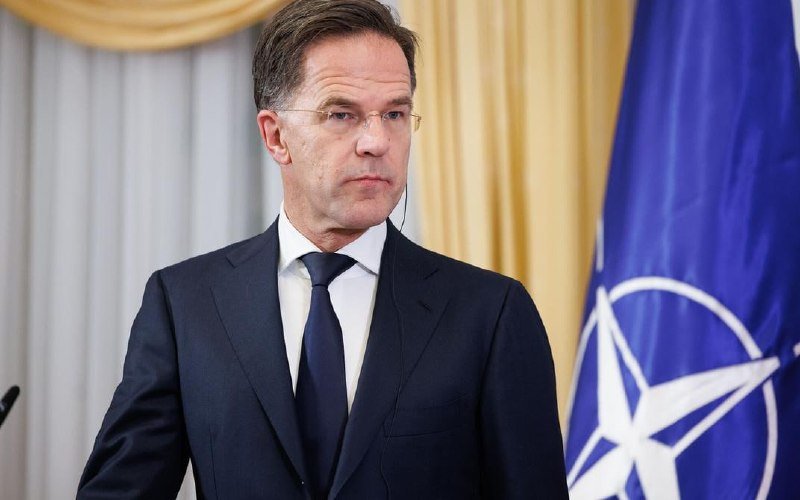
Ankara has refused accreditation to dozens of Turkish journalists seeking to cover next month's NATO summit, the Reuters news agency reported on 25 June 2026 at 13:35 UTC. The decision lands at an awkward moment for the alliance's host: President Recep Tayyip Erdogan told reporters earlier the same day, at 05:36 UTC, that he would "most likely" hold bilateral talks with US President Donald Trump on the margins of the gathering in the Turkish capital.
The press bar and the presidential handshake are now part of the same summit. Ankara's allies should treat them that way.
A credentialing squeeze, by the numbers
Reuters, citing Turkish media, did not publish a full list of outlets affected, but the count runs into the dozens, with newsroom editors describing the process as opaque. Accreditation for NATO summits is technically administered by the host government in coordination with the alliance's Brussels headquarters, and Turkish officials have framed recent rejections as routine security screening. That framing does not survive contact with the pattern. Turkey's domestic press corps has spent the better part of a decade operating under one of the world's most restrictive media environments, and an international summit is precisely the moment when the world's press might otherwise broadcast that record back to domestic audiences.
The move is best read as a hosting choice, not a logistical inconvenience. A NATO summit in Ankara is, by definition, a stage; Ankara is choosing who stands on it.
Erdogan wants the Trump meeting anyway
Erdogan's public signalling on 25 June — that a Trump bilateral is "most likely" during the summit — confirms that the Turkish government expects the gathering to function as a bilateral venue first and an alliance summit second. That is consistent with Erdogan's recent posture. He has used previous NATO gatherings in Vilnius and Washington to extract concessions on fighter jets, sanctions carve-outs and Syria policy. Ankara's calculation is straightforward: a sitting US president on Turkish soil, under Turkish television lighting, is leverage. The press-gate tightens that grip by reducing the pool of reporters who can interrogate it in real time.
Trump, for his part, gave the day an unusually wide-ranging news footprint. At 01:45 UTC on 25 June he told reporters that "grass has a life just like people have a life," a remark that travelled across networks without clarifying which policy file it belonged to. The juxtaposition is the point. A US president who muses about botanical personhood is also the US president Ankara wants across the table when F-16 upgrade financing and Syrian Kurdish policy come up.
What this looks like from inside the alliance
The structural concern is not that Turkey will censor a single press conference. It is that a NATO summit in a member state whose domestic media ranking sits well outside the alliance's rhetorical commitments to democratic resilience sends a message to every other capital about how the alliance measures that commitment when a host matters enough. Article 2 of the North Atlantic Treaty asks members to "strengthen their free institutions." Allowing a host to curate which journalists enter the press centre is, at minimum, a stretch of that language.
The counter-read is that summits are security operations, that credentialing always excludes some applicants, and that host governments everywhere run their own vetting. That is true and beside the point. The press bar in Ankara is not a question of who gets a security badge; it is a question of whether the alliance tolerates a host government using the accreditation process to manage the story the summit tells about itself.
The stakes, plainly stated
If Erdogan secures the Trump bilateral he wants and the press room thins out behind him, the precedent is set: future summits in candidate or front-line states will be planned with the assumption that the host can shrink the press pool to fit its preferred narrative. That is a small loss for any single summit and a cumulative loss for the alliance's claim to speak about open societies.
What remains genuinely uncertain is whether Trump's team will press Ankara publicly on the journalist exclusions, or treat them as a host-country housekeeping matter. On the available reporting, the administration's attention is on the bilateral agenda, not the press centre. That tilt is itself a tell.
This publication treats the Ankara credentialing story and the Erdogan-Trump bilateral as a single event. Wire copy has run them as two; they aren't.
Wire provenance
This editorial synthesis draws on the following public wire/social posts:
- http://reut.rs/4gFdPlo
- https://x.com/i/status/2070138740425535488
- https://x.com/i/status/2070138740425535488