Antimatter propulsion returns to the conversation — but the physics is still the bottleneck
A Fars news wire revisiting antimatter propulsion has drawn fresh attention — and a public nod from Elon Musk and Jared Isaacman. The engineering reality remains far more modest than the headline.
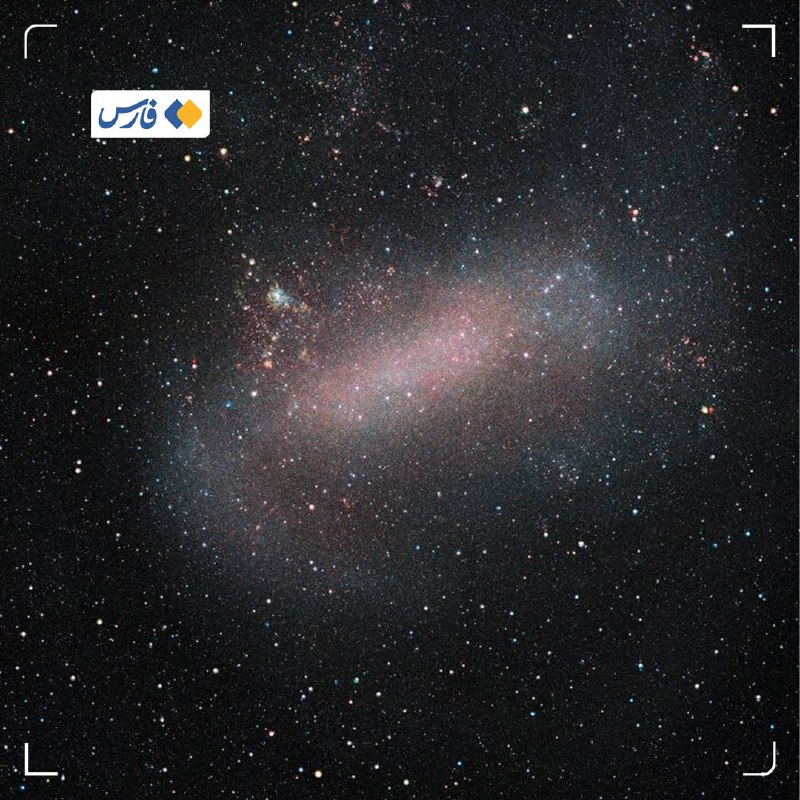
On 25 June 2026, Iran's Fars News Agency circulated a wire revisiting one of the most seductive ideas in astronautics: using antimatter to push a spacecraft. The piece, posted to Fars's Telegram channel at 19:41 UTC, frames the technology as a route to "the dream of interstellar travel" and notes that the idea has attracted public comment from Elon Musk and Jared Isaacman — the billionaire founder of Shift4 Payments who was nominated by President Donald Trump in late 2024 to serve as the next administrator of NASA.
The premise is straightforward enough to summarise in one sentence: annihilate matter and antimatter, harvest the resulting photons or charged particles, and you get the highest specific impulse — propellant efficiency — of any reaction humans know how to write down. The difficulty is that the premise has been stuck in the same place for roughly forty years: producing meaningful quantities of antimatter, and then containing it.
What the Fars wire is actually pointing at
Fars's framing leans on a small but persistent body of recent interest. Antimatter-catalysed fission and fusion concepts have circulated in the technical literature since the 1980s, and NASA has periodically funded small studies into positron drive concepts and antiproton-catalysed propulsion through its Innovative Advanced Concepts (NIAC) programme. The hook this time is the public commentariat. Musk, who runs SpaceX and has built a career on the assumption that the cost of access to orbit falls far enough to make new things possible, has been an instinctive booster of exotic propulsion for years. Isaacman's nomination — his second tour as a NASA-administration pick, after withdrawing from the first — places a private-astronaut and entrepreneur at the top of the civil space agency at a moment when several wealthy figures are openly discussing missions that conventional chemistry cannot deliver.
This is the part of the story the wire treats as news. It is also the part where a careful reader should slow down.
The engineering, in plain terms
Antimatter is real. Physicists have made positrons and antiprotons at CERN's antimatter factory and at other accelerators since the 1990s. The Antihydrogen Laser Physics Apparatus (ALPHA) collaboration at CERN has been trapping antihydrogen since 2010, and in 2011 it held on to enough atoms to publish a measurement of antihydrogen's spectrum. These are the sorts of milestones that, in another field, would be the spine of a working technology. In propulsion, they are footnotes.
Two numbers explain why. The energy density of antimatter is roughly ten billion times greater than that of chemical rocket propellant. That sounds like a cosmic edge, and it is — but the qualifier matters: only one part per ten billion of the energy released is currently in a form that can be harnessed for thrust, because antiprotons and positrons are produced as part of an enormous particle-physics apparatus. The other bottleneck is storage. Antiprotons annihilate on contact with ordinary matter, so they have to be held in a Penning trap or an electromagnetic bottle at temperatures near absolute zero. Doing that for a flight duration of months or years, with current superconducting magnet technology, is the kind of engineering problem that takes decades rather than years to solve.
The counter-frame the wire skips over
The Fars piece treats antimatter propulsion as if it were an emerging competitor to chemical rockets and electric propulsion. It is not. It is a research direction that has not produced a single gram of usable propellant, and whose cost-per-gram remains in the trillions of dollars at the CERN production rates that currently exist. By contrast, ion and Hall-effect thrusters are flying today on deep-space missions, and SpaceX's Raptor engine has demonstrated a specific impulse roughly comparable to the upper end of chemical propulsion — orders of magnitude below antimatter, but available, on the ground, in working engines.
There is also a less flattering cultural history to absorb. Antimatter propulsion has been a perennial talking point since the 1960s, in part because it lets people who are not propulsion engineers talk about propulsion engineering without having to defend any of the intermediate steps. It does the same work that warp drives, warp-bubble drives, and EmDrive speculation have done for the last two decades: it makes far-future travel feel like a near-future budget item. Whether the renewed visibility around Isaacman's nomination and Musk's commentary produces more than another cycle of that pattern is the open question.
Structural stakes
What is genuinely worth watching is the surrounding capital cycle rather than the propulsion physics itself. The global space economy is now large enough — measured in the hundreds of billions of dollars across launch, satellite broadband, Earth observation, and national-security launches — that wealthy individuals with existing operational space companies (Musk) and wealthy individuals whose companies depend on government contracts (Isaacman, if confirmed) can shape which propulsion research directions get funded. That does not mean antimatter rockets are about to fly. It means that if a credible enough figure repeats the case loudly enough, NIAC awards, DARPA seed funding, and university lab heads can drift toward the topic for two or three funding cycles before the engineering catches up.
For readers: the practical takeaway is that the gap between "antimatter is real" and "antimatter will move a spacecraft to Proxima Centauri" is not a few engineering years. It is more than one human career. The interesting question is not whether the physics works — it does, on paper — but whether the institutional and financial ecosystem around space will continue to support the unglamorous middle path of ion thrusters, solar sails, and nuclear thermal propulsion long enough for any of them to matter.
This piece relied on a single Fars News Agency Telegram wire dated 25 June 2026 and on publicly documented antimatter physics at CERN's antimatter factory; readers seeking primary-source technical detail on antihydrogen trapping and spectroscopy should consult CERN's published ALPHA collaboration results directly.
Wire provenance
This editorial synthesis draws on the following public wire/social posts:
- https://t.me/farsna