Caracas collapses: a city already on its knees takes another blow
Two tremors and a pancake building collapse in Los Palos Grandes have pushed Caracas into a declared state of emergency — and exposed how thin the safety margin has become in a country already hollowed out by crisis.
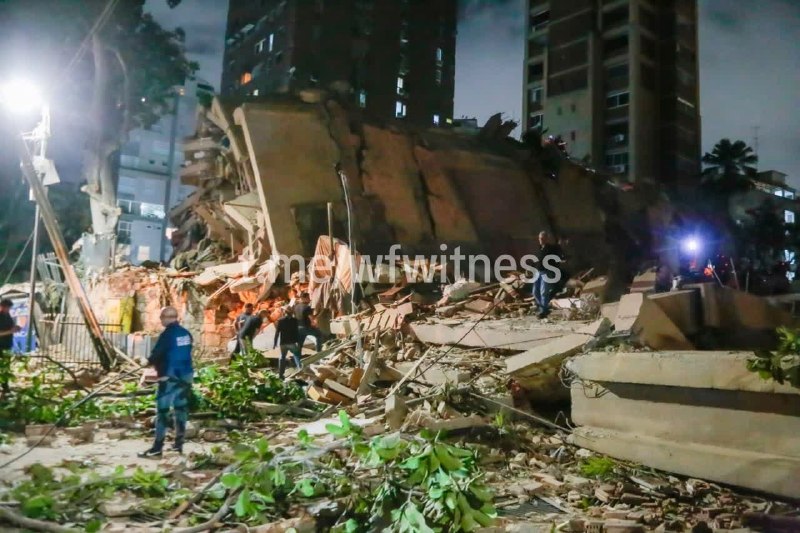
The capital of Venezuela lay partially wounded on the morning of 25 June 2026. Two earthquakes measuring above magnitude 7 struck near Caracas in the small hours, and the iconic Los Palos Grandes neighbourhood absorbed the worst of it: a multi-storey residential block pancaked to the ground, with rescue crews pulling at concrete through the daylight hours. By 02:12 UTC, Caracas had been placed under a formal state of emergency, declared by national authorities in response to the seismic sequence and the building's total collapse, according to early wire reporting on the Polymarket news desk. The neighbouring Bello Monte and Las Mercedes districts — middle-class strongholds that had held up through years of economic free-fall — now sit inside the same emergency cordon.
This is not just a natural-disaster story. It is a stress test of an already fractured polity. The tremors were the trigger; the failure was structural, in every sense of the word.
What we know, hour by hour
The first reports of the Los Palos Grandes collapse surfaced on open-source channels around 01:10 UTC, when BellumActa News posted footage of a fully pancaked residential tower in the eastern Caracas municipality of Chacao. By 02:12 UTC, Polymarket's news desk reported that the national government had declared a state of emergency following the two magnitude-7-plus events. By 03:22 UTC, the @wfwitness channel on Telegram was carrying continuous rescue footage — heavy equipment being hauled through narrow streets, neighbours forming human chains to clear debris, and at least one body bag visible above the working line. The reporting window is narrow and the picture is still being assembled, but the basics are no longer in dispute: a major building failure, multiple seismic events, and an official emergency declaration inside three hours of the first collapse reports.
The casualty count at the time of writing is not in the public record from the sources available to this publication. The framing that matters most in the immediate term is operational: search-and-rescue is the active mission, not assessment.
The counter-read: a building problem more than a quake problem
The seismology here is not exotic. Caracas sits inside a known fault system; the San Sebastián fault runs through the broader Ávila range and has produced damaging events historically. Two magnitude-7 tremors near a dense capital are serious, but the structural puzzle for Venezuelan engineers — and for anyone who has watched this country's building stock age — is how a residential tower in one of the better-off neighbourhoods of the capital could fail so completely. The dominant counter-explanation circulating among Latin American urban-planning commentators is that the building envelope had been progressively weakened by years of deferred maintenance, regulatory neglect, and informal occupation patterns, with the seismic event acting as a final trigger rather than a sufficient cause on its own.
The opposition-aligned framing goes further. Years of currency collapse, hyperinflation, and capital flight have starved municipal inspection regimes of resources, the argument runs; construction quality has eroded across both private and public works; and what the cameras are showing in Los Palos Grandes is less an act of God than the visible end-state of a decade of disinvestment. The government's framing, by contrast, treats the event as a natural disaster requiring national solidarity. Both readings can be partly true, and the early evidence is consistent with both — but the building's behaviour under shaking is the question that forensic engineers will spend the next several weeks trying to answer.
A country already running on empty
The structural context is what makes this event legible as more than a single bad night. Venezuela enters this emergency after years of compounding crises: an opposition-led interregnum that never quite consolidated, a sanctions architecture that has crimped state revenue, an oil sector operating well below capacity, and an estimated seven-million-strong diaspora that has hollowed out working-age cohorts. The country's humanitarian indicators — food insecurity, healthcare capacity, basic-services delivery — were already in a precarious band before the ground moved.
What this means in plain terms: when a high-density residential block collapses in a Latin American capital, the response capacity of fire services, urban search-and-rescue teams, hospital trauma networks, and logistics chains is the difference between a contained tragedy and an extended one. Caracas is working from a thin margin. State-of-emergency declarations in Venezuela have also historically doubled as political instruments — mobilising security forces and concentrating executive discretion — which means the operational response and the political response will be running on parallel tracks from the first hour onward.
What happens next, and what we still do not know
The next seventy-two hours will determine whether this remains a localised building-collapse tragedy or tips into a wider humanitarian episode. The variables that matter: confirmed casualty figures from official channels (still pending in the open reporting available at publication), the integrity of adjacent structures in the Los Palos Grandes / Chacao corridor, the status of communications and electricity in the affected neighbourhoods, and whether the national emergency framework translates into effective coordination with municipal fire and civil-protection authorities. The diaspora networks — already mobilised on WhatsApp and Telegram within minutes of the first footage — are likely to do what they have done in past Venezuelan emergencies: organise fundraising, pressure foreign governments for consular assistance, and crowd-source information faster than official channels.
What this publication cannot yet verify from the available reporting is the exact magnitude sequence of the two events, the precise death and injury toll, whether neighbouring high-rises have been evacuated as a precaution, or the official text of the state-of-emergency decree. Those gaps will narrow as the day progresses. What is not in doubt is the immediate human scale of the event: a residential block, in a city of two million-plus people, is no longer standing, and the people who lived inside it are being pulled from the rubble one at a time.
The structural lesson, when the dust settles, will be the same one Latin American cities have learned repeatedly: the earthquake is the headline; the building stock is the story. Caracas has been living with a deferred-maintenance deficit for the better part of a decade. The fault did not invent that deficit on Wednesday morning.
Desk note: Monexus treated this as a developing humanitarian and infrastructure event rather than a political one, because the available reporting at publication centres on rescue operations, building performance, and the emergency declaration. The structural political framing — sanctions, capital flight, regulatory erosion — is flagged as the longer-cycle context, not as a verdict on the present emergency response.
Wire provenance
This editorial synthesis draws on the following public wire/social posts:
- https://t.me/wfwitness
- https://t.me/BellumActaNews
- https://x.com/polymarket/status/