Carney's Tehran gambit: why Canada is testing the diplomatic door to Iran
Mark Carney wants to reopen Canadian missions in Tehran and Caracas. The move, fourteen years after Ottawa cut ties under US pressure, is less about Iran than about who Canada thinks it answers to.
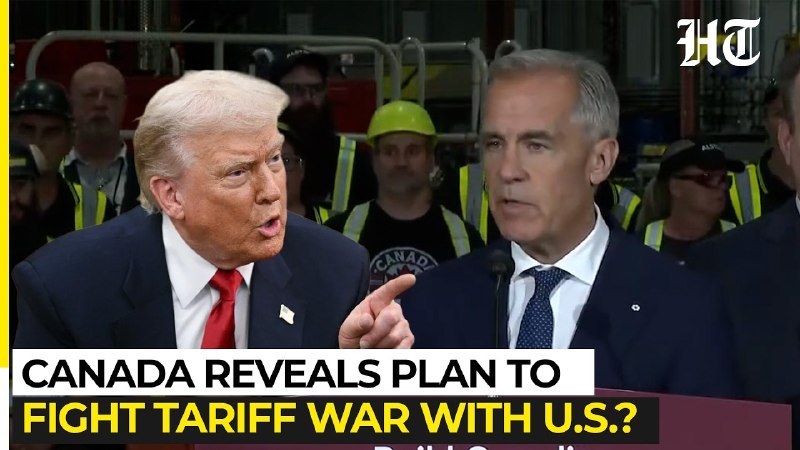
On the morning of Friday 25 June 2026, Tehran time, Canadian Prime Minister Mark Carney stood before reporters and said his government should restore diplomatic representation in Iran and Venezuela. The remarks, carried in near-real-time by Iranian state outlets Fars News, Tasnim and the Tasnim-affiliated Jahan Tasnim channel, mark the first time a sitting Canadian prime minister has publicly called for the reopening of either mission since Ottawa severed relations with Tehran in September 2012 under Conservative prime minister Stephen Harper.
The proposal is more than a consular convenience. It is a quiet test of how much latitude a middle power retains to redraw its own diplomatic map when the map's largest feature — the United States — still views both Iran and Venezuela as adversaries. Ottawa is signalling that the rules written in 2012, when Western alignment with Washington's Iran posture was near-automatic, no longer bind as tightly. Whether that signal survives contact with allied capitals, with the residual sanctions architecture still governing Canadian banks, and with the Iranian government's own appetite for a Western partner is the open question Carney has just put on the table.
The 2012 break and the long shadow of US alignment
To understand why a routine-sounding call to "reopen representative offices" carries weight, it helps to recall how relations ended. In September 2012, the Harper government closed Canada's embassy in Tehran and expelled Iranian diplomats from Ottawa. The official justification, aired at the time, was Iran's nuclear programme, its support for the Syrian government, and what Canadian officials described as Iranian hostility to Canada's interests. The decision was made within weeks of Washington tightening its own sanctions regime and the European Union imposing an oil embargo on Iranian crude. Ottawa was not the first Western capital to pull its ambassador that year — the United Kingdom withdrew its entire diplomatic staff from Tehran after protesters stormed its compound — but Canada's break was unusually complete: there has been no resident Canadian ambassador in Iran for the intervening fourteen years, and consular services have been routed through the Canadian embassy in Ankara.
The institutional scar tissue matters. A generation of Canadian diplomats has done its entire career without an Iran posting. Trade promotion, academic exchange and family-visit traffic have all flowed through third countries. Reopening is not a phone call; it is a multi-year project of staff recruitment, banking-relationship re-establishment, and security arrangements. Carney's statement on Friday is therefore the opening bid in what will be a long process, not a policy already executed.
A second front: Caracas in the same breath
What made the announcement more striking was that Carney coupled Iran with Venezuela. "We must reopen our representative offices in Iran and Venezuela," the prime minister said, in Tasnim's readback of the press conference. The pairing is deliberate. Venezuela, like Iran, sits inside the broader sanctions perimeter maintained by the United States, the European Union, Canada and several Latin American neighbours. Ottawa has had no ambassador in Caracas since 2019, when the Trudeau government joined a US-led recognition of Juan Guaidó as interim president — a posture the Liberals have walked back but never formally rescinded.
Reading the two together, the signal is structural rather than bilateral. Carney is signalling that the 2010s-era Canadian default of calibrating every foreign-policy move to Washington's most hostile framing of an adversary state is being relaxed — not repudiated, but loosened. The language of the statement, as relayed through Iranian outlets, was conditional ("should," "must"), not declarative. The prime minister is opening a domestic conversation, not signing a memorandum of understanding.
The counter-narrative: what Carney is not saying
The Western-wire reaction, to the extent it has appeared in the hours since Carney spoke, frames the announcement as either a sovereignty gesture or a hedge. Two readings compete. The first is that Carney, as a former central banker who ran the Bank of Canada and then the Bank of England, is simply applying portfolio logic to a diplomatic balance sheet that has been left out of date. Fourteen years of zero presence in a country of nearly ninety million people, sitting on the world's fourth-largest proven oil reserves and second-largest natural gas reserves, is a costly non-position. The same logic applies, even more sharply, to Venezuela — the world's largest certified oil reserves — where Canadian heavy-oil producers once had deep technical relationships.
The second reading is sharper: that Carney is building diplomatic insurance against a continental trading environment in which the United States under its current tariff posture is a less reliable partner than it was in 2012. A Canadian mission in Tehran gives Ottawa a channel for indirect communication with Tehran-aligned actors in the Middle East and, by extension, an independent read on energy-market dynamics that touch the Strait of Hormuz. A mission in Caracas does the same for Latin American political risk. None of this requires Ottawa to recognise, embrace or legitimise either government; it merely requires a desk.
A third, less flattering reading is that the announcement is a trial balloon designed to gauge American reaction before any concrete step is taken. The 2012 closure was, in plain terms, the price Canada paid for being seen as a fully aligned Western ally in the early phase of maximum pressure on Iran. Reopening without at minimum a quiet nod from Washington would be a more consequential political act than the prime minister's press-conference language suggests he is yet prepared to make.
The structural frame: middle-power diplomacy after maximum pressure
The deeper pattern is the gradual erosion of the unipolar diplomatic settlement that held between roughly 1990 and 2015. During that quarter-century, Western middle powers — Canada, the United Kingdom, France, Germany, Japan, Australia — calibrated their Iran, Russia and Cuba policies in close alignment with Washington by default. The system produced real outcomes: an Iran sanctions regime severe enough to bring Tehran to the negotiating table in 2013-15, and a coordinated Western diplomatic posture on Venezuela that constrained Caracas's room for manoeuvre.
What has changed since is not the sanctions architecture itself — most of the underlying US, EU and Canadian measures remain in force — but the diplomatic willingness of middle powers to accept that architecture as the organising principle of their regional relationships. European capitals have spent the last three years rebuilding consular and commercial contacts with Tehran. Several have done so openly; others have done so through trade offices, academic missions, and energy-dialogue formats. Carney's announcement, if it survives the political weather in Ottawa and Washington, places Canada in that same slow lane. The "maximum pressure" era has not formally ended; what is ending is the assumption that middle powers will keep enforcing it for the United States at no cost to themselves.
For Ottawa specifically, the calculus is sharpened by domestic energy politics. A Canadian embassy in Tehran would not, on its own, unlock Iranian crude for Canadian refineries; the US secondary-sanctions exposure for any Canadian refiner handling Iranian oil remains prohibitive. But a diplomatic channel is also a commercial channel, and Canadian heavy-oil producers have watched European and Chinese refiners gain technical positions in Venezuela and Iran that Canadian firms once held. Reopening the embassy is partly about whether Ottawa wants to be inside that room or outside it for the next decade.
Stakes: what happens next
The short-term stakes are modest. No embassy will reopen on Carney's timetable in 2026. What will happen, almost immediately, is a round of consultations between Canadian and Iranian foreign ministries, mediated through the Interests Section arrangements that have kept basic consular services alive since 2012. If those consultations produce an agreed framework for staff exchanges, banking-relationship rehabilitation, and security protocols, a re-opened mission could be operational by 2027 or 2028.
The medium-term stakes are larger. A successful Canadian-Iranian re-engagement would add another datum point to the slow normalisation of Western-Iranian diplomatic traffic that has been under way in European capitals since 2023. It would also create a second Canadian-Iranian diplomatic track alongside the United States, whose posture toward Tehran remains in its own slow-motion flux. On the Venezuela side, the implications are similar but faster: Caracas has been more visibly open to foreign diplomatic re-engagement than Tehran, and Canadian energy firms have a direct commercial interest in a working channel.
The risk for Carney is that the announcement is read in Washington, in Riyadh, and in Tel Aviv as a directional signal — that Canada is moving from alignment to hedging on the adversary file. The risk for Ottawa is that it moves too slowly to matter and ends up with the diplomatic equivalent of a soft opening: a trade office in name that performs none of the strategic functions Carney's rhetoric on Friday implied. The risk for the Iranian government is that it over-reads the Canadian statement as a regional inflection point and recalibrates its posture accordingly, only to discover that Ottawa cannot deliver on the implied commitments without a US nod that is unlikely to come.
What remains uncertain
The sources that carried Carney's statement on Friday were exclusively Iranian state and state-adjacent outlets — Fars News, Tasnim, and the Tasnim-linked Jahan Tasnim channel. The Canadian government's own readout, in the prime minister's press conference format, was relayed through those channels because Western wire services have limited staff in Tehran and rely on local pickups for Iranian-leader statements. That sourcing asymmetry means the precise wording of Carney's conditional ("must," "should") is filtered through outlets that have an interest in presenting any Western openness to Tehran as more advanced than it actually is. The Western-wire confirmation of Carney's framing — and any reaction from the US State Department, the Canadian opposition, or Iran's foreign ministry — had not been published in the thread as of 25 June 2026 at 23:06 UTC. Until those cross-checks are in, the announcement should be read as a Canadian prime minister opening a conversation, not as a policy that has been decided.
This publication read Carney's statement as relayed through Iranian state and state-adjacent outlets because no Western-wire confirmation was available in the thread at publication time. Where Iranian and Western framings later diverge, the source ledger will be updated.
Wire provenance
This editorial synthesis draws on the following public wire/social posts:
- https://t.me/FarsNewsInt
- https://t.me/JahanTasnim
- https://t.me/tasnimplus
- https://t.me/FarsNewsInt/2
- https://en.wikipedia.org/wiki/Canada%E2%80%93Iran_relations
- https://en.wikipedia.org/wiki/2012_diplomatic_break_between_Canada_and_Iran
- https://en.wikipedia.org/wiki/Canada%E2%80%93Venezuela_relations
- https://en.wikipedia.org/wiki/Mark_Carney
- https://t.me/FarsNewsInt
- https://t.me/JahanTasnim
- https://t.me/tasnimplus
- https://t.me/FarsNewsInt/2
- https://en.wikipedia.org/wiki/Canada%E2%80%93Iran_relations
- https://en.wikipedia.org/wiki/2012_diplomatic_break_between_Canada_and_Iran
- https://en.wikipedia.org/wiki/Canada%E2%80%93Venezuela_relations
- https://en.wikipedia.org/wiki/Mark_Carney