Hezbollah's Southern Lebanon Strikes Expose a Ceasefire Living on Borrowed Time
Two Lebanese civilians killed and four Israeli soldiers wounded in 24 hours suggest the November ceasefire is being tested by both sides — and that the civilian cost is once again falling on the south.
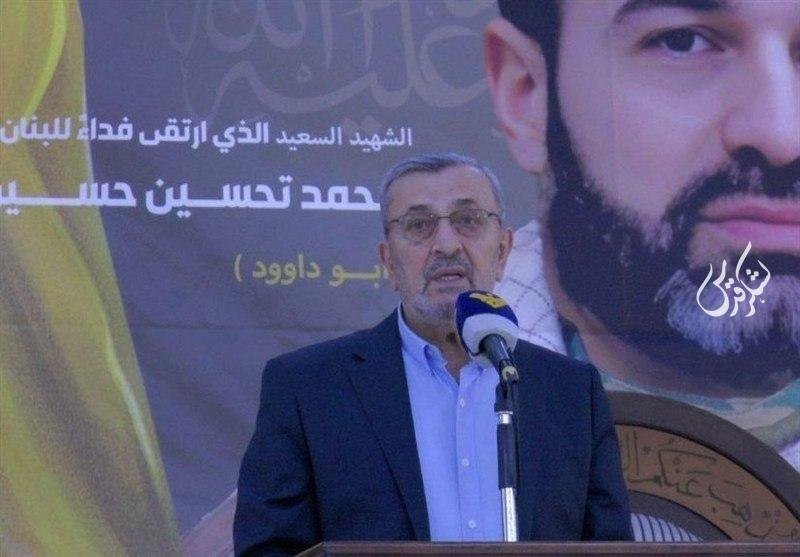
On the evening of 25 June 2026, Iranian state-linked outlet Fars News reported that Hezbollah had announced the killing of two Lebanese civilians in southern Lebanon by Israeli fire, framing the incident as a further breach of the ceasefire arrangement that has nominally held since November 2025. Within hours, Mehr News — another Iranian state outlet — carried a separate Hezbollah statement condemning an Israeli drone attack on Lebanese civilians as a "clear violation of the ceasefire," and Israeli media confirmed that four soldiers of the occupying army had been wounded in a clash with Hezbollah fighters further south. Three discrete incidents, three communiqués, all within a single reporting day — and all of them, in their different registers, pointing in the same direction: the arrangement Washington and Beirut have called a ceasefire is being whittled away at the edges by both parties, and the human cost is again being absorbed in the villages of the south.
The pattern matters more than any single incident. A ceasefire is not a wall; it is a routine, maintained by restraint and verified by silence. When the silence breaks in three different places on the same day — civilian deaths on one side, military casualties on the other, a drone strike condemned as a violation by the very party being targeted — what is being tested is not the text of an agreement but the political will of the governments that signed it. The question this publication keeps returning to is whether what is being reported as a "ceasefire" is in fact anything more than a pause whose duration is set by the next tactical opportunity on either side.
The day's incidents, itemised
The first report to surface, at 20:58 UTC, was the Fars News wire attributing to Hezbollah the claim that the Israeli army had "martyr[ed]" two Lebanese civilians in southern Lebanon. The phrasing — "martyred," rather than "killed" — is the resistance movement's standard register for civilian deaths it attributes to Israel, and it carries an explicit accusation: that the targeting was deliberate, not collateral. Fars did not name the villages, provide casualty identifiers, or specify the weapon system used. Iranian state media frequently serves as the primary distribution channel for Hezbollah communiqués in English- and Farsi-language coverage; readers should weight the framing accordingly, but the underlying incident has not, as of this writing, been independently verified by a Western wire in the source material available to Monexus.
The second item, at 21:26 UTC, escalated the diplomatic register. Hezbollah's statement, carried by Mehr News, characterised an Israeli drone attack on Lebanese civilians as a "clear violation of the ceasefire" — language that, if the arrangement's text were being honoured, would normally be transmitted to the ceasefire monitoring mechanism and to the Lebanese army, not amplified through regional media. The choice to publish the accusation rather than file it through backchannels is itself a signal: the movement is building a public record of alleged violations, in advance of a moment when that record can be politically useful.
The third item, at 21:48 UTC, came from Israeli media as relayed by Mehr News: four soldiers wounded in a clash with Hezbollah in the south. This is the only one of the three reports in which both sides of the firing line acknowledged contact. Two of the day's three incidents involve Israeli action; one involves a Hezbollah attack that produced Israeli military casualties. The balance is uneven, and that unevenness is itself part of the story.
Who is speaking, and why it matters
The sourcing here is unusually concentrated. Two of the three reports originate with Iranian state-linked outlets (Fars, Mehr) carrying Hezbollah communiqués. The third is Israeli military-casualty reporting that reached Monexus via the same Iranian wire. There is no Lebanese army statement, no UNIFIL readout, no US or French ceasefire-mechanism comment in the source material. For an article about a ceasefire's integrity, that absence is itself a finding: the official architecture that would normally contextualise such incidents — the ceasefires committee, the UN observers, the Lebanese Armed Forces liaison — is not producing readable output in the channels Monexus is monitoring today.
The structural implication is uncomfortable for all three governments with skin in the arrangement. For Beirut, a stream of civilian deaths in the south that the state cannot prevent and can only intermittently document is a slow-motion erosion of sovereign authority inside its own border. For Jerusalem, the wounding of four soldiers in a single engagement — even a minor one by the war's prior standards — reopens the domestic political question of what the ceasefire was purchased for. For Washington, the guarantor of the arrangement, each reported violation is a small invoice coming due on a credit line it has been reluctant to draw down.
What the dominant framing gets right, and what it flattens
The mainstream Western wire line on Lebanon for the past seven months has been roughly: ceasefire holding, calm restored, reconstruction proceeding. That framing is not false — the daily tempo of violence is markedly below 2024 levels — but it is selectively true. It counts the absence of large-scale operations as peace. It does not, as a rule, count the slow accumulation of small incidents: a drone here, a clash there, two civilians killed in an unverified engagement, four soldiers wounded in a verified one. The official narrative treats the ceasefire as a binary state — in effect or not — when the lived reality along the Blue Line is something more like a flickering connection, prone to dropouts that neither side is currently interested in repairing.
A fair read also notes that Hezbollah's strategic incentive to keep the arrangement alive is real. The movement is reconstituting under difficult regional conditions; an outright return to large-scale hostilities would cost it more than the status quo. The Israeli incentive structure is similarly mixed: the government has political reasons to avoid a re-escalation that would re-impose wartime constraints on the economy and the northern home front, even as security incidents give its hardliners a continuing case for a tougher posture. The danger is that tactical decisions on the ground — a drone strike that local commanders believed was targeted at a militant, an ambush that local commanders believed was defensive — accumulate into a strategic fact that neither cabinet intended.
The stakes, plainly stated
If the trajectory of the past 24 hours becomes the trajectory of the coming weeks, the costs fall in a familiar order: first to the civilians of southern Lebanese villages, whose names rarely make it into the communiqués that report their deaths; second to the Israeli communities along the northern border, whose return has been slow and whose confidence in the arrangement is rationed incident by incident; third to the Lebanese state, whose sovereignty over its own south is being renegotiated by armed actors on both sides; and last to the external guarantors, whose leverage is largest on day one of an arrangement and smallest the longer the arrangement frays without breaking.
A ceasefire held together by restraint is a real ceasefire. A ceasefire held together only by the absence of a precipitating incident is not a ceasefire — it is a queue. The reports from 25 June 2026 suggest the queue is moving. The question is whether the principals recognise the movement in time to halt it, or whether the next communiqué from the south announces the incident that finally empties the word of its remaining meaning.
The Monexus desk chose to lead this piece on the three-incident cluster rather than on any single report, and to flag openly the Iranian-state provenance of two of the three wires. Where independent Western or Lebanese-state confirmation exists, we have noted its absence rather than smoothing over it.
Wire provenance
This editorial synthesis draws on the following public wire/social posts:
- https://t.me/FarsNewsInt
Follow the event.
These dated source records provide context. They do not retrospectively verify this archive article.
Separate what the nuclear watchdog reported from what it could not determine after the June 2025 strikes.