One Israeli soldier killed in southern Lebanon: what the wire actually says
The IDF announced the death of a soldier from the 75th Battalion during operations in southern Lebanon on 25 June 2026 — but the public record is thinner than the headlines suggest, and the framing on each side tells its own story.
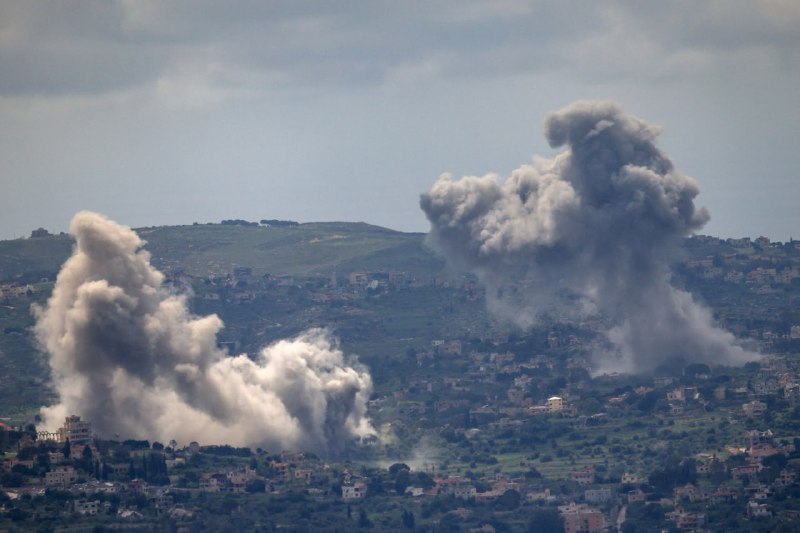
At 06:45 UTC on 25 June 2026, the Israeli Defence Forces Spokesperson's unit confirmed that a soldier had been killed during operational activity in southern Lebanon. The brief announcement — circulated through Israeli Telegram channels and picked up almost immediately by Iranian state-aligned outlets — was the first hard confirmation of an Israeli combat fatality on the Lebanon front in the public record that day, and it set off a familiar pattern: a curt official notice on one side, a louder, more politically charged read on the other, and a thin factual core on which neither version fully agrees.
What follows is less a story than a careful inventory of what the public wire actually contains on the morning of 25 June — and what it conspicuously does not. Because the casualty, the unit, the operational geography, and the surrounding context all sit in the gap between an Israeli official notice and its Iranian-language retelling, the news is as much about the two channels of reporting as it is about the incident itself.
The Israeli notice: short, factual, and procedurally framed
Two near-simultaneous posts to the Telegram channel "abualiexpress" — one timestamped 06:45 UTC, the other 06:49 UTC — carried the IDF Spokesperson's announcement in essentially identical wording: an IDF soldier had fallen during operational activity in southern Lebanon. The phrasing is the standard IDF formula for combat deaths announced after next-of-kin notification: "the soldier fell during operational activity," followed by a line of condolence and a link for responses.
Two structural features are worth noting. First, the notice identifies the event as an "operational activity" rather than a specific named engagement — language Israeli spokespeople use when an operation is ongoing or when details are being held back for operational-security reasons. Second, neither post in the wire at this hour contains the soldier's name, rank beyond the implied enlisted or NCO tier, home town, or the precise location within southern Lebanon where the fatality occurred. The IDF's convention is to release biographical detail after the family has been informed and a window of 24 hours or more has passed; the morning-of posts are deliberately skeletal.
That skeletal quality is not editorial squeamishness. It is the standing protocol, and it is what makes the casualty count easy to verify but the surrounding narrative hard to assemble in real time.
The Iranian-language echo: same incident, opposite frame
Within twenty minutes of the Israeli announcement, two Iranian state-aligned Telegram channels — Jahan Tasnim and Fars News International, at 06:07 UTC and 06:06 UTC respectively — had already pushed their own versions of the story. The Tasnim post identified the soldier as belonging to the IDF's "75th Battalion" and added that a second soldier had been wounded in the same engagement. Fars framed the death in explicitly polemical language: "one of the soldiers of this regime was killed during operational activity," with the quotation marks around the Israeli term signalling that the outlet did not accept the framing as a neutral description of events.
The two Iranian channels provided something the Israeli wire had not: a specific unit number, and a wounded-casualty count. Unit identifiers in Hezbollah-aligned and Iranian state-media reporting on the Israel-Lebanon border have historically been sourced from the group's own battlefield observers, and they are often accurate within hours of an incident even when Israeli channels hold the detail back. On the morning of 25 June, however, no independent Western wire had corroborated the 75th Battalion attribution or the second-soldier wounded count. The figure that travels furthest on the day of the announcement is therefore the one with the most authoritative-seeming provenance — which in this case is the one most exposed to single-source risk.
What the Iranian-language posts do not contest is the underlying fact: an Israeli soldier was killed on Lebanese territory during an Israeli operation. The dispute is tonal and political, not factual at the core. That distinction matters, because conflating the two is how false-equivalence framings get built.
What the public record does not yet contain
The gaps in the morning-of wire are worth listing plainly, because they define the limits of any responsible write-up of the event.
The IDF Spokesperson's office, as represented in the Telegram posts cited above, had not at the time of writing released the soldier's name, rank, or unit beyond the general "operational activity" framing. The casualty's biography — first name, age, hometown, length of service — was not in the public wire.
The Hezbollah media arm had not, as of the morning of 25 June, posted an operational claim of responsibility. In the established pattern of cross-border fighting, claims of responsibility for specific casualties typically emerge either from Hezbollah's official military media or from groups operating under its umbrella within hours of an incident; their absence in the available record at 06:49 UTC means the operational attribution on the opposing side is, for now, formally open.
The precise location in southern Lebanon — village, district, the Litani corridor or beyond it — was not specified in any of the four available posts. The phrase "southern Lebanon" is the level of geographic resolution the public record supports at this hour.
Western wire reporting — Reuters, Associated Press, Agence France-Presse, the BBC, the Guardian — had not, as of the posts captured here, run an independent item. The Israeli-language press (Times of Israel, Ynet, Haaretz, the Jerusalem Post) had not been captured in this thread. That absence is itself informative: it places the entire morning-of record on channels that are either the official Israeli spokesperson's distribution layer or Iranian state-aligned outlets, with no third-party corroboration in between.
The Lebanese state news agency and the UN Interim Force in Lebanon (UNIFIL) had not, in the available wire, commented on the incident.
Any account of the event that goes beyond these limits is, for the moment, extrapolation.
Reading the two channels against each other
The most revealing thing about this morning's wire is not the casualty itself — one soldier's death in a long-running border campaign is, in raw arithmetic, a single data point — but the way the same fact moves through two reporting ecosystems with different rules.
The Israeli channel treats the incident as an administrative event wrapped in condolence. The unit is not named because the family has not been informed at scale; the geography is not given because the operation may not be over; the enemy is not identified because identifying the enemy would, by IDF spokesperson convention, attribute operational success or failure to a specific adversary before the relevant commander has chosen to do so. The reader is asked to hold a fact and wait.
The Iranian-language channel treats the same incident as a political event wrapped in a fact. The unit number is given; the wounded-casualty count is given; the language around the incident is calibrated to situate the Israeli military as the agent and the southern Lebanese theatre as the site of a war of position in which the reader is meant to understand that Israeli soldiers die here regularly, that the IDF is on the defensive, and that this is what the regional order looks like from the eastern shore of the Mediterranean. The reader is asked to draw a conclusion.
Neither channel is lying. Both are operating within their own professional norms. The hazard for any publication writing about the incident in real time is to mistake the conclusion of one channel for the corroborated fact, or to mistake the procedural silence of the other for concealment rather than convention.
Why this matters beyond the single fatality
A single soldier's death in southern Lebanon is not, on its own, a structural event. It is the routine human cost of a border campaign that has run for most of two years and that has, by every available count, produced casualties on both sides measured in the hundreds. What makes the morning of 25 June worth pausing on is the gap it exposes in the information environment.
In the hour after the IDF announcement, the only two channels reporting the casualty in any detail were the Israeli spokesperson's distribution layer and Iranian state media. Western wire desks had not yet moved. Israeli-language daily press had not yet moved. UNIFIL had not commented. Hezbollah's media arm had not claimed. That left a public record in which an Israeli soldier's death was being narrated, in real time, by the IDF on one side and by outlets whose editorial line is fundamentally hostile to the Israeli state on the other.
That is not an unusual situation in the Middle East beat — it is, in fact, the structural norm — but it is worth naming plainly. The longer the gap between official Israeli notice and independent Western-wire confirmation, the more the framing of the incident travels along channels that have a stake in the conclusion. The reverse is also true: when Iranian state media carries a specific unit number or a wounded-casualty figure, the figure tends to enter the international conversation well before it has been independently confirmed.
The honest position at 06:49 UTC on 25 June 2026 is therefore narrow. An IDF soldier was killed during operational activity in southern Lebanon, according to the IDF Spokesperson's announcement as carried by the abualiexpress channel. Iranian state-aligned outlets identified the unit as the 75th Battalion and reported a second soldier wounded; those specifics had not been independently corroborated at the time of writing. No Western wire had yet reported the incident in the captured thread. Hezbollah had not yet claimed responsibility. UNIFIL and the Lebanese state had not commented. The soldier had not been publicly named.
What this publication can do, until the wider record fills in, is hold the fact carefully and not pretend the silence around it is information.
Desk note: Monexus led with the Israeli spokesperson's announcement as the source of record for the fatality, then gave the Iranian-language coverage its structural weight without laundering its framing as neutral. Western wire reporting and an Israeli-language press item will be added to this piece as they appear in the public record; readers seeing this before then should treat the unit attribution and the wounded-soldier count as single-source claims pending confirmation.
Wire provenance
This editorial synthesis draws on the following public wire/social posts:
- https://t.me/abualiexpress
- https://t.me/abualiexpress
- https://t.me/JahanTasnim
- https://t.me/FarsNewsInt