Israel's southern Lebanon footprint becomes the diplomatic fault line in the US-Iran track
Tehran says a full Israeli withdrawal is a precondition; Beirut and The Cradle report Israeli violations continue. The November 2024 ceasefire is being stress-tested in real time by the diplomatic track Washington insists is on track.
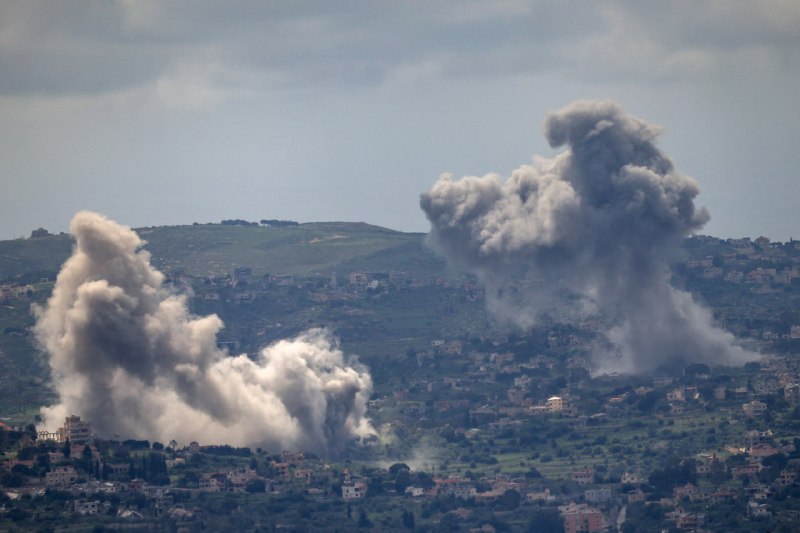
On 25 June 2026, the diplomatic track that the Trump administration has spent six months marketing as a near-final US-Iran deal ran into a wall built not in Geneva or Muscat, but along a strip of Lebanese territory roughly the length of a trans-Atlantic flight. Iran's state broadcaster IRIB reported, via a source described as close to the Iranian negotiating team, that Israeli withdrawal from occupied Lebanese territories is a "red line and precondition for any deal," with the memorandum of understanding set to guarantee Lebanon's [terms]. Within the hour, the Beirut-based outlet The Cradle published a separate report, citing Lebanese officials, that Prime Minister Benjamin Netanyahu had convinced US President Donald Trump to back continued Israeli occupation of southern Lebanon — a framing that contradicts Washington's public position that Israel is pulling back.
The two claims, taken together, are not merely contradictory headlines. They are the visible seam of a much larger argument: whether the November 2024 ceasefire between Israel and Hezbollah, and the residual Israeli security footprint in five points along the Lebanon-Israel border that followed it, is being honoured, hollowed out, or quietly converted into something more permanent. The answer determines not only whether southern Lebanon becomes a flashpoint in any war, but whether the diplomatic architecture being built around Tehran can hold together at all.
What IRIB and The Cradle are actually saying
The IRIB framing, as relayed in the Telegram channel World Food Witness at 17:28 UTC on 25 June, is the harder of the two red lines. The Iranian source frames Israeli withdrawal as a precondition — language that suggests Tehran intends to make any signing ceremony contingent on visible Israeli movement out of southern Lebanese territory. The reference to a memorandum of understanding "set to guarantee Lebanon's" terms is incomplete in the relay, but the structural claim is clear: Tehran is tying its signature on a wider US-Iran arrangement to the territorial question inside a neighbouring state.
The Cradle's report, transmitted through its Telegram channel at 17:20 UTC, reads in the opposite direction. Its lede — "Netanyahu 'convinces' Trump to back Israeli occupation of south Lebanon" — is itself an editorial claim, and the outlet's own caveats matter. The Cradle writes that, "despite US claims of an Israeli withdrawal, Lebanese officials report aggressive violations by the occupation" [of the ceasefire terms]. That formulation is important. It does not assert that the US has formally endorsed continued Israeli presence; it asserts that the on-the-ground reality, as Lebanese officials describe it, contradicts the formal US position. The Cradle is read closely in Beirut and in Tehran-aligned media ecosystems precisely because it is willing to publish claims that Lebanese officials will only give on background.
A third signal, from Clash Report at 16:03 UTC the same day, lands between the two. An Iranian source tells the channel that any final deal requires full Israeli withdrawal from southern Lebanon as a key red line, and adds that Israeli attacks have decreased over the past six days — a small but consequential data point, because it implies the current lull is being read in Tehran as something that can be levered into a written commitment.
The November 2024 ceasefire, restated
To understand why this seam matters, it is worth restating what was actually agreed roughly nineteen months ago. The ceasefire announced in late November 2024 paused the open warfare between Israel and Hezbollah that had run through the previous year and displaced populations on both sides of the blue line. In the architecture that followed, Israel retained a residual security presence at five points along the border — sometimes described as a buffer, sometimes as an occupation — and Hezbollah was required to push its military infrastructure north of the Litani River. The arrangement was understood as temporary. Its replacement was supposed to be either a permanent security arrangement acceptable to both Beirut and Jerusalem, or a full Israeli withdrawal alongside a demilitarised zone.
Nineteen months on, neither replacement has happened. What has happened, according to the reporting on 25 June, is that Israel has maintained or expanded its presence at some of those points, that Lebanese officials characterise the activity as "aggressive violations" of the ceasefire, and that Washington has continued to publicly describe the situation as one in which Israel is in the process of withdrawing. Each side of that contradiction is now publicly visible in the same news cycle.
Why the Israeli footprint is the deal-breaker
The Iranian insistence on full withdrawal is not sentimental. It serves three concrete functions for Tehran. First, it gives the Iranian negotiating team a visible, deliverable concession to take back to domestic audiences — a tangible win that can be presented as Iran having forced a regional adversary to retreat. Second, it undercuts the Israeli argument, advanced in Hebrew-language press and through back-channels, that any residual Israeli presence is non-negotiable on security grounds; a US-brokered deal that produced Israeli withdrawal would decisively refute that position inside Israeli politics. Third, it binds Lebanon — a state where Iran wields considerable but not total influence — into the diplomatic architecture as a beneficiary rather than an object, which matters for the long-run legitimacy of any arrangement.
The Israeli counter-position is equally functional. For Netanyahu's government, a continued presence in southern Lebanon is presented as essential to preventing a reconstitution of Hezbollah's operational capability within striking distance of Israeli towns and to preserving the deterrent credibility established during the open conflict. The framing in The Cradle — that Netanyahu has "convinced" Trump — captures the deeper Israeli anxiety: that a US-Iran deal, if it trades Iranian nuclear concessions for Israeli withdrawal, would amount to Jerusalem underwriting its own strategic contraction in exchange for a problem it does not consider solved.
The structural frame: corridor politics and the limits of deal-making
What is being negotiated in this cycle is not, strictly speaking, a bilateral arrangement. It is a layered settlement in which multiple unfinished conflicts are being traded against each other. The Iranian nuclear file, the Israeli-Hezbollah ceasefire, the status of the five border points, the question of US sanctions relief, and the wider regional posture of the Islamic Republic are all bundled into a single memorandum of understanding. Each component is being used as leverage for the others.
This is the recurring pattern in regional deal-making when a hegemonic power attempts to substitute a comprehensive settlement for the absence of one: the deal works only if every component holds, and every component is held hostage to the weakest link. In this case, the weakest link is the southern Lebanon border strip — not because the issues there are technically intractable, but because the Israeli political system cannot easily deliver withdrawal, the Iranian political system cannot easily accept the absence of withdrawal, and the Lebanese state is too weak to enforce either outcome on its own territory.
The pattern is not unique to this track. It is the same architecture that has produced the recurring failures of the Israeli-Palestinian talks of the previous two decades, in which a final-status question is bundled into a process that requires each side to commit to outcomes their domestic politics cannot bear. The difference in 2026 is that the bundling is being attempted by a US administration that has staked considerable political capital on a visible win, against an Iranian counterpart under serious economic pressure, at a moment when the Israeli government's room to compromise is narrower than at any point in the last decade.
What the on-the-ground record actually shows
The reporting on 25 June is consistent in one specific direction: Israeli attacks have, by the Iranian source's account to Clash Report, decreased over the past six days. That is a meaningful data point in a region where the absence of strikes is itself a form of diplomatic currency. If true at scale — and the source is anonymous — it suggests one of two things: either Israel is voluntarily reducing activity to grease the diplomatic track, or the operations tempo was already lower and the description is a way of crediting the negotiation.
The Cradle's parallel claim — that Lebanese officials describe "aggressive violations" continuing — points the other way. Both claims can be partly true: kinetic activity can be down overall while specific incidents continue at points that Lebanese officials consider violations. The asymmetry in framing — Iranian sources emphasising the reduction, Lebanese officials emphasising the violations — is itself part of the diplomatic choreography, and is worth reading as such rather than as a factual disagreement.
The reporting does not specify how many of the five border points remain under active Israeli military presence, what the precise scope of the residual security arrangement is, or whether there has been a formal Israeli government decision to maintain or expand the footprint. Those details will determine whether IRIB's "red line" framing is the opening position of a serious negotiation, or the diplomatic vocabulary of a side that intends to walk away.
What remains uncertain
Three things are not yet knowable from the available reporting. First, whether the US-Iran memorandum of understanding that IRIB references is a draft that exists in writing, a verbal framework agreed in principle, or aspirational language from one side of the talks. Second, whether the Lebanese officials cited by The Cradle are speaking from the Lebanese Armed Forces, the caretaker government in Beirut, or political actors aligned with Hezbollah — a meaningful distinction, because their authority to describe ceasefire violations differs sharply. Third, what the Israeli government's actual position is, beyond the read-out The Cradle attributes to Netanyahu's reported conversation with Trump; Israeli official sources have not, in the source material available here, confirmed or denied the characterisation.
What is clear is that the diplomatic track cannot reach a signing ceremony while the southern Lebanon question is unresolved, and that neither Tehran nor Jerusalem is currently in a domestic political position to resolve it unilaterally. The next data point will be either a written US-Iran text that addresses the five border points explicitly, or a public confirmation from Washington that Israeli withdrawal is not, in fact, a precondition — a step that would collapse the Iranian negotiating position and probably end the track.
Desk note: Monexus framed the IRIB and The Cradle reports as parallel primary signals from inside the Iranian and Lebanese political ecosystems, neither elevated nor dismissed. Where the Western wire position — implicit in the State Department's public read-outs that Israel is in the process of withdrawing — differs from the on-the-ground read in Beirut, both are named and the structural reason for the divergence is the story, not a footnote to it.
Wire provenance
This editorial synthesis draws on the following public wire/social posts:
- https://t.me/wfwitness
- https://t.me/thecradlemedia
- https://t.me/ClashReport
Follow the event.
These dated source records provide context. They do not retrospectively verify this archive article.
Separate what the nuclear watchdog reported from what it could not determine after the June 2025 strikes.