Israel declares open-ended hold on southern Lebanon, setting up a new front with Beirut
Israeli Prime Minister Netanyahu and Defense Minister Katz say troops will stay in a southern Lebanon 'security zone' for as long as necessary, hardening a front that the November ceasefire was meant to wind down.
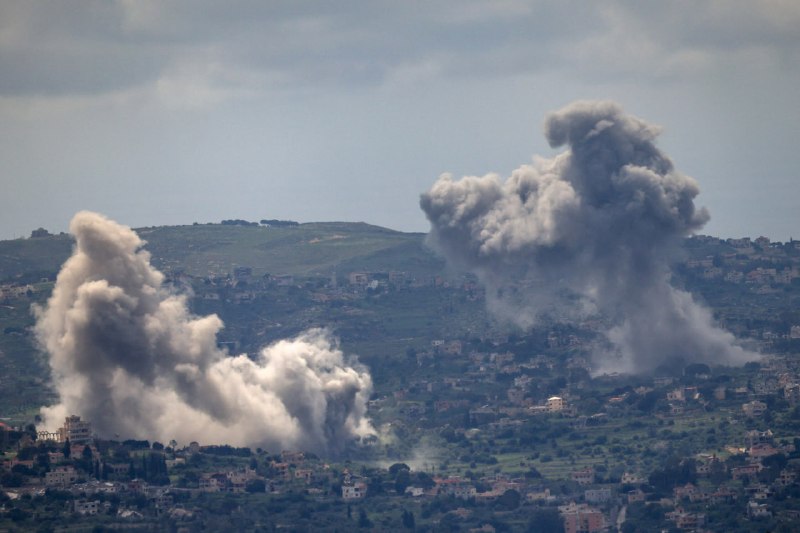
At 15:34 UTC on 25 June 2026, Israeli Prime Minister Benjamin Netanyahu declared that Israeli forces would not withdraw from a buffer strip in southern Lebanon and that troops deployed there enjoyed "complete freedom of action" to operate, according to Telegram channels Tasnim, Fars and Jahan Tasnim, which relayed the remarks in real time [1][2][4]. Within twenty minutes, the messaging had crystallised into a stated policy: Israel, Netanyahu said, "dominates southern Lebanon from the summit of the Beaufort" and intends to remain inside what officials now openly call a "security zone" in the south of the country for "as long as necessary" [3]. By 15:58 UTC, Israeli Defense Minister Israel Katz had reinforced the line, telling reporters that Israel would not withdraw from the zone "despite mounting pressure" — language captured by the Polymarket news desk and circulated on X [5].
The declarations amount to a hardening of an Israeli position that, until this week, the government had described as provisional and tactical. They also reopen a question that the November 2024 ceasefire arrangement was meant to settle: how much of southern Lebanon does Israel intend to control, for how long, and at what diplomatic cost.
From ceasefire to 'security zone'
The current arrangement in southern Lebanon traces to the cessation-of-hostilities framework negotiated in late 2024 between Israel and Hezbollah, which halted the open cross-border war that had displaced tens of thousands of Israelis and Lebanese and redrawn the daily reality of the border region. Under the terms reported at the time, Israeli forces were to withdraw from positions they had pushed into during the fighting, while a UN-chaired monitoring mechanism — supported by US and French diplomacy — was meant to police Hezbollah's presence north of the Litani River.
What Netanyahu described on 25 June is something different. The phrase "security zone" is a deliberate echo of the Israeli-occupied strip Israel maintained in southern Lebanon from 1982 to 2000, a roughly 10-to-15-kilometre belt that the United Nations and the Lebanese state both treated as occupied territory. By choosing that vocabulary, the Israeli Prime Minister is signalling that what began as a tactical depth-of-field operation against Hezbollah rocket and tunnel infrastructure is now conceived as a durable, named arrangement — and that the word "withdrawal" has been removed from the government's near-term lexicon.
The geography matters. The Beaufort Castle, a 19th-century Crusader fortress above the Litani that overlooks the Litani River bend, is the highest defensible point on the Israeli-Lebanese frontier. Whoever holds Beaufort controls observation over the entire southern approach to the Litani and, by extension, the main launch corridors that Hezbollah used during the 2023-24 war. By anchoring the Israeli position "from the summit of the Beaufort," Netanyahu is putting a name to a line of control that is more than symbolic.
The diplomatic counter-pressure
Katz's phrase — "despite mounting pressure" — is the line that does the diplomatic work. It is an acknowledgement that Israel is making this decision against the explicit objections of at least some of its partners, even if the channels doing the pressing are not named in the Israeli readout.
The pressure is not theoretical. The United States, France and the United Nations have invested roughly eighteen months of diplomacy in the monitoring mechanism that was supposed to substitute for an Israeli ground presence. A declared, indefinite Israeli security zone in southern Lebanon would effectively re-occupy the territory that the 2024 framework was designed to return to Lebanese sovereignty. That would, in turn, force Washington and Paris into a choice they have so far avoided: publicly back an Israeli annexation-by-stealth, or push for enforcement of the original arrangement at the cost of a fresh diplomatic crisis with Jerusalem.
The Lebanese state, for its part, treats any Israeli military presence on its soil as occupation under international law. Beirut has not been able to project force into the south since Hezbollah's defeat in the 2024 war, but a formal Israeli declaration of permanence would crystallise a domestic political problem for the government of Prime Minister Nawaf Salam, which has staked its credibility on the restoration of state authority in the south.
What Israel says it is buying
Israeli officials frame the posture in security terms. The argument, made in briefings to Western reporters and in cabinet statements since the spring, runs roughly as follows: Hezbollah's capacity to reconstitute rocket and anti-tank capabilities in the area between the border and the Litani has not been extinguished, only damaged. Without a sustained Israeli presence in the depth, the organisation will, within a measurable window, be able to threaten the Galilee communities that were evacuated for most of 2024. A pullback to the international border, in this reading, returns Israel to the exact posture that produced the 7 October shock and its northern front.
It is a security argument with internal logic. It is also a security argument that the architects of the 2024 arrangement explicitly weighed and rejected in favour of a Lebanese-state-plus-international-monitoring solution. The fact that Israel is now publicly departing from that bargain is the most consequential signal Netanyahu has sent on the northern front since the ceasefire took hold.
The counter-reading is that an open-ended Israeli presence will, in fact, accelerate the very reconstitution it claims to prevent. Lebanese state authority cannot be rebuilt in a vacuum; the Lebanese Armed Forces cannot deploy north of the Litani while Israeli armour holds the high ground above the Litani. A declared security zone therefore risks freezing the south into a grey zone that neither Beirut nor the UN mechanism can govern, and that gives Hezbollah the political argument — and the physical space — to argue that armed resistance is the only Lebanese force still in the field.
What the messaging tells us
Three features of the 25 June rollout are worth noting for the picture they paint of Israeli decision-making.
First, the messaging was coordinated across the Prime Minister's office and the Defense Minister, with both Katz and Netanyahu using near-identical language about "complete control," "complete freedom of action" and indefinite duration. That is not the cadence of an off-the-cuff statement; it is the cadence of a decision that has been through the security cabinet.
Second, the language was directed outward as much as inward. The "despite mounting pressure" clause is a tell: it is written for the foreign-policy reader, not the Israeli voter. The audience is Washington, Paris, Beirut and the UN, and the message is that Israel has made its choice and is prepared to bear the cost of saying so out loud.
Third, the channels that carried the remarks most prominently in the first hour were Iranian and Iran-aligned wires — Tasnim, Fars, Jahan Tasnim — which is itself a piece of the picture. The Israeli Prime Minister's office did not, in the source material available to this publication, issue a corresponding English-language readout in that window, which left the framing of the announcement to outlets that frame Israel in hostile terms. That is either an act of strategic ambiguity, intended to leave the formal Israeli position slightly deniable, or a communications failure that the office will need to correct. Either reading has consequences.
Stakes over the next 90 days
The near-term stakes are concrete. If the Israeli position holds, the November 2024 ceasefire framework is effectively superseded on the ground even if it remains nominally in force. The UN monitoring mechanism, led by the United States and France, will have to either accept a diminished role as a coastal observer or escalate into public disagreement with Israel. The Lebanese government will have to choose between a quiet assertion of sovereignty — including possible International Court of Justice action — and a continued search for a negotiated re-entry into the south.
The medium-term stakes are larger. A declared Israeli security zone in southern Lebanon would harden a pattern that has been visible, in different form, across the eastern Mediterranean since 2023: a regional order in which ceasefires are made, observed briefly, and then progressively reinterpreted by the stronger party until a new de facto line takes shape. That pattern is not unique to Israel — it describes the situation in parts of Syria, in the Houthi-controlled north of Yemen, and in the unresolved Aegean disputes — but it is the Israeli-Lebanese case that will test whether the November framework is the start of a settlement or a pause between rounds.
For now, the picture is straightforward and uncomfortable. Israel has said, in the clearest terms it has used since the war, that it intends to stay. The partners that brokered the ceasefire have been told, politely but unambiguously, that they can object. And the south of Lebanon is, as of 25 June 2026, no longer a temporary Israeli depth-of-field operation but a declared zone of indefinite occupation. The diplomatic contest that follows will determine whether that label is contested and reversed, or normalised and made permanent.
How Monexus framed this: the wire took Netanyahu's language as a transient campaign line. This publication treats it as a policy decision because the messaging was coordinated across the Prime Minister's office and the Defense Ministry, used the historically loaded phrase "security zone," and was deliberately framed against unnamed external pressure. The source material in this window is dominated by Iranian and Iran-aligned wires; the Israeli English-language readout was not yet in evidence at the time of writing, which is itself a piece of the picture.
Sources
- https://t.me/tasnimnews_en — Tasnim News (English Telegram) — "Netanyahu's insistence on Israel's aggressive presence in southern Lebanon" — 2026-06-25T15:34Z
- https://t.me/FarsNewsInt — Fars News International (Telegram) — "Netanyahu: We will not withdraw from South Lebanon" — 2026-06-25T15:55Z
- https://t.me/ClashReport — Clash Report (Telegram) — "Netanyahu: We dominate southern Lebanon from the summit of the Beaufort" — 2026-06-25T15:55Z
- https://t.me/JahanTasnim — Jahan Tasnim (Telegram) — "Netanyahu's insistence on Israel's aggressive presence in southern Lebanon" — 2026-06-25T15:34Z
- https://x.com/polymarket — Polymarket (X) — "Israeli Defense Minister Katz declares Israel will not withdraw from the 'security zone' in Lebanon" — 2026-06-25T15:58Z
Wire provenance
This editorial synthesis draws on the following public wire/social posts:
- https://t.me/tasnimnews_en
- https://t.me/FarsNewsInt
- https://t.me/ClashReport
- https://t.me/JahanTasnim