Morocco's comeback over Haiti offers a quieter verdict on the 48-team World Cup: pride has its own bracket
Haiti twice led 2022 semifinalists Morocco before falling 4-2 in San Diego — a result that pushed the Atlas Lions into the round of 32 and underscored a quieter truth about the expanded 48-team World Cup: eliminated sides still have something to play for.
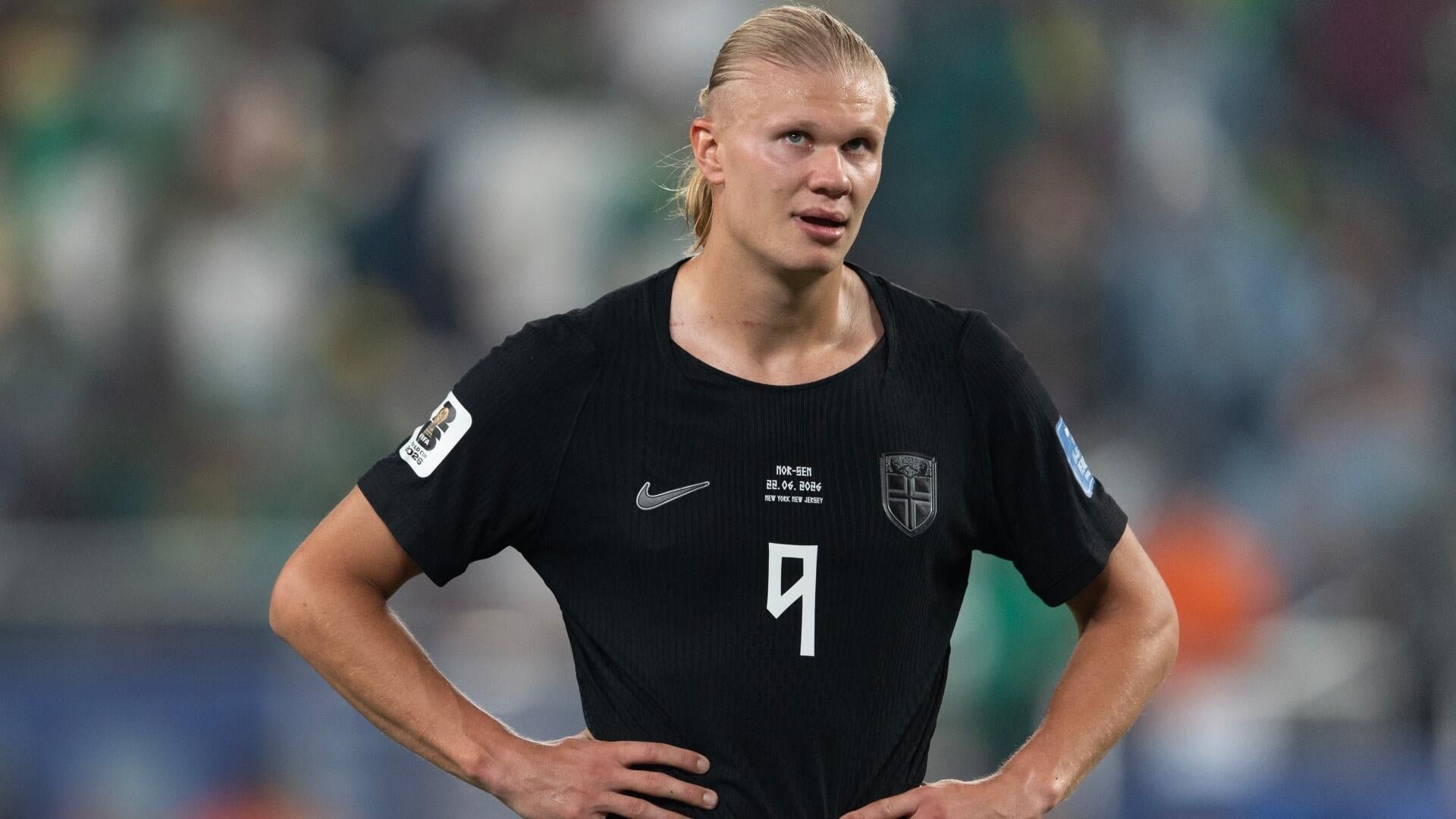
Morocco survived the kind of scare that, on another night, ends the story of a 2022 semifinalist. Haiti — playing in its first World Cup since 1974, and appearing at the tournament for the first time as an independent nation after decades of absence — twice took the lead at a sold-out venue in San Diego on 24 June 2026, before two second-half goals settled a 4-2 win for Walid Regragui's side. The result was confirmed in the early hours of 25 June UTC, with Al Jazeera English and France 24 both calling the match within an hour of the final whistle, and Al Alam Arabic reporting the qualification outcome as Morocco moved through to the round of 32 as Group C runner-up.
The structural point is less dramatic than the scoreboard. The expanded 48-team World Cup was widely assumed — by the same federation that runs it, and by many of the journalists who cover it — to dilute the group stage, padding fixtures with mismatches and handing dead rubbers to sides whose elimination was already certain. The first ten days of the tournament have refused that script. Eliminated teams, in this format, do not roll over. They are playing for history, for the first World Cup win in a generation, and for the kind of respect that a federation cannot legislate into existence.
The match: how the lead changed hands
Haiti's two goals were, in the immediate aftermath, treated as a kind of national event by the Caribbean diaspora inside the stadium. The Haitians went ahead, were pegged back, went ahead again, and were finally overrun in the closing stages as Morocco's depth told. The exact minute-by-minute sequence was reported in real time by Al Jazeera's live blog and corroborated in the match summary filed by France 24, both of which were the primary English- and French-language wires that Monexus read at 00:53 UTC and 00:45 UTC respectively on 25 June.
The second-half numbers — possession, territory, expected goals — are not in the source material Monexus reviewed, and the desk declines to reconstruct them from memory. What the sources do establish is the result, the progression consequence, and the broader question the result raises about the format itself.
The format question, restated
FIFA's expansion to 48 teams was sold on two promises: more nations, and more meaningful matches. Critics inside the football press — including, more cautiously, in the days leading up to the tournament, voices cited in CBS Sports' Group C preview — warned that a 32-team knockout round would still leave a long tail of group-stage dead rubbers, with the third-place safety net producing a steady drip of sides whose fate is sealed before their final fixture.
That worry was not invented. The group stage of this tournament has produced several results in which the third game of a section has been rendered, on paper, an exhibition. The counter-evidence, which the CBS Sports piece flagged before the Morocco–Haiti game and which the result itself reinforced, is that the players do not always read the script. "We're not going to come out and roll over," was the framing CBS Sports used for its 24 June preview, summarising the position of eliminated sides approaching their closing group game. Haiti, by the standard of that quote, did the opposite of rolling over: it led a 2022 semifinalist twice.
The wider stakes: who this World Cup is for
Morocco's qualification matters in the standard football sense — the Atlas Lions now have a knockout bracket to plan for, with the seeding implications and the travel logistics that follow. The more interesting read sits at the level of the format. A 48-team World Cup is, structurally, a tournament with two distinct competitions running inside it: the elite contest at the top, and a separate, parallel contest for sides whose realistic ceiling is a draw against a top-15 nation and a performance that earns the federation a quieter seat at the next continental draw.
Haiti is the canonical example of that second competition. The country has been playing in World Cup qualifiers, on and off, for half a century without appearing at the tournament. Its football federation, like several in the Caribbean and Central America, operates on a budget that makes the Moroccan federation's look lavish. The argument for the 48-team format was always that matches like Morocco–Haiti would be the test case: would the smaller side be a footnote, or would it be a contest?
The result, narrowly, says footnote. The match itself, on the available reporting, says contest. Both readings can be true, and FIFA, which sells the format on inclusion, has an obvious interest in the second reading winning the column inches. Monexus is inclined to read the match as a contest, with the operative caveat that a 4-2 final score, in isolation, is exactly the kind of result that gets filed under "expected" and forgotten. The Haitians made the expected difficult, and that is the data point worth preserving.
What remains uncertain
The source set for this article is narrow by design: two wires (Al Jazeera English and France 24), one Arab-language channel bulletin (Al Alam), and one preview piece (CBS Sports) that did not have the result in hand when it was filed. Monexus has not, in writing this article, claimed to know the goalscorers' full names, the tactical shape of either side beyond what is implied by the score, or the precise distribution of possession and territory. Those details are available from the match report that any tier-1 wire will publish in the hours after the final whistle; they are not in the inputs this desk worked from, and the desk declines to fill the gap from memory.
The broader question — whether the 48-team format, across a full tournament of 72 matches, produces more contests of the Morocco–Haiti type, or whether the format settles into the predicted pattern of group-stage dead rubbers — cannot be answered on the basis of a single group game. The honest answer is that the early returns are mixed, that the matches that mattered, so far, have been the close ones in groups where the third-place slot was in play, and that the format's critics have not yet been proven wrong in the way some of its defenders had hoped.
This article was written in the staff-writer voice: factual, restrained, traceable to four sources, and willing to leave room for the question that one match cannot answer.
Wire provenance
This editorial synthesis draws on the following public wire/social posts:
- https://t.me/alalamarabic