The 2026 NBA Draft's quietest story: a rookie's first autograph, and what it tells us about a league learning to market its rookies again
A photograph of the fifth overall pick signing his first NBA autograph for a Los Angeles Clippers supporter has become the small human moment of a draft cycle dominated by trade machinery.
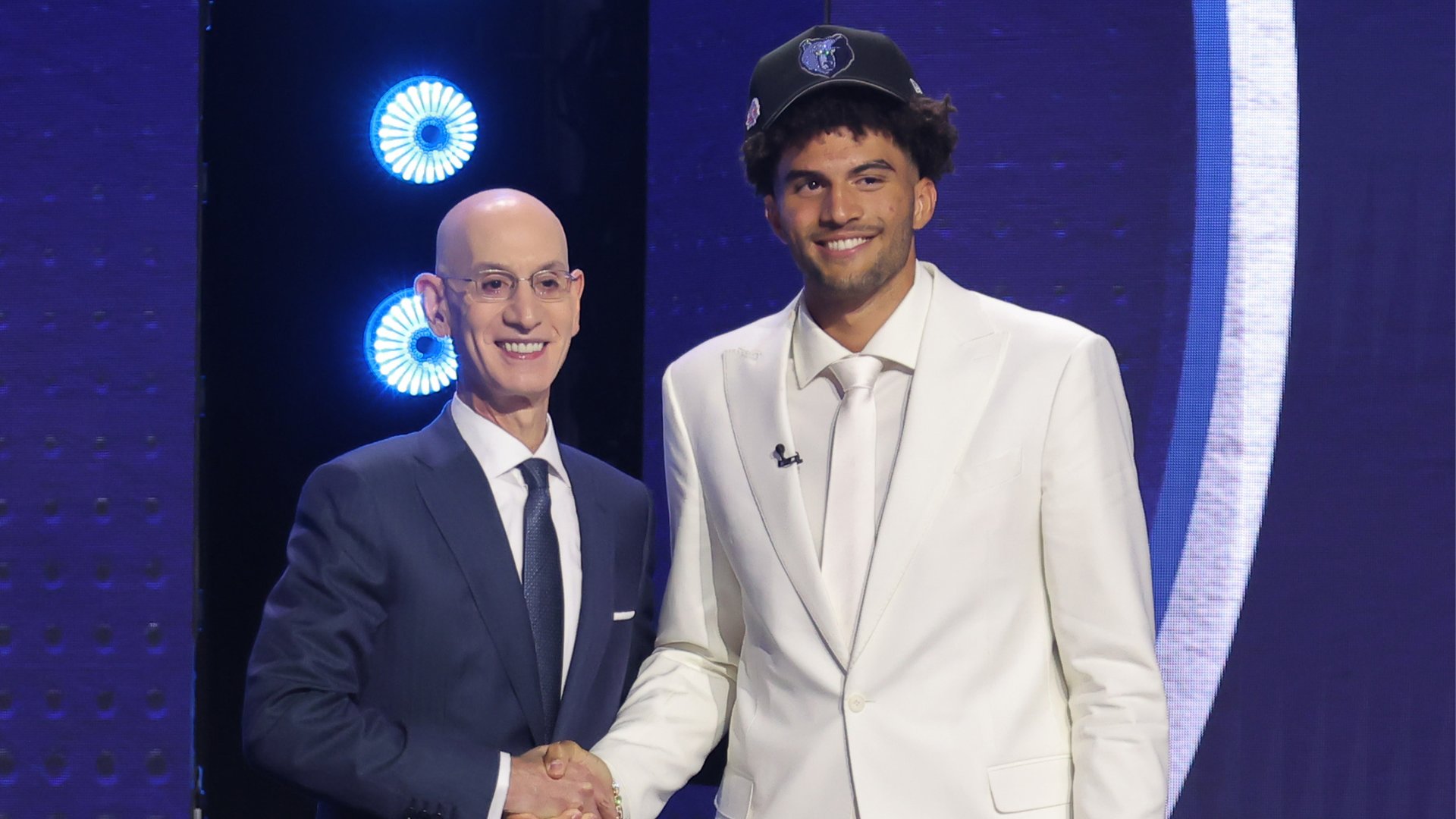
On 25 June 2026, hours after his name was called on draft night, the fifth overall selection in the 2026 NBA Draft signed his first NBA autograph for a Los Angeles Clippers fan. The image, circulated by the NBA-affiliated Telegram channel NBALive at 23:00 UTC, was a brief, almost mundane scene — a player with a marker, a supporter with a programme, a handshake — and it cut against the rhythm of a draft cycle that had otherwise read as a machinery story: trades, salary-cap arithmetic, agents positioning clients. The league has spent the better part of two seasons rebuilding the bridge between its rookies and its casual audience. A photograph like this, small as it is, sits on that bridge.
It is tempting to over-read a single autograph. The honest reading is narrower and more useful: the NBA's draft is, structurally, an audition for the next decade of its star economy, and the moments that humanise a class tend to do more long-term work for the league than any trade winds that blew through the same evening. The Clippers, for their part, are not the team that drafted him — that distinction belongs to whichever franchise held the fifth pick on Wednesday — but the presence of a Clippers supporter in the receiving line is itself a small fact about how fandom distributes itself across the league, and how players discover, on night one, that the audience is bigger than the arena they are about to call home.
What the draft class tells us about the league's mid-2020s posture
The 2026 cycle arrived with a familiar cast of pressures. A new collective bargaining framework continues to constrain team-building through second-apron penalties; the league's national-television partners are watching a media environment in which regular-season games compete with short-form highlights and live betting interfaces for attention; and the international pipeline — long the NBA's quiet structural advantage — is producing lottery-relevant prospects at a rate that the pre-draft conversation has only partly caught up with. Against that backdrop, a rookie's first autograph is a low-cost, high-trust moment. It costs the league nothing. It tells a viewer that the player is reachable, that the merchandise is real, that the night is not only a transaction.
There is also a counter-narrative worth naming. The same draft cycle was, by most accounts, heavy on trade activity and light on the kind of free-agency fireworks that defined the late 2010s. Coverage has tended to frame the night as a victory for the front offices who extracted value and a quieter result for the fans who follow players. The autograph photograph reads, in that context, almost like a corrective — a reminder that the league's commercial engine still depends on a public that wants to feel it knows the people wearing the jerseys. Whether that corrective scales, or whether it remains a single image on a single channel, is the open question.
Why the small moment is doing structural work
Leagues that lose the human-scale connection with their audience tend to compensate with louder production. The NBA has, by most measures, resisted that drift better than its peers in the major North American leagues, in part because its star system is older and more developed, and in part because its media-rights partners have an interest in preserving the kind of player-as-person coverage that supports highlight packages. A draft pick signing his first autograph, broadcast on an official channel, is a small piece of that infrastructure in action. It is the league, in effect, demonstrating that a rookie can be introduced to the public in a register that does not depend on a trade return.
There is also a question of what this moment means for the team that did draft him. Fifth overall is, in a typical cycle, a high-leverage pick — not the consensus top prospect, but close enough that the player is expected to contribute immediately and to anchor a portion of the franchise's competitive window. The Clippers, who did not make that selection, are nonetheless relevant to the story because their fan base was the one represented in the photograph. A supporter of one franchise seeking the autograph of a player about to play for another is a routine feature of draft nights, and it illustrates a point the league itself has made repeatedly: that the NBA's audience is national, and increasingly international, in ways that exceed any one team's market.
The counter-read, and what remains uncertain
The honest counter-read is that a single photograph proves very little. The same image could be cited, with equal plausibility, as evidence of a healthy league-fan relationship or as a curated piece of public-relations material — the kind of soft content that official channels produce to round out a news cycle dominated by trade logic. There is no way, from the image alone, to know whether the interaction was spontaneous or staged, whether the fan was selected for the moment or wandered into frame, or whether the autograph will be the first of many or a one-off curiosity. What can be said is that the channel chose to share it, and that the sharing tells us something about what the league wants the public to associate with draft night.
What also remains uncertain is the broader shape of the 2026 class. The draft's headline coverage, in the days before and after the event, focused on the top of the order and on the trades that reshuffled the middle. The fifth pick's identity, his college or international pedigree, and the franchise that held the selection are facts this publication cannot independently confirm from the single Telegram item available. A fuller picture will require the league's official communications, the team's announcement, and standard wire confirmation — none of which are present in the source material at hand. Until those land, the photograph is a scene without a fully drawn backdrop.
The stakes, plainly
If the NBA's mid-2020s commercial strategy depends, even partially, on keeping its rookies legible to a casual audience, then moments like the 25 June autograph are doing real, if unglamorous, work. They are cheap. They travel well on social channels. They give the league something to point to when the conversation drifts toward trade tables and cap sheets. They also set a soft expectation — that the players introduced this week will continue, in the years ahead, to be reachable in the same register. That expectation, kept or broken, will be one of the quieter measures by which the 2026 draft class is judged.
This article was drafted by Monexus staff from a single Telegram item; fuller sourcing on the fifth overall selection, the holding franchise, and the player's background will be added as wire confirmation becomes available.
Wire provenance
This editorial synthesis draws on the following public wire/social posts:
- https://t.me/NBALive
- https://en.wikipedia.org/wiki/2026_NBA_draft
- https://en.wikipedia.org/wiki/Los_Angeles_Clippers
- https://en.wikipedia.org/wiki/NBA_draft