Netanyahu Pitches Permanent Mountaintop Footprint in Southern Lebanon as Israel Enters Tenth Month of War
At a Beaufort Ridge ceremony on 25 June 2026, Israel's prime minister framed a permanent southern Lebanon security zone as fait accompli. The declaration lands as ceasefire talks sputter and displacement deepens on both sides of the border.
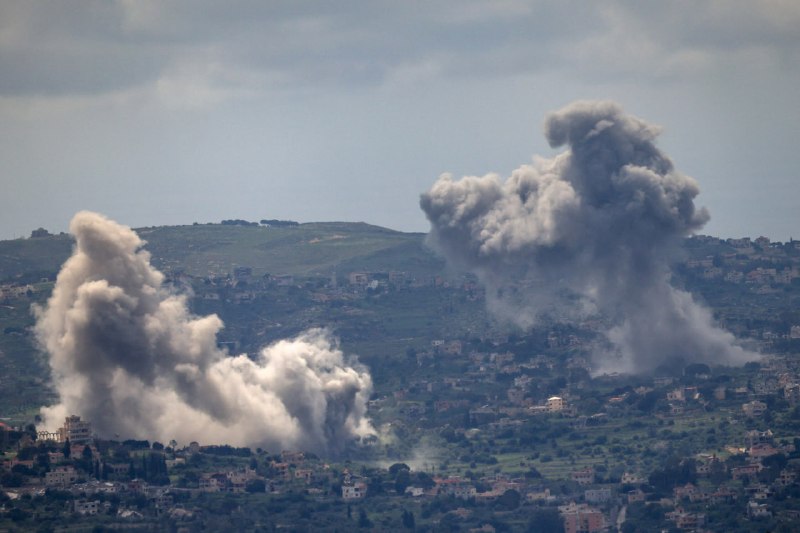
On 25 June 2026, standing at the crest of a ridge that has been fought over for at least four decades, Prime Minister Benjamin Netanyahu declared that Israel would hold a "security zone" in southern Lebanon "for as long as necessary" and would not withdraw from it. Defence Minister Israel Katz issued a parallel statement in the same hour. The choreography — two senior Israeli officials, two separate platforms, one message — was clearly designed to lock the position into the public record before any external mediator could push back. The implication is plain. The war that began in October 2023 is not, on the Israeli government's current telling, heading toward a return to the 2023 line.
The framing matters because it converts a temporary military occupation into a stated strategic objective. Until now, Israeli officials have generally described operations north of the border as defensive — pushing Hezbollah rocket and drone units back from range of Israeli towns. Netanyahu's Beaufort address recasts the posture as a permanent geographic claim, justified by the commanding terrain and by what he characterised as Israeli control of the high ground. In the same 24-hour window, both the Iranian-aligned Tasnim news agency and the Jerusalem-based Telegram channel Clash Report carried overlapping translations of his remarks, indicating that the message was meant to be heard in Beirut, in Tehran, and in Washington simultaneously.
What was actually said
The substantive content of Netanyahu's statement, as carried by the Telegram channel Clash Report on 25 June 2026 at 15:55 UTC, was that Israeli forces "dominate southern Lebanon from the summit of the Beaufort" and that Israel "will remain in the security zone in southern Lebanon for as long as necessary" and "are not going to withdraw from it." The phrasing is unusually categorical. It does not attach a condition (no "until a buffer force is in place," no "pending a verified demilitarisation of Hezbollah's northern command"), nor does it define a withdrawal trigger. Defence Minister Katz's statement, captured on the X account associated with the prediction market Polymarket at 15:58 UTC, used the term "security zone" explicitly and rejected withdrawal "despite mounting pressure." The two statements, issued within roughly three minutes of each other, are the closest thing to a unified cabinet position that has been put on the record since the ground campaign in Lebanon began in late 2023.
The geographic anchor is not accidental. Beaufort Castle — a 12th-century Crusader fortress in the Chouf foothills — commands a sightline across much of the Litani basin. It was the site of major Israeli operations in 1982 and again in 1996, and it was occupied for nearly two decades between 1982 and 2000. Naming it explicitly in a public address is a way of telling Lebanese, Iranian, and American audiences that the geography Israel is talking about is not a hypothetical buffer but a specific ridgeline, with a specific history of past Israeli presence, and a specific strategic logic of controlling observation and fire over the lowlands to the west and north.
The diplomatic counterweight
A declaration of this kind does not land in a vacuum. By 25 June 2026, ceasefire diplomacy in the Israel–Lebanon front has been running in fits and starts for several months, with the United States and France publicly carrying the principal mediation load. The Iranian state-aligned Tasnim news agency, in a 15:34 UTC dispatch on the same day, framed Netanyahu's announcement as "Israel's aggressive presence in southern Lebanon" and reported that Israeli forces in the area have "full freedom of action" — a phrase that, in Iranian and Arab press, is read as authorisation for ground operations, demolitions, and the kind of village-by-village clearing that characterised earlier Israeli occupations of Lebanese territory.
The two reads of the same speech are not symmetrical. The Israeli framing, as delivered, treats the security zone as a finished fact whose future status is a matter for Israel alone. The Tasnim framing, and the wider Arabic-language reception, treats it as a provocation that the mediators will have to overcome. Whether the United States, which has been the principal external backer of the Israeli campaign against Hezbollah since October 2023, treats the declaration as a settled Israeli policy line or as a negotiating posture is the open question. The Polymarket-flagged Katz statement — the use of a prediction-market feed to carry a sitting defence minister's declaration — is itself an indicator that the Israeli government wants the message priced into the global conversation by every available channel.
What "security zone" historically means here
The term has a specific, uncomfortable history. Between 1982 and 2000, Israel maintained a self-described "security zone" in southern Lebanon that at its widest extended roughly 15 kilometres north of the international border. The zone was policed by the Israel Defense Forces together with the South Lebanon Army, a locally recruited militia. Israeli politics for the following two decades was substantially shaped by the cost of holding that line — soldier casualties, attacks on northern Israeli towns from within the zone, and ultimately a domestic political consensus that the occupation was unsustainable. The 2000 withdrawal, carried out unilaterally under Prime Minister Ehud Barak, did not produce the calm that had been promised, but it did end the direct ground presence.
The Hezbollah military infrastructure that Israel began dismantling in late 2023 was built, in significant part, in the eighteen years between the 2000 withdrawal and the cross-border attack of October 2023. Israeli officials have, in various forums, framed that interval as the operational justification for the current campaign. Netanyahu's 25 June statement, by committing Israel to a new security zone without a defined endpoint, puts the government on a different trajectory. The implicit comparison is not to 2000 but to 1982: a long-term presence, justified by terrain and by a maximalist reading of the threat, with the cost — in Israeli lives, in Lebanese civilian displacement, in diplomatic capital — to be amortised over years rather than months.
The structural frame: a war without a declared end
What is striking about the 25 June declaration is not the content in isolation but the broader pattern of which it is the latest instalment. Across the multiple fronts opened in October 2023 — Gaza, the West Bank, the Israel–Lebanon border, the Iran-facing theatre — the Israeli government has, over the course of 2025 and 2026, moved from "operations to degrade" language to language that describes permanent changes of geography and security architecture. The southern Lebanon declaration sits inside that arc. So do the expanded settlement licensing procedures in the West Bank, the repeated discussion of "voluntary migration" from Gaza, and the ongoing strikes on Iranian-aligned logistics routes in Syria. Taken individually, each can be read as a tactical response. Taken together, they read as a doctrine.
That doctrine has a domestic logic. A government that has lost a meaningful share of public confidence over the failure to prevent the October 2023 attacks, that is operating under a domestic hostage crisis whose resolution is uncertain, and that is presiding over an economy bearing the cost of prolonged mobilisation needs a narrative that ties the ongoing sacrifice to a visible, durable outcome. "We dominate southern Lebanon from the summit of the Beaufort" is that kind of outcome. It is filmable. It is surveyable from a known point on a map. It offers a closing image for a war that, in its twentieth month, has not produced a clear strategic deliverable.
What is not yet known, and what the sources do not specify
The Clash Report and Tasnim dispatches, which are the principal feeds carrying the Netanyahu and Katz statements on 25 June, do not specify several pieces of context that a reader would normally expect. They do not state the size of the security zone in kilometres or in named villages. They do not say whether the Israeli cabinet has formally ratified the position or whether it is the prime minister's personal framing. They do not give casualty figures for either side in the southern Lebanon theatre in the week leading up to the declaration, nor do they give the number of Lebanese civilians currently displaced. They do not record any third-party reaction from Washington, Paris, Beirut, or the United Nations Interim Force in Lebanon (UNIFIL), all of whom would normally be expected to issue a response within hours. The absence of those reactions in the carried text is not the same as their absence in the world — but the 25 June record, as it stands in the cited feeds, is one-sided.
It is also worth being precise about what Netanyahu did and did not say. The carried text is a single declarative paragraph, in English translation, with several phrases repeated across feeds. The original Hebrew phrasing, the full speech, the cabinet decision (if any) that may underlie it, and any accompanying diplomatic notes to the United States, France, or Lebanon are not in the cited record. The Polymarket-flagged Katz statement, in particular, is carried via a prediction-market feed — a vehicle optimised for short, newsworthy declarations, not for the full text of a ministerial statement. Readers should treat the declarations as a real and substantive signal of Israeli government intent, and at the same time as a partial record of a much larger set of decisions that have not, on the evidence available here, been put in writing.
The stakes
The stakes of the 25 June declaration, if it holds, are concrete on both sides of the border. For Israel, a long-term security zone commits the country to a multi-year ground presence in a territory that produced a sustained domestic political backlash the last time it was tried. The fiscal cost, the casualty cost, and the diplomatic cost will compound. For Lebanon, a permanent Israeli presence north of the international border — even one described as defensive — forecloses the basic premise of the post-Taif settlement, which has been that no foreign army should hold Lebanese territory. For Hezbollah specifically, the loss of the Beaufort observation line is a degradation of the kind of terrain advantage the group has spent the last two decades building into. For Iran, the declaration is a direct material change in the balance of forces on the northern border of Israel, and the Tasnim framing should be read in that light: an ally signalling to its patron that the cost of the current Israeli posture is being absorbed.
The most important question is not whether Israel can hold the ridge — it plainly can, on the available evidence — but whether the holding is the beginning of a negotiated settlement or the end of one. The Clash Report text is explicit that Israel is "not going to withdraw." The Tasnim text is explicit that this is read as aggression. The Katz text, via Polymarket, is explicit that withdrawal will not happen "despite mounting pressure." The mediators, when they next speak, will be negotiating against a stated Israeli position rather than an assumed one. That is a different kind of negotiation, and the 25 June declaration is, in effect, the opening move.
This article was filed against a partial record: the cited feeds carry the Netanyahu and Katz declarations but do not include cabinet authorisation text, casualty figures, or third-party diplomatic responses. Monexus will update as those elements enter the wire.
Wire provenance
This editorial synthesis draws on the following public wire/social posts:
- https://t.me/ClashReport
- https://t.me/JahanTasnim
- https://en.wikipedia.org/wiki/Beaufort_Castle,_Lebanon
- https://en.wikipedia.org/wiki/South_Lebanon_conflict_(1985%E2%80%932000)
- https://en.wikipedia.org/wiki/Israel%E2%80%93Hezbollah_conflict_(2023%E2%80%93present)
- https://en.wikipedia.org/wiki/Israel_Katz
- https://en.wikipedia.org/wiki/2023_Hamaz_attack_on_Israel
- https://t.me/ClashReport
- https://t.me/JahanTasnim
- https://en.wikipedia.org/wiki/Beaufort_Castle,_Lebanon
- https://en.wikipedia.org/wiki/South_Lebanon_conflict_(1985%E2%80%932000
- https://en.wikipedia.org/wiki/Israel%E2%80%93Hezbollah_conflict_(2023%E2%80%93present
- https://en.wikipedia.org/wiki/Israel_Katz
- https://en.wikipedia.org/wiki/2023_Hamaz_attack_on_Israel