Rubio draws the line on Iran: ships, sovereign borders, and the money trail
On 25 June 2026, Secretary of State Marco Rubio laid out three hard tests for any Iran deal: no reconstruction fund, no proxy money, and no movement of sanctioned vessels. The framework reveals how thin the diplomatic runway has become.
On the morning of 25 June 2026, U.S. Secretary of State Marco Rubio used three short press appearances to sketch what he described, again and again, as the only deal worth having with Tehran. The rubric was unsentimental. No reconstruction fund was discussed with Gulf states. Iranian money that funds regional armed groups would void any agreement. And if sanctioned ships do not move, that is a violation; if they do, that is what Washington will judge. Taken together, the three lines amount to a working definition of what American negotiators now consider success — and what they consider failure.
That the Secretary of State has had to say this publicly, and in terms this blunt, says more about the state of the diplomacy than any joint communiqué could. Iran is at the table, but it is at the table with the people most willing to deal, not necessarily the people who control the levers. Rubio acknowledged as much, noting that Iranian counterparts include figures who "seem more flexible and more willing to work with us" even as the regime remains, in his words, led by "extremist clerics." The gap between the clerical leadership and the negotiating principals is now the operative variable.
The money test
The first test is financial. Asked whether a Gulf-financed reconstruction package for Iran was on the table, Rubio answered flatly that it was not. The denial matters because, in the months of quiet diplomacy preceding the current talks, reconstruction financing had been floated by intermediaries as the sweetener that might convert a tactical agreement into something durable. Gulf capitals — with capital to deploy and a direct stake in regional de-escalation — were the natural backers. Rubio's statement closes that door for now.
The second test is the proxy test. "If Iran uses funds for proxies, the deal doesn't work." The line is short but does enormous work. It reframes what counts as Iranian compliance. Theask is no longer whether Tehran moves uranium, enriches to a certain percentage, or permits a given number of inspectors. The ask now reaches the downstream behaviour of Hezbollah, the Houthis, the Iraqi militias, and the broader constellation of armed groups Tehran sustains. That is an ambitious ask. It is also one that Washington's Gulf partners have been demanding in private for years.
The shipping test
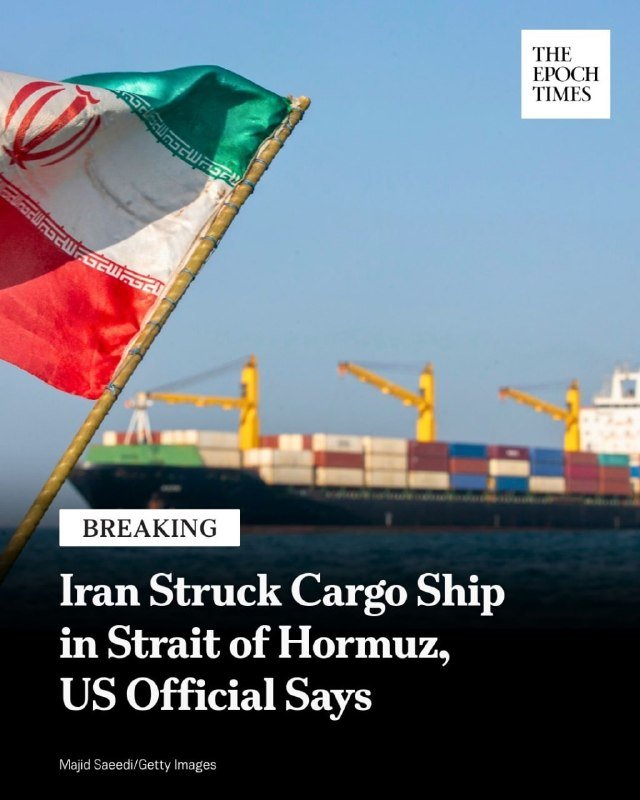
The third test is operational, and the easiest to verify. "If ships are moving, then that's what we are gonna react to," Rubio said, in remarks captured at 11:41 UTC on 25 June. "If the ships don't move, then that's a violation of the agreement, and we are gonna have a problem with it." The phrasing inverts the usual sanctions logic. Movement is not the trigger for sanctions; non-movement is the trigger for escalation.
This is a meaningful shift. Under the previous sanctions architecture, presence of Iranian-linked cargo at sea generated automatic penalties; the burden was on Tehran to prove non-movement or non-Iranian provenance. The new framework treats the resumption of sanctioned shipping as the desired outcome and treats continued stillness as the breach. The change in presumption is itself a concession — and a tell. It suggests that, behind the scenes, Washington is preparing to certify that certain shipowners, certain flags, and certain cargoes are no longer hostile traffic. It also creates a fast observable: satellite tracking of named vessels will, within days, indicate whether Tehran is holding up its end.
The sovereignty line
The most consequential sentence Rubio delivered on 25 June was not about Iran at all. "You're not going to have peace and stability in this region as long as there are non-state actors operating within the boundaries and borders of sovereign countries," he said, in remarks recorded at 12:42 UTC. It is a line that applies across the Middle East: to armed groups inside Lebanon, to militias embedded in the Iraqi state, to Houthi forces on Yemeni territory. But aimed at Tehran, it amounts to a demand that Iran stop arming, training, financing, and politically sheltering groups that operate inside other states' borders.
That demand is the one most likely to break the talks. Tehran can, in principle, constrain its nuclear programme. It cannot, in principle, surrender its regional architecture without surrendering its claim to great-power status. Which is why Rubio paired the sovereignty line with the clerical one: the regime is still led by extremist clerics, the Secretary said, and that fact has not changed. Negotiating with flexible figures inside an inflexible system is, by design, a fragile arrangement.
Stakes
If the framework holds, the upside is real and measurable. A verifiable ceasefire on shipping in the Gulf would lower insurance premia for tanker traffic within weeks, ease pressure on the Strait of Hormuz, and create political space for the kind of reconstruction package Rubio just denied exists. If the framework breaks — and the most plausible break is a single Houthi missile, a single militia provocation, a single Iranian shipowner who refuses to move — the snap-back is automatic. The deal is binary by design.
What remains genuinely uncertain is whether the flexible figures Rubio cited have the authority to deliver. Iranian negotiating teams have signed understandings before that senior clerics later refused to ratify. The framework's success depends on a hypothesis Washington has not, in public, offered evidence for: that this round of Iranian interlocutors can bind the system. Until that hypothesis is tested, the three tests Rubio laid out on 25 June are best read as a statement of intent — and a warning that the runway is short.
How Monexus framed this versus the wire: where most outlets led with the reconstruction-fund denial, this publication foregrounds the three-test framework — money, proxies, shipping — because the denial only matters inside the architecture those tests describe.
Wire provenance
This editorial synthesis draws on the following public wire/social posts:
- https://twitter.com/Osint613/status/2070120403888939099
- https://twitter.com/Osint613/status/2070120403888939099/vi
- https://twitter.com/Osint613/status/2070120403888939099/vi
- https://twitter.com/Osint613/status/2070120403888939099
- https://twitter.com/Osint613/status/2070120403888939099
- https://twitter.com/Osint613/status/2070120403888939099
- https://twitter.com/Osint613/status/2070120403888939099
- https://twitter.com/Osint613/status/2070120403888939099
- https://twitter.com/Osint613/status/2070120403888939099/vi
- https://twitter.com/Osint613/status/2070120403888939099/vi
- https://twitter.com/Osint613/status/2070120403888939099
- https://twitter.com/Osint613/status/2070120403888939099
- https://twitter.com/Osint613/status/2070120403888939099
- https://twitter.com/Osint613/status/2070120403888939099