Screens in the Square: Israel, Lebanon, and the Theatre of a Closing War
Outdoor screens in Israeli towns are broadcasting the bombing of Lebanese cities while Beirut and Jerusalem prepare to sign a ceasefire by nightfall. The two scenes, watched together, say something about the war the deal is meant to end.
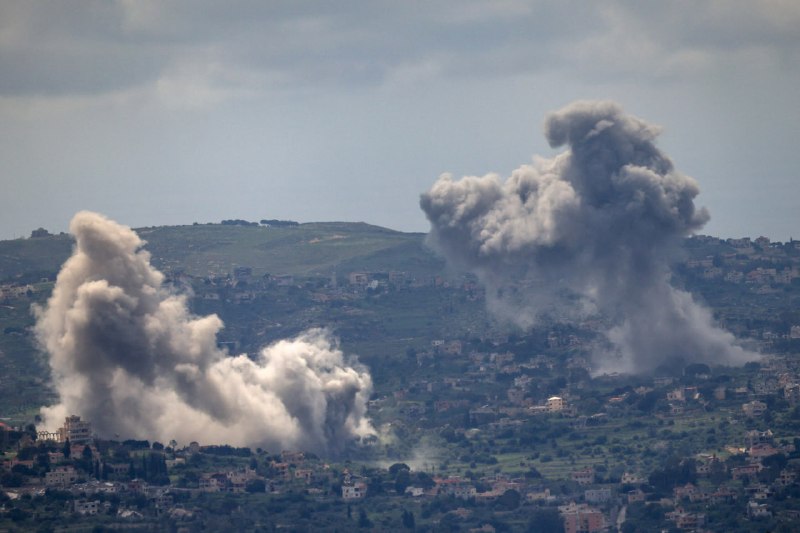
At 18:51 UTC on 25 June 2026, a video circulated on X showing large outdoor screens in an Israeli town tuned to live coverage of the bombing of Lebanese cities. Residents in the frame were applauding as buildings came down. Thirty-seven minutes earlier, MTV Lebanon had told its audience that an agreement between Lebanon and Israel was expected to be signed at around 21:30 local Beirut time. By the time those two signals crossed on the same evening, the war Israel has fought in Lebanon since late 2023 appeared to be ending — not with quiet relief, but with the specific noise of one side watching the other burn on a screen.
Monexus has chosen to read those two scenes together because, taken separately, neither tells the truth of the day. A ceasefire that drops onto an already-celebrating crowd is not a ceasefire in the moral sense. It is an armistice that the dominant party has decided to call, and the way a population experiences that call — cheering, indifferent, grieving, or relieved — tells you what kind of peace is being installed.
The two clocks of 25 June
The MTV report, relayed by the @wfwitness Telegram channel at 18:28 UTC on 25 June, was precise about timing: a signing expected at roughly 21:30 Beirut time. The wording was deliberately hedged — an agreement is expected to be signed — but the framing assumed the deal would hold. Lebanese and Israeli negotiators had spent weeks trading drafts of an arrangement that would, in its essentials, push Hezbollah's remaining military presence north of the Litani River, demobilise heavy weapons in the south under international supervision, and end the open-ended Israeli air campaign over Lebanese towns. That is the architecture the public has been told to expect.
The Polymarket contract on a full Israeli withdrawal from Lebanon by year-end traded at 24 percent on the same afternoon, per a post on the platform's X account at 15:59 UTC on 25 June. That is a low number. It says the informed money believes a deal will be signed but does not yet believe Israel will actually leave. The distinction matters: an Israeli government can pause bombing without withdrawing, and the Litani line is not the border.
In Israel, the picture circulating from @sprinterpress at 18:51 UTC showed the pause as something other than sorrow. Large-format screens had been set up in a public square. Footage of Lebanese cities being hit ran live. The crowd was not flinching. The video does not show who organised the broadcast, who paid for the screens, or whether the gathering was a private event, a municipal one, or a partisan rally; those details are not in the source material. What the source material does show is the affective register: applause. That is not a marginal mood. It is the visible interior of a war that is being framed as a war the public wants won on television before the television gets turned off.
What the deal is actually settling
Reports over the preceding weeks have described the framework as a Hezbollah disarmament track attached to a wider Lebanese-state security roadmap: Lebanese army deployment along the border, UNIFIL reconfiguration, and an Israeli commitment to halt air operations over populated areas in return for verifiable demilitarisation south of the Litani. None of those specifics are stated in the source items Monexus is working from tonight, and it is worth saying that plainly. The deal's fine print has not been independently confirmed in the materials available to this article.
What is confirmed is the diplomatic shape: a bilateral text, an Israeli side and a Lebanese side, and a third-party channel that has kept the two talking. The Israeli public mood captured on the screens suggests the Israeli negotiating position has internal support — that is, the political space exists in Israel to settle on terms that, even if less than maximalist, are saleable as victory. The Polymarket price suggests the international audience that prices such things is less sure the implementation will follow. Between those two readings lies the actual risk of the deal: a signature without a follow-through, the worst-case outcome for Lebanese civilians and the most likely outcome of wars that end on screens rather than at conference tables.
The screen as a political object
Large public broadcasts of war are not new. They are, however, doing different work in 2026 than they did in earlier decades, when the screen was the moment families saw their sons return in coffins. The screen in this video is not a memorial. It is a rally. The state is not formally announcing; an organiser — whose identity the source does not give — has built a stage.
Three things follow from that. First, the visual grammar of war is shifting from casualty to spectacle. If the public's first encounter with enemy territory is destruction shown live and cheered, the political cost of continuing the war drops sharply. Second, the boundary between wartime propaganda and civic life blurs. There is no editor curating what the crowd sees; there is a feed. Third, the same feed, on the same evening, is the one the Lebanese side is watching in fear. The screen that delights in Sderot or Petah Tikva is the screen that haunts Sidon or Tyre. The architecture of the deal is supposed to put those screens out of business. It has not yet done so.
Why the crowd was applauding
The Israeli public mood in mid-2026 cannot be reduced to one video. The source material offers a single data point, not a survey. But the video is consistent with a wider reporting pattern across the past year: an Israeli electorate that has come to accept — and in places demand — a sustained high-intensity campaign against Hezbollah's military infrastructure in Lebanon, conducted alongside the war in Gaza, and a public discourse in which Lebanese civilian harm is treated as collateral to a security objective rather than as a separate moral problem.
This is not a moral judgement layered onto the source; it is what the source depicts. A crowd applauding the visible destruction of another country's cities is a political fact before it is an ethical one. It tells negotiators on both sides something about the constituency they are answering to, and it tells them something different. The Lebanese side learns that the Israeli public mood will not impose restraint on Israeli operations in a future flare-up, because the precedent of public celebration has been set. The Israeli side learns that withdrawal will require either a clear security narrative or a quiet one — the screens do not cheer for quiet.
What the Polymarket price is really saying
Twenty-four percent is a number with texture. It is high enough that a withdrawal cannot be ruled out — the contract would price near zero if traders thought it implausible. It is low enough that the modal expectation is something less than a full exit by 31 December 2026. The implied distribution points to a partial pullback, a staged handover, or a deal whose Israeli withdrawal provisions are watered down in implementation.
That reading is consistent with the structure of the war. Israel has, in 2025 and into 2026, established operational depth inside southern Lebanon against Hezbollah positions, an outcome it did not have before October 2023. Any Israeli government will be reluctant to relinquish that depth in a hurry, and the Lebanese state's capacity to deploy and credible-force in the south — the actual guarantor of any demilitarisation — is itself contested. The signed deal is the easier part. The verified demilitarisation is the harder part. The screens in the square suggest the Israeli public will tolerate the delay; the Polymarket price suggests the international market expects the delay.
What remains uncertain
Three things have not been settled by tonight's reporting. The deal's specific terms — buffer-zone width, the role of international monitors, the timetable for any Israeli withdrawal — are not in the source material. The reaction inside Lebanon, beyond MTV's reporting of the imminent signing, is not in the source material; the Lebanese public mood is, at this hour, unrepresented in the inputs available to this article. And the identity and motive of whoever set up the screens in the Israeli town is not in the source material. It is plausible that this was a partisan or settler-movement event, plausibly a municipal broadcast, plausibly a private gathering that happened to attract a camera. Monexus has chosen not to invent a sponsor. The video's existence is the fact; its organisation is a question.
What can be said, with the source material at hand, is narrower than it should be — and that is the appropriate epistemic register for an evening when a war is signing itself out. A ceasefire is not a peace. A crowd applauding on a screen is not a public mandate. A market price at 24 percent is not a forecast. Together, they describe a transition whose outcome is, tonight, genuinely open.
Monexus framed this story on the Israeli public mood captured in the @sprinterpress video and the timing of the MTV report relayed by @wfwitness, rather than on speculation about the deal's full text. We have not asserted terms the source items do not contain, and we have not named the organiser of the broadcast shown on the screens.
Wire provenance
This editorial synthesis draws on the following public wire/social posts:
- https://x.com/sprinterpress/status/2070218356871839744
- https://t.me/wfwitness
- https://x.com/polymarket/status/2069331329427369984
- https://en.wikipedia.org/wiki/Israel%E2%80%93Hezbollah_conflict_(2023%E2%80%93present)
- https://en.wikipedia.org/wiki/2024_Israel%E2%80%93Lebanon_ceasefire
- https://en.wikipedia.org/wiki/United_Nations_Interim_Force_in_Lebanon
- https://x.com/sprinterpress/status/2070218356871839744
- https://t.me/wfwitness
- https://x.com/polymarket/status/2069331329427369984
- https://en.wikipedia.org/wiki/Israel%E2%80%93Hezbollah_conflict_(2023%E2%80%93present
- https://en.wikipedia.org/wiki/2024_Israel%E2%80%93Lebanon_ceasefire
- https://en.wikipedia.org/wiki/United_Nations_Interim_Force_in_Lebanon