A drone strike in South Lebanon, a routine that no longer shocks
An Israeli drone strike near the town of Zawtar in Nabatieh district killed three people on 25 June 2026 — the kind of incident that, two years into a declared ceasefire, has become a depressingly familiar feature of the South Lebanon line.
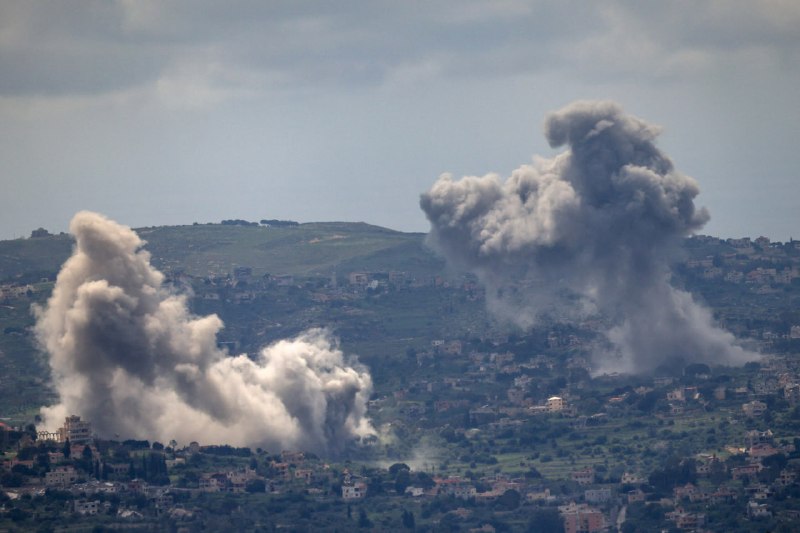
A drone strike near the town of Zawtar, in Nabatieh district of south Lebanon, killed three people on the morning of 25 June 2026, according to Lebanese and Beirut-based outlets reporting from the scene. The strike, attributed to Israel and described as targeting a motorcycle between Zawtar and the neighbouring village of Mayfadoun, is the latest in a string of what the Lebanese side now routinely characterises as Israeli violations of the November 2023 ceasefire framework.
The geometry of the incident is by now depressingly familiar. A small target — a vehicle, a motorcycle, a single motorbike on a hillside road — is hit by an Israeli drone; Lebanese outlets report a number of dead in the low single digits; the Israeli military either does not comment, or frames the action as a strike against an operative of Hezbollah or an affiliated group; and the international wire services run the story as a four-line bulletin. What has changed since November 2023 is that the cumulative weight of these bulletins is starting to look less like a ceasefire in slow collapse and more like a ceasefire in name only.
What the reporting shows
The earliest flash came at 11:56 UTC on 25 June 2026, when Al-Alam Arabic, the Arabic-language satellite channel of Iranian state television, reported an "occupation" strike on the eastern outskirts of Zawtar in Nabatieh district in southern Lebanon. Within two minutes, the Beirut-based outlet The Cradle published a more specific account: an Israeli drone had targeted a motorcycle between the towns of Zawtar and Mayfadoun, both in Nabatieh. By 12:47 UTC, Al-Alam Arabic updated the casualty count to three killed and one wounded.
The geographic setting matters. Zawtar sits in the eastern part of Nabatieh district, an area that has been inside the zone of operations of the Israel–Hezbollah war that ran from October 2023 through the ceasefire of late November of that year, and which has remained the focus of near-daily Israeli air and drone activity since. Mayfadoun, the second village named in the Cradle report, is adjacent. The roads between the two towns cross open agricultural land in which the presence of motorbikes is unremarkable — they are a routine form of transport in the southern villages.
What the three-source cluster does not yet show is the identity of the three dead. Lebanese outlets, including those affiliated with Hezbollah, routinely name victims and publish photographs; the larger international wires typically wait for either an Israeli military statement or the publication of a named obituaries-style identification by a Lebanese local authority. The current reporting window is too early for that. The framing of the strike — a vehicle on a road, three dead, no immediate Israeli comment in the thread — is consistent with the pattern that has prevailed in south Lebanon since the formal cessation of major hostilities: low-casualty precision actions that are not formally acknowledged by the Israeli side but that are reported, photographed, and embedded in the casualty record within hours.
The framing problem
The international wire and the Lebanese-and-Beirut-based coverage of the same incident tend to read as if they describe different countries. The Cradle's line — "Israeli violations in south Lebanon continue" — is the framing used by a Beirut-based, regionally focused outlet with explicit editorial sympathy for the resistance axis. Al-Alam Arabic, the channel that broke the story first on 25 June, is the Arabic service of Iranian state television. The word "occupation" in its first bulletin is not a neutral geographic descriptor; it is a political position.
The mainstream wire services, by contrast, have for months been running the south-Lebanon line as a low-grade background story: Israeli strikes, limited Lebanese casualties, no claim of operational significance, filed under "Israel–Hezbollah" or "Lebanon border" rather than under the war-and-conflict banner. Reuters, AP, AFP and BBC all carry the material; few of them have re-elevated it to sustained coverage since the formal end of the 2023 campaign.
Both framings are partial. The "violations continue" framing is correct on the empirical question — there have been hundreds of incidents since November 2023, in numbers documented by UNIFIL, by the Lebanese army, and by the United Nations Special Coordinator for Lebanon — but the political vocabulary it deploys is a barrier to the broader Western wire audience. The "ceasefire holding, occasional incidents" framing is correct on the political question — there has not been a return to the kind of full-spectrum combat that characterised September to November 2023 — but it has produced, cumulatively, a casualty pattern in the south that would in almost any other theatre of the Israel–Palestine file be treated as a serious escalation.
The interesting question is not which framing is true. Both are. The interesting question is what the gap between the two tells us about how the international press is calibrated to process a particular kind of low-intensity, precision-strike counter-insurgency operation along a border that the major powers do not want to see break into open war.
What the ceasefire did and did not settle
The November 2023 ceasefire framework was negotiated under heavy United States and French mediation and was designed to do three things: end the open war between Israel and Hezbollah, push Hezbollah's operational infrastructure north of the Litani river, and establish a UNIFIL-monitored buffer in which the Lebanese army would be the only armed presence. It largely succeeded at the first of those tasks. It succeeded less well, and for a much shorter time, at the second. It has been in slow attrition on the third from the start.
UNIFIL's own reporting, and the regular statements issued by the office of the UN Special Coordinator for Lebanon, have documented the pattern: Israeli drones operating at low altitude over Lebanese villages, occasional strikes on motorbikes, vehicles, or individuals, and a steady drip of casualties that runs into the dozens per quarter. The Lebanese government, including under prime ministers of different political complexions, has protested the incidents to the UN Security Council. The Israeli military has described the strikes as targeted operations against Hezbollah infrastructure, sometimes against individuals identified as having returned to the south in contravention of the ceasefire, and has emphasised that the operations comply with the right of self-defence recognised in the ceasefire framework itself.
What neither side has done, in the public record available since November 2023, is to provide a clear, dated, publicly accessible breakdown of which strikes are tied to specific named individuals, what the evidentiary basis for the targeting was, or how the cumulative pattern is consistent with the spirit of the arrangement that the United States and France spent the autumn of 2023 brokering. The opacity is itself a structural feature of the arrangement: it allows both sides to keep the political language of the ceasefire in place while, in operational terms, the south remains a live theatre.
The structural frame, in plain language
What is happening in south Lebanon is not a war in the conventional sense. There is no front line, no manoeuvring of formations, no artillery duels. There is something more difficult to read: a slow, distributed, precision-strike campaign that is publicly described by one side as counter-operations against a still-active armed infrastructure, and by the other as a continuing occupation-by-other-means. The international system has effectively accepted that the south will be a zone in which the major-power-brokered ceasefire of November 2023 functions as a political fact — there is no return to open war — but in which the practical pattern of daily life is that of an active, low-intensity, sovereignty-contested border.
The wider context is a Middle East in which Israel is fighting on multiple fronts — Gaza in the first instance, the West Bank in slow escalation, Yemen via the Houthi maritime campaign, Iran via periodic direct exchanges — and in which the southern Lebanese front is the lowest-cost piece of that portfolio. Drone strikes, even at the rate of several per week, do not produce the kind of political price-tag inside Israel that a return to manoeuvre warfare in the south would. They do, however, produce a steady cumulative Lebanese civilian casualty count that, in the documentation of the United Nations and of Lebanese civil society, is now well into the hundreds since the ceasefire was signed.
This is the structural condition that the two competing framings are trying to capture, with different degrees of success. The mainstream wire's "incidents, low-grade" line captures the political fact — there is no war. The Cradle and Al-Alam line captures the empirical fact — there are strikes, and there are dead, and the pattern is sustained. Neither line, on its own, gives a reader the picture that the other, read in conjunction, would.
Stakes
If the pattern continues at the current rate, the cumulative Lebanese civilian and combatant toll for the November 2023–June 2026 ceasefire period will pass into the four-figure range well before the end of 2026, on the documentation of the United Nations. The political cost to the Lebanese state of being unable to prevent that toll — and to the United Nations of having its flag, and its peacekeepers, in the area where the toll is rising — will continue to accumulate at a pace the formal language of the ceasefire does not register.
For Israel, the trade-off is between operational reach into what its security services continue to describe as a residual Hezbollah infrastructure, and the long-term diplomatic and reputational cost of being the state that conducts the strikes. The current configuration has been politically sustainable inside Israel for as long as the broader regional portfolio has not generated a serious counter-coalition response; that is a contingent, not a permanent, condition.
For Hezbollah, the strikes are simultaneously a constraint on the movement of personnel and equipment in the south, and a public-record demonstration of a continued, lower-grade confrontation with Israel that the movement's political wing can mobilise domestically. The pattern is, in other words, a slow equilibrium in which each side bears costs it can absorb, and the third parties — Lebanese civilians, UNIFIL peacekeepers, the broader UN system — bear costs that no part of the arrangement was designed to address.
The strike near Zawtar on 25 June 2026 is one strike. It killed three people on a road between two villages in Nabatieh district. Reported as a one-day item in the international press, it is unremarkable. Read against the rolling aggregate — three here, two there, four somewhere else, week after week, month after month — it is the operation of a slow, low-grade, and apparently durable arrangement that the language of "ceasefire" does not begin to describe.
— This publication framed the 25 June strike as a routine data point inside an accumulated pattern, rather than as a discrete incident. The Cradle and Al-Alam Arabic reporting is treated here as primary on the ground detail; the mainstream wire line is the comparator frame against which that reporting is read.
Wire provenance
This editorial synthesis draws on the following public wire/social posts:
- https://t.me/alalamarabic/
- https://t.me/thecradlemedia/
- https://en.wikipedia.org/wiki/Zawtar
- https://en.wikipedia.org/wiki/Nabatieh_District
- https://en.wikipedia.org/wiki/South_Lebanon_governorate
- https://en.wikipedia.org/wiki/2023_Israel%E2%80%93Hezbollah_ceasefire
- https://en.wikipedia.org/wiki/United_Nations_Interim_Force_in_Lebanon
- https://en.wikipedia.org/wiki/Israel%E2%80%93Hezbollah_conflict_(2023%E2%80%932024)
- https://t.me/alalamarabic/
- https://t.me/thecradlemedia/
- https://en.wikipedia.org/wiki/Zawtar
- https://en.wikipedia.org/wiki/Nabatieh_District
- https://en.wikipedia.org/wiki/South_Lebanon_governorate
- https://en.wikipedia.org/wiki/2023_Israel%E2%80%93Hezbollah_ceasefire
- https://en.wikipedia.org/wiki/United_Nations_Interim_Force_in_Lebanon
- https://en.wikipedia.org/wiki/Israel%E2%80%93Hezbollah_conflict_(2023%E2%80%932024