A chokepoint, a closure, and a $40bn projection: what the Strait of Hormuz crisis now means
A vessel hit, a projected $40bn annual transit-fee windfall, and oil prices back at pre-war lows: the Strait of Hormuz story is shifting faster than the wire copy can keep up.
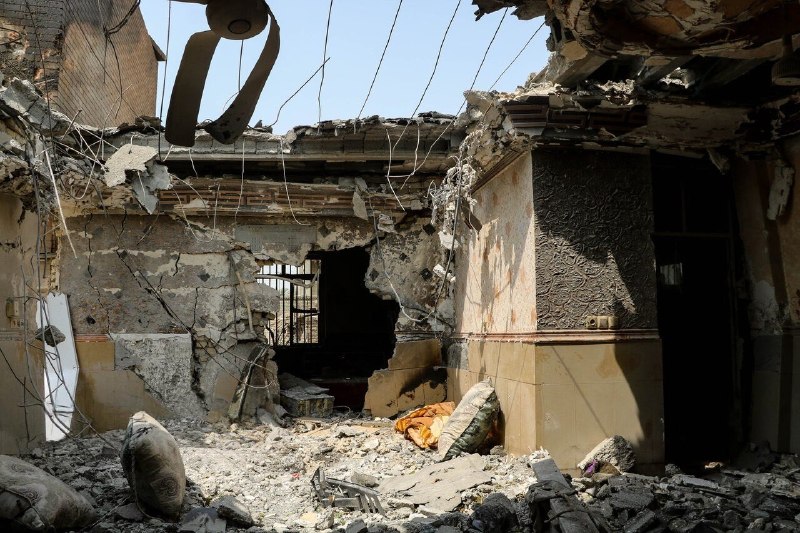
At 15:22 UTC on 25 June 2026, maritime agencies began relaying reports that a commercial vessel in the Strait of Hormuz had been struck by an "unknown projectile." The incident, carried by Telegram channel Insider Paper from initial agency wires, lands in a market that has spent the past several weeks lurching between two extremes: an outright closure of the waterway ordered in the aftermath of US and Israeli strikes on Iran, and a rapid diplomatic reopening that has now pulled oil prices back to levels last seen before the war began. The contradiction is the story.
What the past 72 hours have made clear is that the Strait of Hormuz is no longer being discussed as a piece of geography. It is being discussed as a revenue line. A projection circulating on 25 June — first surfaced via Polymarket's news desk and attributed to Iranian officialdom — puts potential annual income from Strait transit fees at roughly $40 billion. That figure sits oddly beside oil trading back at pre-war benchmarks. Both can be true, and the gap between them is where the next phase of the crisis will be fought.
What actually happened in the waterway
The 15:22 UTC advisory is the first confirmed kinetic incident reported in the Strait since the effective reopening began. Maritime-agency alerts described a "vessel hit by 'unknown projectile'"; the bulletin carried by Insider Paper did not name the vessel, the flag state, or the operator, and did not attribute the strike. As of the latest wires, no party has claimed responsibility, and Iranian, US, and Israeli spokespeople have not been on record naming a perpetrator. The phrase "unknown projectile" — agency boilerplate for a strike that cannot yet be sourced — is itself the news: a week after oil traders were pricing in normalisation, somebody put a weapon back in the water.
For shipowners and charterers, that is a sharper signal than any of the communiqués that have come out of foreign ministries since the closure began. Insurance war-risk premia for tankers transiting the Strait had begun to compress in early June as the route functionally reopened. A single confirmed strike reverses that trend in a single trading session.
The $40bn projection and what it claims about Iranian strategy
The more consequential data point in the public ledger is the $40bn annual revenue projection. The figure appeared on 25 June via the Polymarket-affiliated X account, framed as an Iranian regime estimate of what the Islamic Republic could collect by charging transit fees on commercial traffic through the waterway.
Two readings are available, and they point in opposite directions. The hard-numbers reading: roughly 20% of global seaborne crude passes through the Strait on a normal day. Even a modest fee per barrel — say, a dollar — applied across that volume produces tens of billions in annualised revenue. The geopolitical reading: Iran is signalling that the closure was never binary. A wholesale shutdown costs Tehran its largest single source of leverage; a controlled, fee-based reopening monetises that leverage indefinitely. The projection, in other words, is a price list disguised as a forecast.
It is worth treating the number with care. Iranian revenue projections made during an active conflict tend to overstate collectable income, because they assume counterparties will pay rather than route around. The countervailing reality is that the Strait is narrow, Iran's coastline dominates the northern shore, and the practical alternatives — pipelines across Saudi Arabia and the UAE, the longer Cape route around Africa — each carry their own costs and capacity ceilings. The Iran International–led reporting on the broader closure story has emphasised both halves: Tehran can extract a price, but only as long as the substitute routes stay saturated.
Why oil is at pre-war levels despite an active closure cycle
The market picture is what most observers are missing. Per BBC reporting on 25 June, oil has fallen back to levels last seen before Iran's response to US and Israeli strikes — a finding that initially reads as a contradiction. The closure was, after all, supposed to spike prices. Three things explain the divergence.
First, strategic petroleum reserves. The US, several EU member states, Japan and South Korea drew down SPR volumes through the worst of the closure window, and the release kept physical supply available even as tanker traffic through Hormuz slowed. Second, demand softness. The same BBC report points to subdued industrial demand from the largest Asian buyers, particularly China, where refinery run rates have been below seasonal norms. Third, the substitution effect: Saudi's East–West pipeline and the UAE's Habshan–Fujairah route ramped up, even at higher transport cost per barrel, and the marginal barrel did reach market.
The implication is uncomfortable for any side claiming the closure is a decisive lever. The Strait remains the most important single chokepoint in seaborne energy, but the global system has built more redundancy into the last decade than is commonly credited. A projection of $40bn in Iranian transit revenue assumes that redundancy has a ceiling; the price action argues the ceiling is real but higher than Tehran's optimistic forecasts.
What the wire copy is — and is not — saying
The dominant Western framing since the strikes has emphasised Iran's isolation and the cost of closure to its own economy. That framing is not wrong, but it is incomplete. It treats the Strait as a binary — open or shut — and measures Iranian behaviour against that binary. The polymarket-circulated projection, and the Iranian commentary that has surrounded it on regional outlets, treat the Strait as a tunable instrument: shut it for a week to demonstrate reach, reopen it for a fee to demonstrate restraint, and monetise the cycle indefinitely.
That second framing has more explanatory power for the present sequence of events. It explains why Tehran would tolerate an "unknown projectile" striking a vessel in the waterway in the middle of an apparent normalisation phase: such incidents preserve the option of closure without the diplomatic cost of declaring one. It also explains why Iran's messaging has been disciplined — projection figures rather than threats, official silence rather than boasts after the strike — because the business model depends on customers believing that transit is the safer alternative.
The counterweight to this read is that Tehran's own economy is under severe strain. Sanctions enforcement has tightened since the strikes; regime-aligned outlets have carried fewer confident victory claims in recent weeks than they did in the immediate aftermath of the closure. The fee-revenue model is an attempt to convert a military posture into a fiscal one, and it works only if Iran's coercive credibility in the waterway remains intact. The 15:22 UTC strike, by whoever launched it, is precisely the kind of event that erodes that credibility.
The structural frame: choke points as fiscal policy
For most of the post-1945 period, chokepoint politics have been conducted in the language of security: freedom of navigation, multilateral monitoring, the diplomacy of insurance premia. What the past month has surfaced is a different grammar. A state with the geographic position to throttle a corridor can choose to monetise that position rather than weaponise it outright — and the difference matters, because monetisation produces a stable equilibrium while weaponisation produces a war.
The pattern is familiar from other domains. Platforms that once disrupted incumbents now set the rules of participation; currencies that once competed now coexist in managed hierarchies; supply chains that once optimised for cost now optimise for resilience. In each case, the lever of disruption is converted, over time, into a fee. The Strait of Hormuz is on the same trajectory. Iran's projection is the public price list.
The deeper question is who pays it. Transit fees on the scale Iran is signalling would, in the first instance, be paid by Asian crude importers — China, India, Japan, South Korea — and would feed directly into the domestic energy bills of those economies. That dynamic shifts the diplomatic geometry. A US policy framed around maximum pressure on Iran runs into a counter-policy from importing governments whose voters feel the cost at the pump. The structural tension between Washington's sanction regime and its allies' energy bills is not new; what the $40bn figure does is put a number on it.
Stakes over the next quarter
Three trajectories are plausible over the next 90 days, and each has a different winner.
In the first, the "unknown projectile" strike is contained, transit fees become the working arrangement, and the market treats the Strait as a permanently tolled corridor. The winners are Tehran (revenue), major Asian importers (predictable transit), and insurance markets (sustained premia). The losers are the Western sanction architecture and the political constituencies inside the US and Europe who framed the conflict around Iranian isolation.
In the second, additional strikes occur, the closure returns in full force, and the market reprices. The winners are short-cycle oil traders and SPR holders. The losers are importing economies without SPR cover and the Iranian fiscal position, which depends on collection continuity.
In the third, a diplomatic agreement caps Iranian revenue in exchange for sanctions relief. This is the path most consistent with the pre-war oil price, and it is the path the market is currently pricing — but it is also the path that requires the most political capital from the parties least willing to spend it.
What is not yet visible is which trajectory holds. The 15:22 UTC strike, and the official silence that has followed it, suggests the first trajectory is not yet locked in. The $40bn projection, treated as Iranian aspiration rather than forecast, is what the first trajectory would look like if it stabilised. The pre-war oil price is the market's bet that the third trajectory wins. The next 72 hours of shipping will tell us which of those bets is being priced correctly.
What the sources do not yet settle
Three uncertainties persist at the time of writing. First, attribution of the projectile strike: no party has claimed responsibility, and the agencies have not yet identified the operator or flag state of the affected vessel. Second, the operating status of the vessel: it is not yet clear whether the ship is in distress, diverting, or continuing under its own power. Third, the integrity of Iranian officialdom's $40bn projection: the figure has been carried as Iranian regime arithmetic, not as an externally audited forecast, and the gap between aspiration and collectable revenue in a contested waterway is large.
What is clear is that the news of the day — a single strike, a single number, a falling oil price — is best read together. The strike raises the cost of normalisation. The number raises the value of the asset being normalised. The falling price reflects a market that is still betting on diplomacy. Each of those three readings is defensible, and none of them alone tells the story.
This publication framed the Strait of Hormuz story around the divergence between kinetic events in the waterway and the financial logic of monetised transit, rather than around the opening-and-closing binary the wire copy has tended to use. The Iranian revenue projection is treated as a strategic signal, not as a confirmed fiscal forecast.
Wire provenance
This editorial synthesis draws on the following public wire/social posts:
- https://t.me/insiderpaper
Follow the event.
These dated source records provide context. They do not retrospectively verify this archive article.
Separate what the nuclear watchdog reported from what it could not determine after the June 2025 strikes.