Trump's 'we have the greatest culture' line lands inside a different political weather
Three short Trump lines — on wars, drug prices, and 'the greatest culture on Earth' — surfaced within minutes of each other and tell a story about how the White House now packages a second-term message.
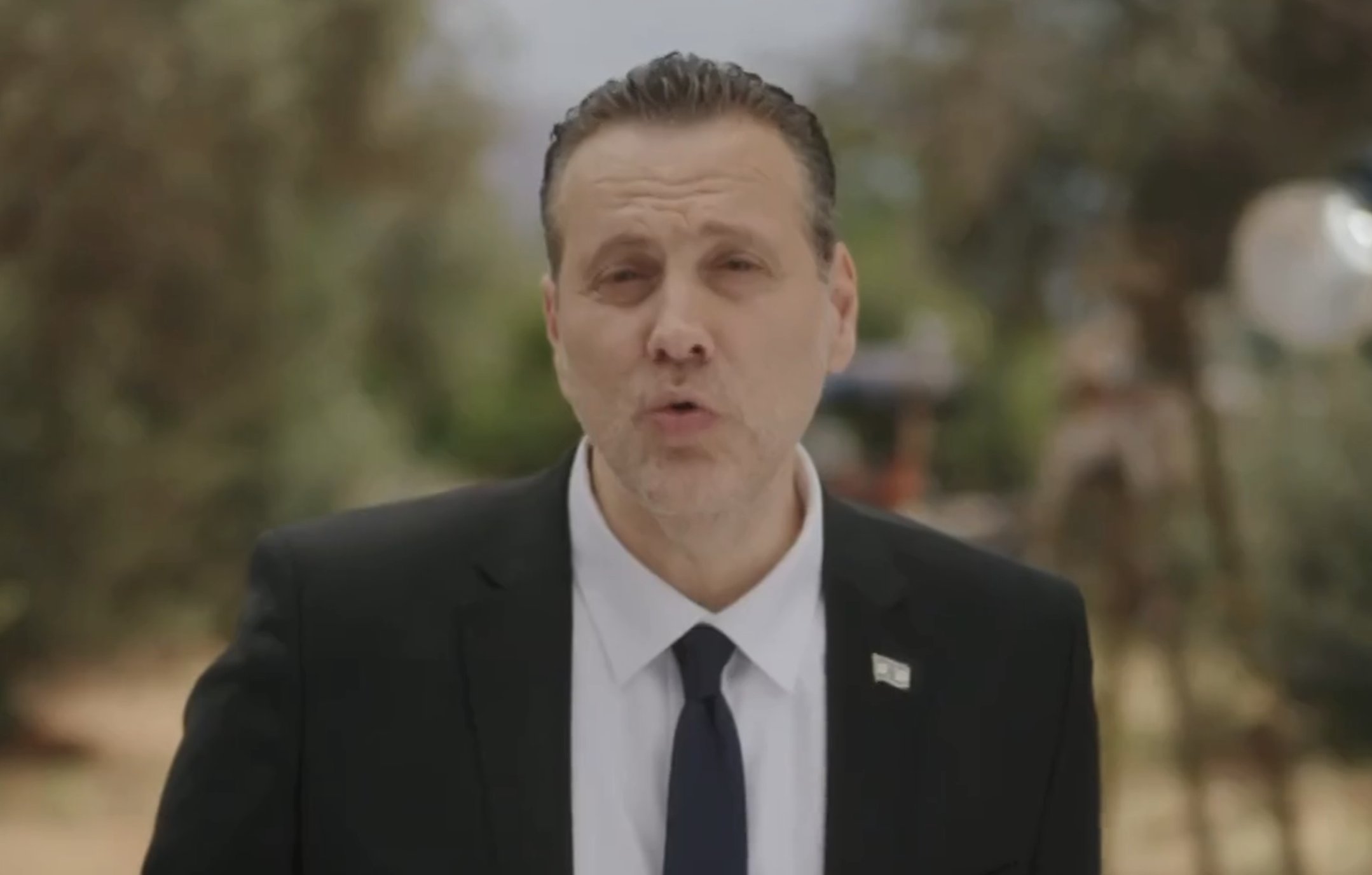
Three lines from the same stretch of Donald Trump's remarks on 25 June 2026 surfaced on the ClashReport Telegram channel within five minutes of each other, and read together they say more than any single one would in isolation. At 05:37 UTC he declared: "We have the greatest culture on Earth." At 05:40 UTC: "We are delivering the largest reduction in drug price history with price differences of 400, 500, and even 600%." At 05:42 UTC: "We won two world wars, defeated fascism and communism. We're going to have to do that again."
The composite is a campaign message in miniature: cultural supremacy, a concrete pocketbook claim, and a re-statement of civilisational mission. The thread items do not specify the venue, but the cadence is consistent with a rally or extended set-piece address. The significance lies less in any single sentence than in the packaging.
Taken individually, each line invites a familiar reaction — triumphalism, grievance, the headline-grabber. Taken together, they read like a deliberate sequence. The administration is now selling three things at once: a moral claim about American culture, a material claim about consumer prices, and an external claim about American power in a more dangerous world. The political weather has changed since the last election cycle, and the rhetoric has changed with it.
A culture line that no longer sits in a vacuum
"We have the greatest culture on Earth" is a claim that lands differently in 2026 than it would have even a decade ago. The administration's first term leaned heavily on economic grievance; the second is leaning on cultural grievance, fused with an explicit assertion of national pre-eminence. The shift is not subtle. In his first term, Trump generally framed cultural questions defensively — as fights over monuments, school curricula, or what he called "American carnage." The 25 June formulation is offensive. It does not apologise, qualify, or pivot to a policy. It states a position. The claim is also unspecified. Trump does not name which films, music, books, or institutions embody this pre-eminence; the assertion is generic, which is the point. Genericity lets the audience fill in their own definition — a feature, not a bug, in this kind of speech.
The line matters because it travels. A short, declarative statement on national culture is easy to clip, meme, and re-use. The campaign does not need to defend the substance because the substance is the affect. By the time opposition researchers have lined up examples to dispute, the line has already done its work.
Drug prices: the concrete claim beside the abstract one
Two minutes later, the same speaker told the same audience that drug price reductions of "400, 500, and even 600%" represent "the largest reduction in drug price history." The juxtaposition is deliberate. Beside an abstract assertion of cultural supremacy sits a hard, numerical claim about consumer cost. The administration has spent the year building a public case that price-setting reforms — anchored in the most-favoured-nation model imported from Medicare negotiations — have produced visible relief at the pharmacy counter.
The arithmetic in the claim is contestable. A 400–600% reduction is not, in the strict pharmaceutical-economics sense, the same as a reduction in headline sticker price, and Trump does not specify which drugs, which payers, or which timeframe. Opposition outlets have already noted that wholesale-acquisition-cost moves and net-price moves diverge sharply, and that percentage reductions of this magnitude typically apply to a small subset of products rather than to pharmacy spending overall. The line, however, is not designed for the spreadsheet reader. It is designed for the voter who pays a co-pay at CVS and feels the difference.
The pairing with the culture line is the political craft. Cultural grievance can float if not anchored; anchoring it to a price story gives the message a material floor. Voters who are unmoved by the abstract claim may still respond to a number that supposedly applies to their prescription.
"We have to do that again" — the foreign-policy register
The third line, at 05:42 UTC, is the heaviest. "We won two world wars, defeated fascism and communism. We're going to have to do that again." The historical claim is the kind of compressed civilisational narrative that has structured American presidential rhetoric since at least the cold-war years. What is unusual is the forward-looking half. "Again" implies that the speaker regards the present period as another ideological moment requiring the same kind of mobilisation.
The line does not name an adversary. It does not have to. The audience that hears it will read it against the live files: the administration's posture toward Beijing, its public split with parts of the European mainstream on industrial policy and climate, its confrontational framing of multilateral institutions, and the renewed emphasis on hemisphere defence. None of those files are spelled out in the three Telegram items; the speechwriter has left them as inference. That, again, is the craft. The leader's job is to set the frame, not to populate it.
What the sequence tells the wider political market
Three minutes, three registers: cultural assertion, pocketbook arithmetic, civilisational mission. The package is not accidental. Campaigns usually leak one message at a time; this White House is comfortable launching them in clusters. That has consequences for both coverage and opposition.
For coverage, the clustering effect means a single clip rarely travels alone. Reporters who pull one line have to either treat it on its own — and risk under-reading — or treat the cluster, which gives the campaign the framing it wants. For opposition, the cluster raises the cost of rebuttal: refuting the price claim does not touch the culture claim, refuting the culture claim does not touch the foreign-policy claim, and so on. The opponent is forced into sequential engagement on terrain the speaker has already chosen.
There is a structural shift underneath the rhetoric that the items themselves do not address but that any responsible reading has to flag. The administration's domestic political base has consolidated around cultural-identity questions in a way that makes economic-populist claims ("600% drug-price cuts") and external-threat claims ("we won two world wars, we have to do it again") functionally compatible, where in earlier decades those strains of conservatism pulled against each other. The new synthesis is what the campaign is selling in three-minute blocks.
The evidence inside these three items does not let this publication adjudicate whether the price reductions are real, whether the cultural claim is defensible against the wider record, or whether the foreign-policy framing maps to a coherent strategy. The sources do not specify any of those things. What they do show, and what is verifiable, is that on 25 June 2026 the White House chose to deliver all three messages within five minutes, in that order, to the same audience. The order is the story.
Monexus framed this as a message-cluster story rather than a policy story because the source items deliver rhetoric, not policy substance; the cluster itself is the citable fact.
Wire provenance
This editorial synthesis draws on the following public wire/social posts:
- https://t.me/s/ClashReport
- https://t.me/s/ClashReport
- https://t.me/s/ClashReport
- https://t.me/s/ClashReport