Strait Talking: How a US-Iran Accord, an IMO Pause, and a Tehran Shipping Ultimatum Are Rewriting Gulf Trade
A Geneva peace accord and a parallel Tehran shipping ultimatum have pulled the Strait of Hormuz in two directions at once, leaving shipowners, insurers, and Gulf importers in a narrow operating window the IMF says is only just beginning to ease.
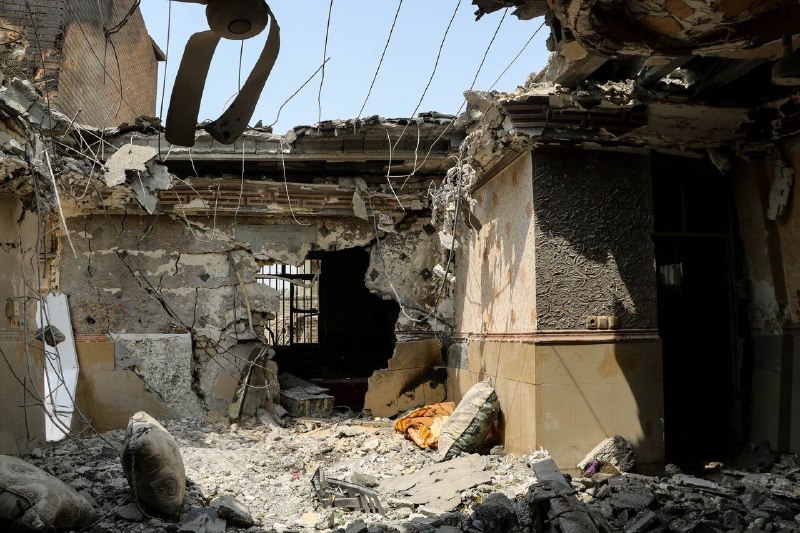
The Geneva signing ceremony is still warm. By 21:03 UTC on 25 June 2026, the International Monetary Fund was telling Middle East Eye's live blog that prices across the Gulf have eased since the United States and Iran confirmed a peace accord will be put to paper in the Swiss city — but that trade through the Strait of Hormuz remains, in the fund's carefully chosen word, disrupted. Two hours earlier, the same live blog carried an Iranian warning that any vessel using unauthorised routes through the strait would lose its safe-passage guarantees. And at 20:55 UTC, Al Jazeera's breaking-news desk reported that the International Maritime Organization had paused a ship-evacuation programme in Hormuz after one of the vessels was struck.
What looks, at first glance, like a single piece of news — a US-Iran détente — is in fact three overlapping stories running on different clocks. There is the diplomatic clock, which is moving in the direction the White House wants. There is the operational clock, on which shipping insurers, port authorities, and the IMO are still reacting to attacks at sea. And there is the political clock inside Iran, where the new safe-passage regime appears to be a coercive instrument rather than a confidence-building one. The shape of the next quarter in Gulf trade will be set by which of those three clocks the regional economy is forced to read.
A deal in Geneva, a warning in the water
The headline event of the day is straightforward. The US and Iran have confirmed a peace accord, and the signing is scheduled for Friday in Geneva, according to Middle East Eye's running live coverage. The same coverage notes that Secretary of State Marco Rubio has just wrapped a tour of Gulf allies, with the South China Morning Post reporting that partners in the region have aired concerns about the accord to him. The framing in both outlets is that Washington is moving quickly to convert a war-risk premium back into trade and transit fees; the framing from the Iranian side, as transmitted by Tehran's own channels and quoted in the Middle East Eye live feed, is that the agreement is conditional on Iranian control of who moves through its own waters and on what terms.
The conditionality is not abstract. At 21:01 UTC, Middle East Eye reported that Iran has told shipowners using "unauthorised" Hormuz routes that they will lose safe-passage guarantees. The word unauthorised is doing all the work in that sentence. It implies an Iranian-administered regime of routing permission layered on top of whatever the Geneva accord itself says about freedom of navigation. For an oil tanker routed from the Gulf to the Atlantic via the Strait of Hormuz, that distinction — authorised versus unauthorised — is the difference between an insurance underwriter accepting a war-risk premium of a few tenths of a percent and refusing cover altogether.
The IMF's assessment, again via the same Middle East Eye live thread, is that prices have eased since the accord was first mooted, but that trade remains disrupted. The fund did not put a number on either the easing or the disruption in the live-blog excerpt; what it did, in effect, was register that the diplomatic signal is ahead of the operational reality on the water.
The IMO pulls back
The most concrete piece of operational evidence in the day's reporting came from Al Jazeera's breaking-news desk at 20:55 UTC. The International Maritime Organization, the UN agency that sets global rules for shipping and is currently running a ship-evacuation initiative in the Strait of Hormuz, has paused that initiative after one of the participating vessels was struck. The agency did not, in the excerpt, specify which vessel, where in the strait, or by what means. Al Jazeera's framing — "Iran warns vessels to use only Tehran-approved routes as IMO halts Hormuz evacuation after ship struck" — couples the pause to Tehran's routing directive and presents the two as parts of the same operating environment.
For shipowners, the practical effect of an IMO evacuation pause is severe. The evacuation programme is, in essence, a backstop: a route and a procedure by which commercial vessels in extremis can be shepherded out of a war zone under international coordination. With that backstop suspended, owners are left to choose between three options. They can reroute around the Cape of Good Hope, adding roughly two weeks of voyage time and a meaningful increase in bunker-fuel costs. They can wait. Or they can continue to transit Hormuz under Iranian-approved routing, accepting the political and legal dependency that implies.
None of those choices is new in form. Each of them, however, is being made at higher cost in the immediate aftermath of the Geneva announcement than it was before. The accord is supposed to lower the cost of doing business in the Gulf. The simultaneous attack-and-ultimatum sequence is keeping that cost elevated.
What the allies told Rubio
The South China Morning Post's reporting, datelined 20:39 UTC and also threaded into the day's news flow, is that Rubio has wound up a Gulf tour during which regional partners shared concerns about the Iran peace accord. The piece does not, in the excerpted text, name a single concern, and the framing is general rather than attributed: allies have "concerns," plural and unspecified.
That sparsity is itself the story. A US Secretary of State does not return from a regional tour and brief journalists about the gap between Washington and its partners in language as flat as "concerns" unless the concerns are sharp enough that enumerating them on the record would amount to an open breach. The reasonable inference — and it is an inference, since the source does not state it — is that Gulf monarchies want to know what kind of Iran they are about to live next to, and they are not yet satisfied that the Geneva text answers that question. The shipping ultimatum and the IMO pause, both of which post-date Rubio's tour, will not have made that conversation easier.
The structural frame
A peace accord in Geneva is the kind of document that, in the conventional telling, removes a risk premium from regional trade and lowers the price of oil. That conventional telling assumes a market in which the principal sources of risk are the negotiating parties themselves. The day's reporting suggests a more layered picture. The risk that priced out part of the tanker market over the last year was never just the risk of a US-Iran war; it was also the risk of asymmetric action by Iranian forces on commercial shipping, of miscalculation by Iran's Revolutionary Guard Corps units operating small craft in the strait, and of a fragmented Iranian command structure in which central authority and field behaviour could diverge.
A deal between Washington and Tehran does not by itself remove that second layer. It can, at best, raise the cost to Tehran of actions its own forces might take anyway. The shipping ultimatum and the IMO evacuation pause, read together, are a near-textbook example of why a diplomatic headline and an operational reality can diverge. The headline compresses months of negotiation into a single Friday signing. The operational reality is set by what happens to a single vessel on a single day in the strait, and by whether the UN body that exists to coordinate the response decides it is safe to keep its staff in the water.
There is also a longer-running structural element, expressed here in plain terms rather than in the language of any particular school of thought. The world is in the middle of a slow renegotiation of which state — or which set of states — guarantees the rules of passage through the most important energy chokepoints on the planet. For most of the post-1945 period that guarantee was effectively provided by the US Navy, with the IMF and the World Bank providing the financial complement. Today's reporting shows a different configuration: a US-Iran accord that pulls the temperature down in capitals, while a UN agency pauses operations and an Iranian directive narrows the list of routes that shipowners can safely use. The guarantor is fragmenting, and the price of fragmentation is being paid, in the first instance, by Gulf importers and the insurers that price their cargo.
What the next days will tell
The honest reading of the four source items threaded into this story is that the Geneva accord lowers the ceiling on the war-risk premium without yet lowering the floor. The IMF's "prices have eased but trade remains disrupted" formulation is, in this light, a precise description of the market's two-tier condition: the diplomatic tier moving in one direction, the operational tier still moving in the other.
The most important thing to watch in the next 72 hours is whether the IMO's evacuation pause is reversed. If the agency returns to active coordination in the strait, the operational tier will have caught up to the diplomatic tier, and the price easing the IMF describes will broaden out from headline rates into actual freight and bunker-fuel quotations. If the pause holds — and especially if a second vessel is struck — the Geneva accord will trade as a ceiling on escalation rather than as a recovery in trade volumes, and the directional risk on Gulf shipping will point the other way.
There is also a quieter question on which the sources are silent: who, exactly, struck the vessel that triggered the IMO pause, under what authority, and with what chain of command. The four source items name Iran as a party to the routing directive and name the IMO as the agency that paused; they do not name an actor for the strike itself. That gap is not a defect of the reporting; it is, almost certainly, a gap in the present state of public knowledge. Until it is filled, the Geneva accord is doing what accords of this kind usually do in their first days: providing a frame, a date, and a price floor — while the strait itself remains, as the IMF puts it, disrupted.
This publication framed the same set of wire inputs around the gap between the diplomatic and the operational. The headline read in most Western outlets on Thursday is that the accord is itself the story; the live evidence from Middle East Eye, Al Jazeera, and the South China Morning Post suggests that the accord is the leading indicator, not the outcome.
Wire provenance
This editorial synthesis draws on the following public wire/social posts:
- https://en.wikipedia.org/wiki/Strait_of_Hormuz
- https://en.wikipedia.org/wiki/International_Maritime_Organization