After the US-Iran flare-up: what Polymarket is pricing, and what that reveals about the deal that may follow
A prediction market with two freshly minted contracts on a US-Iran deal and a renewed Strait of Hormuz blockade is reading the post-war room in real time. The signals are mixed, and the deal that emerges is likely to be a narrower accord than the rhetoric suggests.
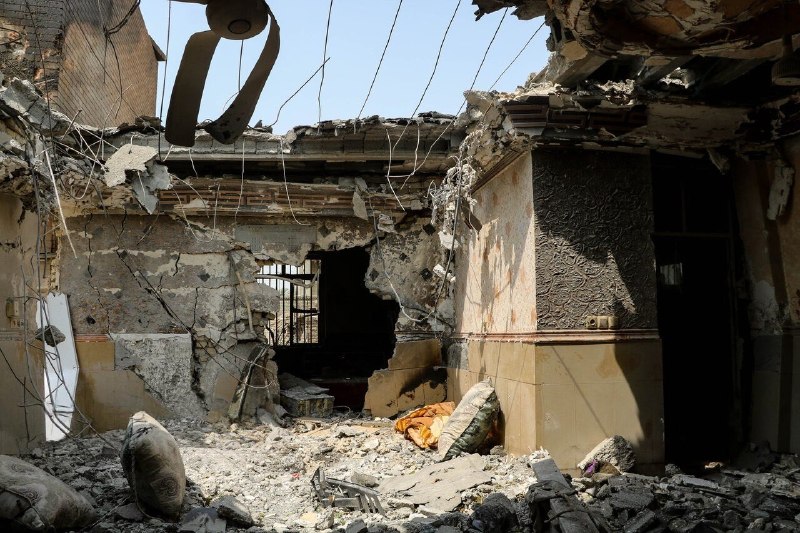
On 24 June 2026, two contracts appeared on the prediction market Polymarket that, taken together, describe the next phase of US-Iran diplomacy better than most of the cable-news commentary now circulating. The first asks what a US-Iran deal in 2026 will actually contain. The second, posted the same day, prices a 47% probability that the United States announces a fresh blockade of Iran by the end of the year. The two questions are not independent. A deal that goes too narrow makes a blockade more likely; a deal that goes wide enough to satisfy Tehran's core demand on sanctions relief makes a blockade almost unnecessary. The market is, in effect, asking the same question twice from opposite ends — and giving the diplomatic class a real-time read on which side blinks first.
What is unusual is not the existence of these contracts. Prediction markets have priced Middle East conflict for years, often more accurately than the agencies whose analysts brief the same desks that set policy. What is unusual is the timing. The South China Morning Post's editorial board published a wide-ranging set of takeaways from the US-Iran war on 25 June 2026, and the throughline in those observations is that the fighting has not produced a clean winner. Polymarket's two new contracts are the public's first attempt to translate that ambiguity into probabilities — and to monetise the gap between Washington's stated position and Iran's capacity to keep the Strait of Hormuz open as a pressure point.
The war that didn't end with a treaty
The SCMP takeaways piece, datelined 25 June 2026, treats the US-Iran war as a discrete event whose resolution is now underway, but whose political terms remain undefined. The war, in the piece's telling, left the United States in possession of leverage it is struggling to convert into an enforceable agreement, and left Iran in a position weakened militarily but intact enough to set the price of any deal the White House wants to claim as a win. The 8-takeaways format is editorial framing, not an official assessment, and the takeaways themselves are not footnoted to a single named source — they read as a synthesis of reporting from across the past several weeks.
What the format tells the reader is that the diplomatic phase is now open. War produces treaties, or war produces blockades; the in-between — a deal that is neither a peace treaty nor a sanctions regime — is what Polymarket is being asked to price. The first contract on the platform explicitly asks what will be in a US-Iran deal in 2026, which presupposes that a deal exists to be characterised. The second contract presupposes the opposite: that a deal either does not land or is insufficient, and that the US defaults to a maritime coercion play it has used before.
The blockade contract and the 47% number
The figure doing the most work in the market right now is the 47% probability attached to a fresh US naval blockade of Iran in 2026. The Polymarket listing for that contract was posted on 24 June 2026. The number is not a forecast in the traditional sense — it is a market-cleared price, and the price of such a contract is sensitive to liquidity, to the news flow of the day, and to the trader mix on the platform. What the price is doing is aggregating two priors: the historical base rate for US maritime coercion against Iran (low, but non-zero), and the post-war political incentive to use a low-cost instrument that produces visible pressure without a re-escalation risk on the same scale as the conflict just concluded.
The structural reason the number is this high is that blockades are the lever of first resort when the diplomatic track stalls. They are reversible, they are escalable in measured increments, and they impose asymmetric costs on the target economy. For a US administration that wants to keep the option of a deal open but cannot afford to be seen to have fought a war for nothing, a blockade is the politically cheapest way to convert military success into commercial pressure. The market is reading that incentive structure, and assigning it a roughly coin-flip probability.
What Polymarket knows that cable news doesn't
Prediction markets are imperfect, but their epistemic edge is the willingness of participants to put money behind a claim at a specific price. A cable-news panel can talk about a 50-50 chance; Polymarket gives you a tradable number that has cleared with real capital behind it, and that updates on the news in seconds rather than hours. The 47% on a US blockade and the open question on what a US-Iran deal contains are therefore not punditry — they are a snapshot of the median trader's view of two distinct outcomes, with implied correlations that the trader base is updating in real time.
The second-order signal is what the market is not pricing. There is no widely traded contract on the platform, on the evidence of the two contracts shared on 24 June 2026, that asks whether Iran will resume enrichment above 60% in the absence of a deal. There is no contract on the size of any sanctions relief package, or on the timing of the next IAEA inspection cycle. The traders are telling the public, by where they are putting their money, that the binding constraint on 2026 is the choice between coercion and accommodation — not the technical contents of any agreement that emerges.
The deal the market is implying
Read together, the two contracts imply a deal narrower than the rhetoric suggests. A 47% probability on a blockade is consistent with a deal that is partial: an exchange of limited sanctions relief for limited nuclear concessions, an enrichment cap that is enforceable enough for Washington to claim victory but loose enough for Tehran to claim it preserved its programme. The market is pricing a deal that exists, but that does not foreclose the US's option to return to the maritime pressure track if the implementation phase disappoints. In other words, the predicted deal is the kind of agreement that is deliberately under-determined — a deal whose vagueness is the political product being sold to two domestic audiences that need to claim different things about it.
The counter-narrative is that the market is over-weighting the blockade probability because the platform's trader base is not representative of the actual decision-makers in Washington or Tehran. The diplomatic corps in both capitals operates on a longer clock than the news cycle, and a 47% probability over a six-month window can resolve in either direction on a single phone call. The market may be reading the structural incentives correctly and the political signals wrong — it may be that the deal, once it lands, is more comprehensive than the current price implies, precisely because the alternative (a blockade in an election year) is more domestically costly than the headline number suggests.
What remains uncertain
What the source material does not establish is whether the two Polymarket contracts are seeing correlated trading — that is, whether traders who are buying "yes" on a deal are also buying "no" on a blockade, as economic logic would predict. The platform's order books are not visible in the thread material shared, and the prices shown are point-in-time rather than time-series. The SCMP editorial synthesises a war whose end is described but whose casualty figures, specific terms of any ceasefire, and the current operational status of US Central Command forces in the Gulf are not specified in the items reviewed. The 47% number is a market-clearing price on 24 June 2026, not a forecast of what the probability will be on the day a deal is announced. A reader looking for a definitive answer to either question will not find it here; the markets themselves do not pretend to provide one.
What the markets do provide is a public benchmark. When a senior US official next claims that a blockade is "on the table," the trader base will reprice the contract within minutes. When Tehran's negotiating team signals willingness to cap enrichment at a specific level, the deal-content contract will move the same way. The prediction market has become, in effect, the polling instrument for a diplomatic phase in which the official communiqués are written for two separate domestic audiences and neither can be taken at face value. The 47% number is not a prediction. It is a confession of how little is settled, priced as honestly as the public trading book will allow.
— Monexus framing note: wire reporting on the US-Iran war has, to date, leaned heavily on official communiqués from both governments and on the cable-news panel format. Polymarket's two contracts, opened on 24 June 2026, give readers a non-institutional read on the same decision space. This piece treats the market as a polling instrument on a diplomatic phase whose official outputs are written for separate domestic audiences, and does not assert a forecast of the deal's contents or of any blockade decision.
Wire provenance
This editorial synthesis draws on the following public wire/social posts:
- https://t.me/s/SCMPNews
Follow the event.
These dated source records provide context. They do not retrospectively verify this archive article.
Separate what the nuclear watchdog reported from what it could not determine after the June 2025 strikes.