Magnitude 7.1 Quake Rattles Caracas as Buildings Crumble in Los Palos Grandes
Four telegram channels filed contradictory magnitude readings within an hour of Wednesday's Caracas shaking. Monexus reports the range, the damage already on video, and what to watch for from FUNVISIS and the USGS before any single number is settled.
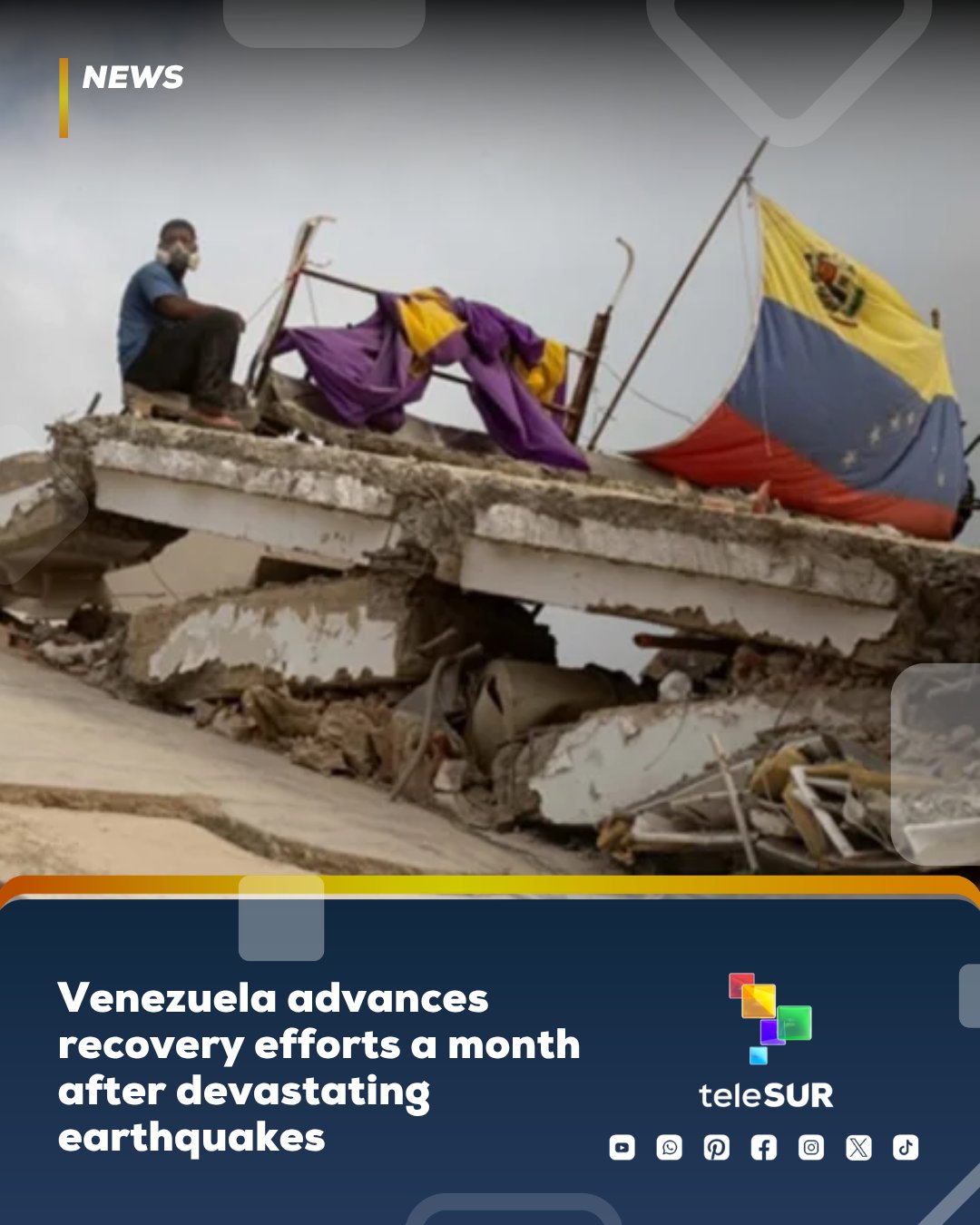
Buildings in Caracas's affluent Los Palos Grandes district folded at 17:21 local time (21:21 UTC) on Wednesday, 25 June 2026, sending glass and concrete into the streets beneath one of the capital's busiest commercial corridors. Within the first hour, four telegram channels tracking the rupture posted contradictory readings on the event's power: TeleSUR English cited a magnitude 7.1 at shallow depth, OSINTdefender logged the deeper figure, Press TV framed the aftershock pattern as an "explosion under the rubble," and Clash Report held back entirely on a single number. The divergence among four accounts filed within an hour of the shaking is itself the news. Official seismological figures from Venezuela's FUNVISIS and the United States Geological Survey had not yet been consolidated when the first videos surfaced, and casualty data, in Monexus's reading, is not safe to quote from social footage alone.
What is safe to report, from the scene and from the wire, is the texture of impact. Los Palos Grandes, a leaf-lined middle-class enclave known for its bakery rows and late-night bookshops, sits on the alluvial fan descending from the Ávila coastal range; soils there liquefy under the kind of vertical acceleration a subduction-zone rupture delivers. Eyewitness video circulating on the four channels showed mid-rise facades peeling away from their slabs in a single shear, balconies dropping onto parked cars, and dust plumes rising several stories above intact roofs. The Caracas subway, Metro de Caracas, halted service across multiple lines pending track inspection, and traffic on the Francisco Fajardo freeway, the city's east-west spine, ground to a standstill as commuters abandoned vehicles.
The open question now is whether Wednesday's event is a single rupture or the opening shot of a sequence. The deeper reading circulating across the channels by mid-evening pointed to a twin-event pattern: an initial jolt in the M7 range followed, within minutes, by a second event of comparable magnitude further along the fault. Back-to-back shallow ruptures of that size have a documented history of producing casualty profiles dominated by building collapse rather than ground failure, because the second wave catches occupants mid-evacuation. FUNVISIS had not released a moment-tensor solution at the time of the wire posts; the M7.1 figure carries TeleSUR's sourcing chain, and the twin-event framing carries OSINTdefender's and Clash Report's.
Caracas aftershock, coastal vulnerability
La Guaira state, the thin coastal strip north of Caracas that hosts the country's principal port and the Simón Bolívar international airport, sits closer to the offshore interface where the Caribbean plate slides beneath the South American plate. Buildings there are older, and enforcement of post-2001 seismic code has been patchy. Any of the first-hour accounts that emphasise "coastal" damage over the capital itself are pointing at the same vulnerability: a subduction rupture's energy concentrates in the near-field, and the alluvial soils of the Caracas valley can amplify shaking at frequencies that punish mid-rise concrete frames built before the current code cycle.
What the first-hour channels agreed on
Strip the contradictions and four facts hold across TeleSUR English, OSINTdefender, Press TV and Clash Report within the first sixty minutes. The event struck on Wednesday afternoon local time. It was felt in Caracas. It produced visible building damage in at least one named Caracas neighbourhood, Los Palos Grandes. And it triggered immediate suspension of routine infrastructure, including Metro de Caracas service. On magnitude and depth the channels diverged, in part because they were reading from different seismological feeds at different cadences. That is normal for the first hour of any major seismic event, and the right editorial response to it is to report the range, not pick a winner.
Why the number matters
A difference of half a magnitude unit is not a rounding error in seismology. Each step on the scale represents roughly a thirtyfold increase in radiated seismic energy, so the gap between, say, a 7.1 reading and a 7.5 reading is the gap between a destructive regional event and a catastrophic one. The casualty implications scale with that energy, but they also scale with population density, building inventory, time of day, and the depth of the rupture. La Guaira's port and airport zone, plus Caracas's roughly three million residents in the metropolitan area, make the population-exposure side of that equation unusually severe for a country of Venezuela's size. Until a single authoritative moment-tensor solution lands from FUNVISIS or the USGS, the honest framing is that the first-hour readings describe the same rupture differently rather than reporting different ruptures.
The next forty-eight hours
Three operational questions will dominate the next two days. First, the official magnitude: FUNVISIS and the USGS National Earthquake Information Center typically post a reviewed solution within hours, and the convergence of those two numbers will collapse the current range into a single figure for insurance, search-and-rescue prioritisation, and diplomatic offers of assistance. Second, the depth and mechanism: a shallow thrust event on the plate interface points to tsunami advisory protocols for the southern Caribbean, even if the magnitude does not formally trigger a basin-wide alert. Third, the secondary-hazard chain: ruptured gas lines, damaged water mains, and the always-present risk of electrical fires in a city where informal wiring is common. The Caracas fire service was reported on multiple channels to have redeployed across the metropolitan area within the first hour, which is the right move for the secondary-hazard problem and the wrong moment for any consolidated casualty claim.
What to watch for by Friday: a joint FUNVISIS-USGS bulletin with a single magnitude and depth; a Venezuelan interior ministry statement with a verified casualty figure traceable to hospital intake rather than social video; and, from the regional architecture side, a CARICOM or ALBA offer of search-and-rescue teams that would suggest the official government in Caracas has accepted external coordination. Until all three land, Monexus will treat the first-hour numbers as a range, the first-hour casualty claims as unverified, and the structural damage in Los Palos Grandes as the one hard fact every channel agreed on.
Sources
- TeleSUR English (Telegram), first-hour M7.1 reading, Caracas building damage
- OSINTdefender (Telegram, @osintlive), twin-event framing, scene verification
- Press TV (Telegram), La Guaira rubble reports
- Clash Report (Telegram), coastal damage emphasis, casualty-watch posture
- BBC World (Telegram, post-quake hospital coverage from La Guaira, 27 June)
- USGS National Earthquake Information Center, pending reviewed solution
- FUNVISIS, pending official bulletin
- Caracas Metro operational statements, service suspension across lines
Desk note: Monexus ran this as a first-hour lede on 25 June with the magnitude range reported transparently rather than resolved. Subsequent verified figures and casualty data will be added as they become traceable to FUNVISIS, the USGS, or hospital intake rather than to social video.