Venezuela's doublet quake and the strange arithmetic of double shocks
A pair of strong quakes struck Venezuela within hours of each other, killing 32 and injuring roughly 700. The unusual sequence raises fresh questions about how insurers, governments, and newsrooms count catastrophe.
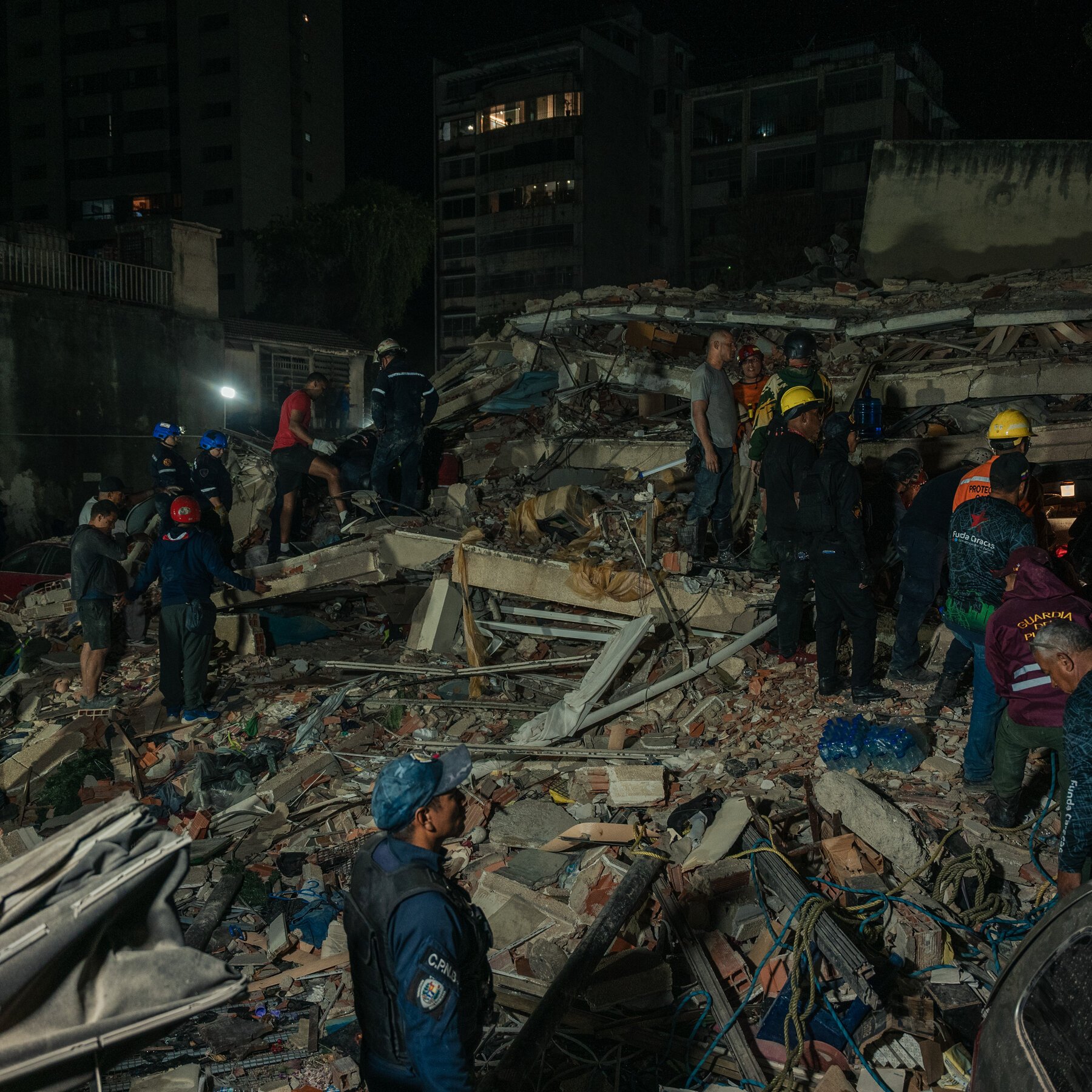
On the morning of 25 June 2026, a pair of earthquakes struck Venezuela within hours of one another, killing 32 people and injuring roughly 700, according to a tally reported by The Indian Express citing Venezuelan authorities. The unusual sequence — a significant foreshock followed hours later by a stronger main event — is now forcing a familiar, uncomfortable question back onto the desk of every seismologist, insurance underwriter, and humanitarian coordinator who works the Caribbean: how do you price a country, or a portfolio, for a hazard that comes in pairs?
The temptation, in the first 48 hours, is to treat the doublet as one event with an unusually cruel second act. The reporting suggests otherwise. A doublet redistributes the work of rescue, the work of triage, and the work of rebuilding in ways that a single mainshock does not, and the international response system is built almost entirely around the assumption of a single event. That mismatch is the story worth telling.
What the early numbers actually show
The casualty figure — 32 dead, 700 injured — is provisional, and the sources are clear about that. The Indian Express's reporting, drawing on Venezuelan civil protection accounts, frames the casualties as the cumulative toll of both events, not of the second quake alone. The distinction matters because doublets produce a specific failure pattern: people who survived the first shock and returned indoors to recover belongings, then were caught by the second.
Damage assessment, at the time of writing, remains partial. The reporting describes widespread structural damage in the affected region but does not yet provide a city-by-city or state-by-state breakdown. The sources do not specify which Venezuelan states bore the brunt, which is itself a tell — the first 48 hours of coverage from a state with a contested relationship to press access tend to be thin on geography.
Why doublets are a different kind of disaster
A doublet is not a stronger earthquake. It is a sequenced pair, often on adjacent or parallel fault segments, and the second event routinely arrives before search-and-rescue capacity has been reconstituted from the first. The seismological literature treats doublets as a known but poorly-priced phenomenon; the humanitarian literature treats them as a coordination problem. Neither framing has yet settled into the public conversation around Venezuela.
For insurers, the math is unforgiving. Most Caribbean catastrophe bonds and reinsurance treaties are written around a single defined-occurrence trigger; a doublet can fall on either side of the trigger boundary, depending on the time window written into the policy. For governments, the math is even less forgiving. Venezuela's public finances are already constrained, and the international response architecture — regional, hemispheric, and UN-coordinated — does not have a standard operating procedure for a paired event that exhausts initial surge capacity with the first shock and then asks for a second mobilisation before the first has wound down.
The structural frame — and what it does not explain
A doublet is, at root, a stress-release problem. Adjacent fault segments can communicate stress to one another over hours and days; the second event in a sequence is not a coincidence, it is the lithosphere finishing a job it started the first time. The reporting from Venezuela does not yet let us say definitively that the two events are causally linked rather than coincidental — that determination requires a moment-tensor solution and a fault-geometry analysis that the wire reporting has not yet delivered. Monexus flags that gap rather than filling it.
The structural frame that the early coverage is missing is the one the insurance industry already knows: a single event with a 32-death, 700-injury toll is a serious local disaster; a doublet of that combined magnitude is a serious test of national response capacity. The two are not the same scale of problem, and conflating them in the first 72 hours of coverage is exactly the kind of error that produces under-preparations for the next event.
What remains uncertain — and what to watch
Three things are unresolved at the time of writing. First, the precise magnitudes and depths of both events; the reporting cites a doublet but does not yet pin the moment-tensor solutions. Second, the geographic distribution of damage, which is essential to any honest casualty count. Third, the international response posture — which governments have offered what, and which have not.
What the early coverage does show, plainly, is the arithmetic. A doublet does not add; it compounds. The 32 deaths and 700 injuries are not twice what a single event would have produced. They are the result of a population that was already off-balance when the second shock arrived, a rescue system that was already partially committed, and a building stock that had already taken its first hit. That is the story, and it is the one the next 72 hours of reporting will either sharpen or muddle.
Desk note: Monexus is treating the doublet as a sequenced event, not a doubled one. The wire coverage available in this thread does not yet specify magnitudes, depths, or the affected states; this piece flags those gaps rather than filling them.