Venezuela's earthquakes test a fractured response, and a sanctions-era template for foreign aid
Twin 7.2 and 7.5 magnitude quakes have killed more than 1,400 people in northern Venezuela, with 68,900 still missing. US Marines are on the ground near La Guaira, and the disaster is stress-testing the sanctions architecture Washington built to isolate Caracas.
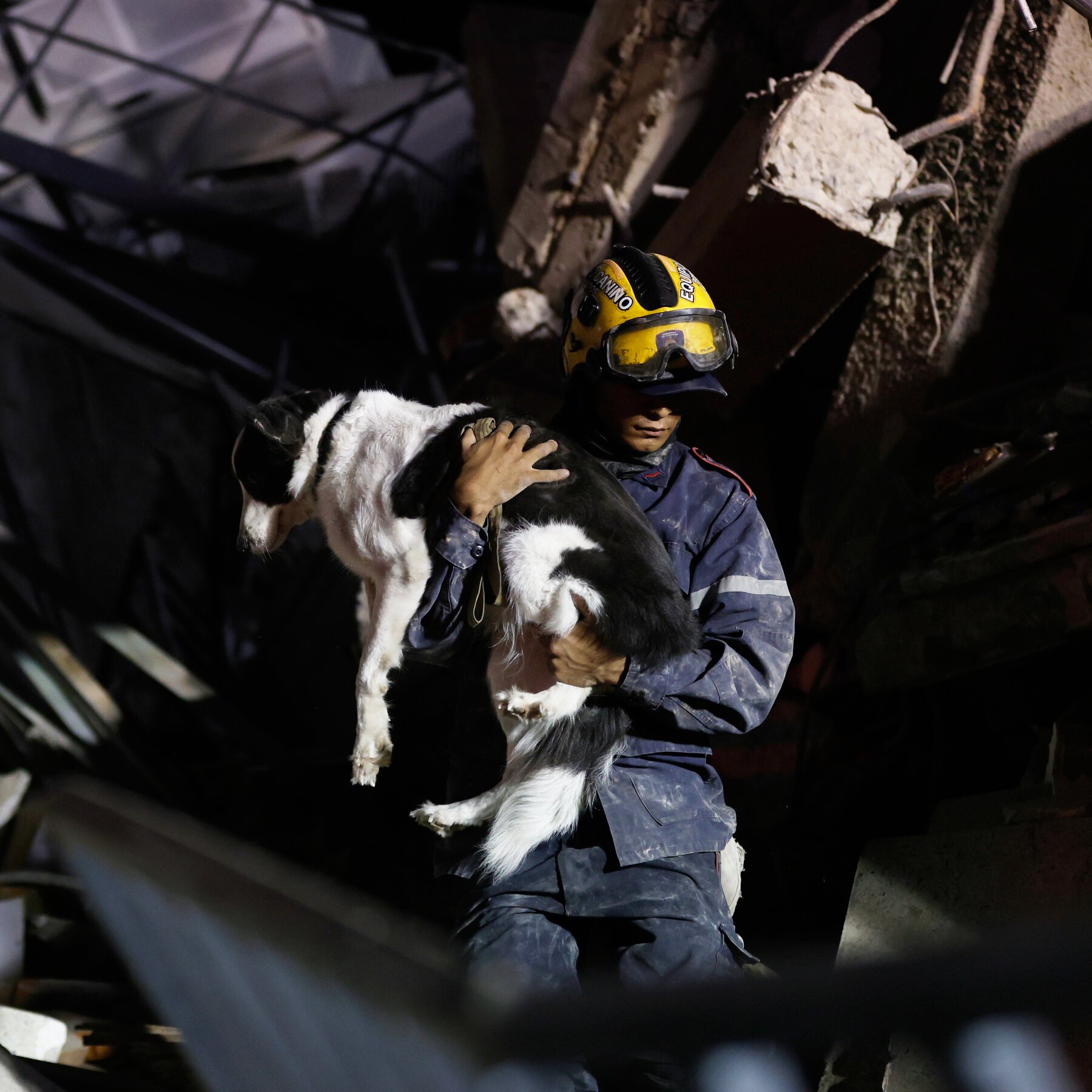
A US Marine Corps MV-22B Osprey settled onto an airfield near La Guaira on June 27, rotors folding, as American heavy urban search-and-rescue teams fanned out across the rubble of a country that Washington does not formally recognise. Three days after twin shallow earthquakes, magnitudes 7.2 and 7.5, tore through northern Venezuela's coastal strip, the official toll had climbed above 1,400 dead and 3,200 injured, with roughly 68,900 people still reported missing, according to wire tallies and regional channels. Rescue crews are digging through pancaked concrete in Falcón state's Tucacas and the low-lying districts of La Guaira. The disaster is the most destructive seismic event in Venezuela's recorded history, a Globovision correspondent told DDGeopolitics, and the final casualty count will run into the thousands.
The disaster has put an awkward question in front of US policy: how does Washington deliver humanitarian aid to a government it treats as illegitimate, under a sanctions architecture designed precisely to constrain that government? The State Department released footage of USA-01 elite heavy urban search-and-rescue personnel extracting a baby from a collapsed building. Marine Ospreys moved people and supplies near the disaster zone. The message, from a department that has spent years tightening the financial noose on Caracas, is that the noose loosens when the rubble piles high.
Volunteers as a logistics problemThe urgency of relief has collided with the geography of the disaster zone. A single road funnels traffic into the worst-hit areas, and the New York Times reported on June 27 that the outpouring of volunteer aid after the earthquakes clogged that road, delaying rescue crews. National Assembly President Jorge Rodríguez, in remarks carried by TeleSUR English, urged citizens to rely on official information channels and praised the solidarity shown by the Venezuelan people. The contradiction is structural: the same impulse to help that powers a civilian convoy also backs it up for hours on the only viable route, and a coordinated military-style relief operation has to wait.
The sanctions-era templateUS sanctions on Venezuela, layered through successive administrations, prohibit most transactions with state entities and designated officials, carve out humanitarian licensing, and leave aid organisations to negotiate a thicket of general licences and OFAC opinions to move money and medicine into the country. The template is well rehearsed: after the 2010 Haiti earthquake, after Cyclone Idai in Mozambique in 2019, after the 2023 Türkiye-Syria earthquake, Washington issued specific general licences that effectively carved out sanctions territory for disaster response. The Venezuela case is more delicate, because the political designation sits on top of a contested presidency, and because the licence has to thread the needle between contact with the Maduro government and contact with an opposition that Washington has, at various points, recognised as the legitimate authority.
The State Department has not, as of writing, published a new general licence for Venezuela earthquake relief, and the rescue teams deployed so far are operating under existing humanitarian authorities. The Pope added his voice on June 27, with Pope Leo XIV expressing solidarity with the Venezuelan people and calling on the international community to continue supporting the country. CGTN video showed relief and recovery efforts underway in Maracay on June 27, two days after the shocks.
Counter-narrative in real timeThe information environment around the quake is itself a stress test. PressTV, Iranian state media, reported the 68,900 missing figure and ran footage of an explosion rocking the La Guaira rubble during rescue operations, framing that footage without independent confirmation. DDGeopolitics carried a correspondent's estimate that the death toll will exceed several thousand, a forecast, not a count. The contested provenance of these figures, bouncing between Caracas-friendly outlets, opposition channels and wire services, is the second disaster layered on top of the first.
Stakes and what to watchThree dates will matter. First, a confirmed government damage assessment from Caracas: the current tallies, including the Reuters figure of more than 1,400 dead and the missing count above 68,900, are wire and channel compilations, not a unified official bulletin. Second, any new US general licence from Treasury, which would signal whether the existing humanitarian authorities are deemed sufficient or whether Washington is willing to write a Venezuela-specific carve-out. Third, the access road into La Guaira and Falcón, the chokepoint whose gridlock has already cost rescue crews hours. If volunteers continue to self-deploy without traffic coordination, the volunteer army becomes part of the casualty story. If the licence arrives, it becomes part of the sanctions-era template: aid as the one area where even adversaries can agree on the arithmetic of a child's extraction from the rubble.