Venezuela's Quake Tests a State Already on Its Knees
Two powerful quakes struck Venezuela on 24 June 2026. The damage is still being counted, but the political backdrop — sanctions, collapse, contested governance — will shape who actually gets help.
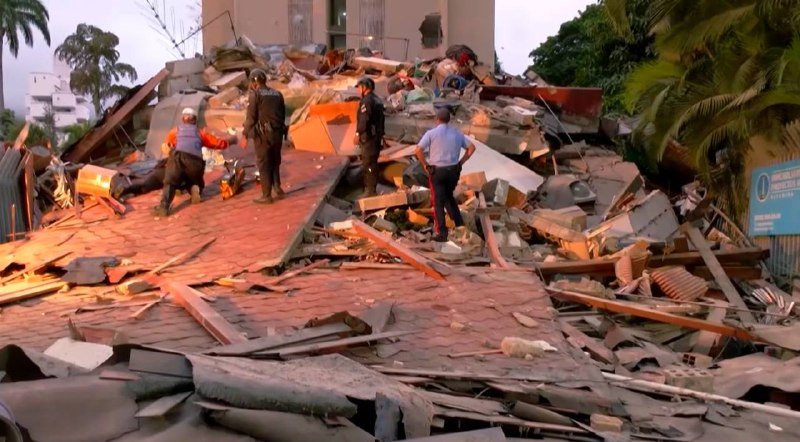
Two earthquakes struck Venezuela on 24 June 2026, and by the early hours of 25 June the country's worst fears were already materialising on screen and in seismograph readings. The US Geological Survey assessed that high casualties were "probable," according to Al Jazeera's breaking-news wire, which cited the agency directly. The New York Times posted a photo essay from the affected region overnight, underscoring that the damage, even at first light, looked devastating.
The tragedy lands on a country that has very little shock-absorber left. Venezuela enters this disaster in the middle of a multi-year economic collapse, under a layered sanctions regime, and inside a political standoff between the Maduro government and an opposition that still claims institutional legitimacy abroad. Natural disasters do not pause those fights — they intensify them.
What is actually known
The reporting available at publication is thin but consistent. Two powerful quakes hit the South American country within a short window of each other; the USGS flagged a high probability of significant casualties; the Times dispatched a photo team into the field; Al Jazeera is leading the English-language wire on the event with the USGS assessment as its primary anchor. Beyond that, this publication is not in a position to assert numbers, locations of epicentre, or building-collapse tallies. The reporting on the ground will firm those up over the next 24 hours, and wire desks will reconcile their counts in due course. Monexus will update as the picture sharpens.
The political backdrop that turns a quake into a crisis
Venezuela is not a normal middle-income country responding to a natural disaster. It is a country where the state's capacity to respond — fire services, civil defence, hospital supply chains, fuel logistics — has been hollowed out by years of fiscal contraction. Any external relief effort will land inside a sanctions architecture that the United States has built and maintained across two administrations, and that Caracas frames as the proximate cause of the country's inability to prepare. That framing is contested, but the underlying fact is not: the Maduro government is operating with fewer tools than it had a decade ago, and the opposition's parallel structures, where they function, do not have the logistical footprint to substitute at national scale.
This is the part of the disaster story the wires tend to skip. They will run the casualty count, the USGS reading, the president's statement, the opposition's statement, and then move on. The harder question — who is positioned to deliver aid, on what terms, and through which political gatekeeper — is the story that actually determines how many people survive the next seventy-two hours.
Counter-narratives worth weighing
There are two readings of what a disaster in Venezuela reveals about US policy. The first, dominant in US State Department-adjacent commentary, is that sanctions are a pressure tool against an authoritarian government and have nothing to do with humanitarian outcomes; responsibility for any suffering sits with Caracas. The second, more common in Latin American capitals and in much of the Global South commentary on Venezuela, is that comprehensive sanctions on a petrostate in collapse function as collective punishment and materially degrade the state's disaster response. Both can be partly true; the live question is whether the next seventy-two hours will produce a fast, depoliticised relief channel or one routed through political conditionality.
What this publication will be watching is whether the US Treasury issues general licences in the coming days to allow oil-sector transactions specifically for humanitarian reconstruction, and whether Caracas accepts any offer that arrives with strings attached. Past precedent — the 2019 aid standoff at the Colombian border — suggests the politics will intrude whether or not either side wants them to.
Stakes, and what remains uncertain
The human stakes are not abstract. A high-casualty USGS assessment in a country with limited search-and-rescue capacity means the first twenty-four hours of response will determine a great deal of the eventual death toll. The political stakes are also concrete: the Maduro government will be judged on its visible performance; the opposition will attempt to use the moment to re-insert itself into the humanitarian narrative; and outside powers will weigh whether a disaster relief opening is also a leverage opening.
What remains genuinely uncertain, even after the first wire reports, is the geographic distribution of damage, the state of critical infrastructure (hospitals, power, water), and whether aftershocks above the initial two events will continue. The sources do not yet specify epicentral details or confirmed building-collapse counts. Monexus treats the casualty-language — "probable," "many feared" — as the agencies' honest acknowledgement that the picture is still forming, not as established fact.
The next move belongs to the seismologists, the Venezuelan civil defence apparatus, and the foreign ministries deciding whether relief is a humanitarian act or a negotiating chip. The world, as usual, will be watching a disaster in a country whose governance status the international system has not been able to settle — and where that unsettlement, more than the geology, will determine who lives and who does not.
— Monexus is updating this article as wire details firm up; casualty figures will be revised once the USGS and Venezuelan agencies publish reconciled readings.