$87.6 Billion and a War-Powers Rebuke: The White House Sends Congress a Price Tag for Iran
Hours after lawmakers voted to claw back the president's war authority, the White House asked for $87.6 billion in emergency funding — including more than $1.4 billion for Ebola response — and put the constitutional fight on a new footing.
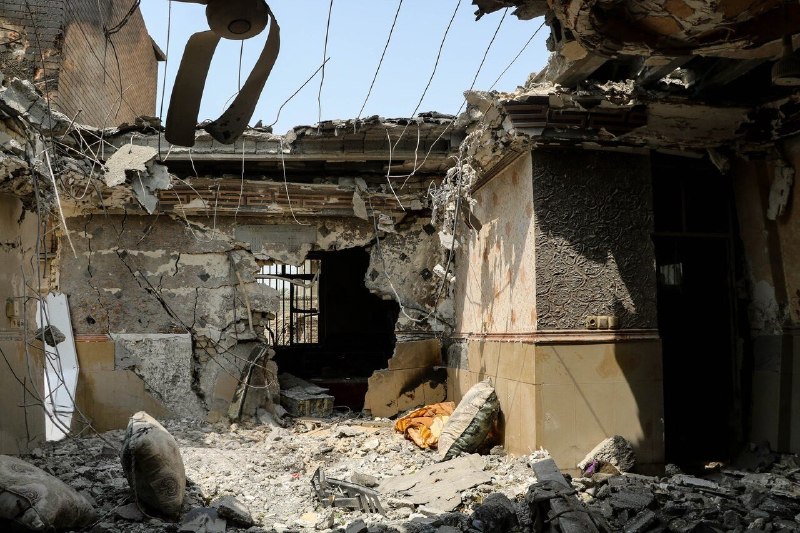
At 23:25 UTC on 24 June 2026, Al Jazeera's breaking-news desk reported that the Trump White House had formally transmitted an $87.6 billion emergency spending request to Congress — a figure that, when broken down, commits fresh money to a widening Middle East war and to a parallel global-health fight, while arriving on the heels of the most direct legislative rebuke of the president's war powers in modern practice. The package, the broadcast and accompanying wire filings noted, faces an uphill path in a chamber that a day earlier moved to constrain the commander-in-chief's authority to direct force against Iran.
The request is the clearest numerical answer yet to a constitutional question that has been running in parallel to the war itself: who pays, who authorises, and who decides when the United States is at war. The political reading of the dollar figure will matter as much as the dollars themselves. By bundling more than $1.4 billion in Ebola response funding — first reported by Reuters on 25 June 2026 at 01:20 UTC — alongside the military line items, the administration is forcing legislators to weigh public-health urgency against the strategic politics of an unpopular regional campaign, in a single up-or-down vote.
What is in the $87.6 billion
Al Jazeera's breaking-news bulletin identified the headline figure as $87.6 billion in emergency spending, with Iran-war-related items as the dominant component. The Polymarket wire account, posting at 21:36 UTC on 24 June 2026, framed the same figure — $87,600,000,000.00 — as emergency funding for "the Iran operation," suggesting that prediction-market traders treated the package as a clean read on the war's price tag.
Reuters, at 01:10 UTC on 25 June 2026, supplied the second layer: the request asks Congress for additional funds "to fight Iran," and does so "defying" the prior day's war-powers vote in the House. The report frames the request as a direct political collision — the executive branch refusing to read the legislature's war-powers resolution as a constraint on its operational choices, and instead seeking fresh authority by the only means the Constitution reliably grants Congress: the power of the purse.
The third strand — the Ebola component — is smaller in dollar terms but politically significant. Reuters's exclusive at 01:20 UTC on 25 June 2026 described the administration as seeking "more than $1.4 billion" in Ebola funding. The package, in other words, is not a single-issue military bill. It is a hybrid: a wartime supplemental braided with a global-health supplemental, on the working assumption that bundling will raise the political cost of voting no.
The war-powers backdrop
The sequencing is the story. On 23 June 2026, the House of Representatives voted to rein in the president's authority to direct the use of military force against Iran — a step that, in practical terms, signalled that a chamber controlled by the president's own party was no longer prepared to treat the campaign as an extension of prior authorisations. By the next afternoon, the White House had answered with a spending request that bypasses the war-powers question entirely. The administration's position, implicit in the structure of the ask, is that a refusal to fund the war would constitute the legislature's binding intervention; a refusal to vote, or a vote in favour of funding, would constitute acquiescence.
This is a familiar manoeuvre in the long history of executive–legislative war finance, but its contemporary register is unusual. Past supplements for Iraq, Afghanistan, and the 1991 Gulf campaign were typically framed by a sitting administration as straightforward wartime needs, voted on by a Congress that had either authorised the underlying conflict (Iraq 2002) or accepted a multinational coalition's invitation (Gulf War I). In the present case, the executive is asking for fresh money for an operation that Congress has, within forty-eight hours, formally tried to constrain. The supplemental is therefore not merely a budgetary instrument; it is a constitutional counter-move.
Reuters's framing — "defying rebuke on war powers" — is the one the White House would dispute on the grounds that money and authority are constitutionally distinct. That distinction is real, and it cuts both ways. If the president believes the war is necessary, he is entitled to seek funding for it. If Congress believes the war is unauthorised, it is entitled to refuse. The supplemental forces that choice into the open.
A separate Ebola fight, folded into the same envelope
The Ebola component deserves separate treatment, because it changes the political geometry of the vote. Reuters's exclusive describes more than $1.4 billion in additional Ebola funding — a global-health ask on its own substantive merits, but one whose passage through Congress has historically been tied to broader vehicles. Bundling it into an Iran-war supplemental trades one form of legislative leverage for another. Lawmakers who support the Ebola money but oppose the war are placed in the position of having to carve out the health portion — a procedural fight that requires time, floor time the chamber's leadership may be unwilling to grant.
The structural pattern here is not new. US global-health supplements have often been wrapped into broader security or humanitarian packages, on the theory that the larger vehicle increases the chance of passage. The political risk, equally familiar, is that combining two popular but ideologically distinct asks with one unpopular one produces a coalition that is internally incoherent: every faction has a reason to vote no, and no faction is large enough to pass it alone.
The wire reporting does not yet specify which agencies would administer the Ebola funding, which countries would receive it, or which phase of response it targets. Those details will matter when they arrive. For now, the figure is the fact, and the figure is large enough — by US global-health supplemental standards — to indicate that the administration is preparing for an extended outbreak response, not a short-horizon containment operation.
The political arithmetic
The House's earlier war-powers vote is the most important data point for predicting what happens next. A chamber that moved to constrain the commander-in-chief is unlikely to deliver an unconditional $87.6 billion without extracting concessions — either in the form of binding spending conditions, additional reporting requirements, or a revised war-powers framework that the administration will have to accept or reject on the record.
The administration, equally, has incentives to refuse any conditions it reads as encroachments on its constitutional authority. The result, if both sides hold, is a slow bleed: continuing resolutions, partial funding, and the steady drumbeat of news coverage that treats each tranche as a fresh test of constitutional balance. The supplementary, in that scenario, becomes a recurring ritual rather than a single event.
The alternative outcome — a clean vote, up or down — depends on internal House dynamics this article does not have the sourcing to resolve. The available wire reporting establishes the request, the timing, and the headline figure; it does not establish which way the votes are moving.
What remains uncertain
Several pieces of the picture are not in the wire reporting yet, and a Monexus reader should hold them as open questions rather than as facts.
First, the precise composition of the $87.6 billion: the headline figure is confirmed across Al Jazeera, Polymarket's wire account, and Reuters, but the line-item breakdown by service, theatre, and operation has not yet been published in the sources available. Second, the relationship between the Ebola figure and prior US commitments to outbreak response: Reuters describes it as "additional," which implies a baseline of prior funding, but the wire does not yet specify which agencies and which country programmes that baseline covers. Third, and most consequentially, the administration's stated legal basis for continuing operations in the face of the war-powers resolution. The Reuters framing of "defying" implies one reading; the White House's own framing, when it arrives, may differ.
None of these gaps changes the central fact: at 23:25 UTC on 24 June 2026, the White House asked Congress for $87.6 billion, and Congress, twenty-four hours earlier, had moved to tell the White House that the constitutional question had not yet been answered. The supplemental is the next round of that argument, expressed in dollars.
— Monexus filed this piece at 02:00 UTC on 25 June 2026, drawing on wire reporting from Reuters and Al Jazeera plus the Polymarket news account. Where the wires converge on the headline figure but diverge on framing, we have flagged the divergence rather than smoothed it over.
Wire provenance
This editorial synthesis draws on the following public wire/social posts:
- http://reut.rs/3SjCFgL
- http://reut.rs/4ahVS8B
- http://reut.rs/3SjCFgL
- http://reut.rs/4ahVS8B
Follow the event.
These dated source records provide context. They do not retrospectively verify this archive article.
Separate what the nuclear watchdog reported from what it could not determine after the June 2025 strikes.