Ashura rites return to Dahiyeh: Beirut's southern suburbs mark the first commemoration at Nasrallah's mausoleum
Worshippers gathered on 26 June 2026 at the Sayyed Hassan Nasrallah mausoleum in Beirut's southern suburbs for the first Ashura commemoration since the late Hezbollah leader's killing — a tightly choreographed display of continuity under wartime strain.
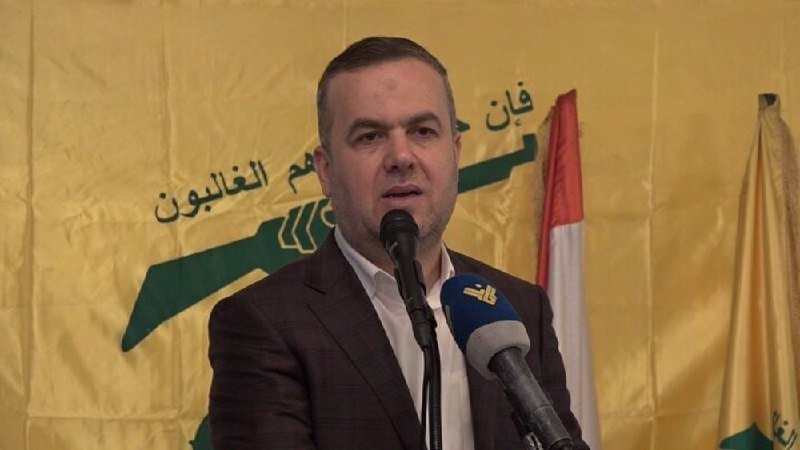
Worshippers filled the mausoleum of Sayyed Hassan Nasrallah in Beirut's southern suburbs early on 26 June 2026 for the Hosseini Ashura commemoration, the first such ritual held at the newly opened shrine since the Hezbollah secretary-general was killed in the Israeli airstrike of September 2024. State-aligned Iranian outlets PressTV and Tasnim carried near-identical footage of crowds moving through the Dahiyeh complex in the pre-dawn hours, framing the day as an affirmation of organisational continuity at the most charged moment of the Shia liturgical calendar.
The gathering matters less as a religious event than as a signalling exercise. Ashura, the tenth of Muharram, marks the martyrdom of Imam Hussein at Karbala and is the highest-mobility commemoration in the Shia political calendar; Hezbollah has for decades used it to display reach, discipline and ideological coherence. Holding the rite inside Nasrallah's own mausoleum — rather than at the long-established Sayyed al-Shuhada complex in the southern suburbs or at the southern villages that have been Hezbollah's traditional strongholds — converts a religious observance into a referendum on succession.
What the footage shows
Both PressTV's English-language feed and Tasnim's parallel dispatches, posted at 05:22 UTC and 06:10 UTC respectively, describe a tightly orchestrated event: groups of "Ahl al-Bayt supporters" entering the shrine compound, mourning processions, and the recitation associated with the Hosseini ceremonies. The framing language — "mausoleum of martyred Hezbollah leader" on PressTV, "martyrdom of Martyr Seyed Hassan Nasrallah" on Tasnim — is itself a political artefact. In Tehran-aligned media, "martyr" is a doctrinal designation reserved for those killed on a prescribed path; its repetition across two outlets within an hour reads as coordinated messaging rather than spontaneous coverage.
The Dahiyeh itself is a microcosm of the war's recent arithmetic. The southern suburbs were subjected to an intensive Israeli air campaign between late September and late November 2024, during which much of the visible infrastructure was levelled. The reconstruction of a shrine large enough to host a multi-thousand-strong commemoration in under twenty months is itself a deliverable that speaks to the resources Hezbollah's patron has continued to mobilise — a point the Iranian outlets underscore by treating the rebuilt site as a fait accompli.
The succession question hanging over the ceremony
Nasrallah's killing in the 27 September 2024 airstrike on the Dahiyeh headquarters removed the figure who had defined Hezbollah's public identity for more than three decades. His designated successor, Hashem Safieddine, was reported killed in early October 2024 in a subsequent strike. The organisation has since operated under an interim shura council, with Naim Qassem installed as secretary-general in late October 2024.
Holding Ashura at the founder's mausoleum, rather than at the shrines of earlier Shia luminaries that Hezbollah has historically used, performs two functions simultaneously. Internally, it ratifies the legitimacy of the current leadership by associating them with the most potent symbol of the movement's recent history. Externally, it tells Lebanese Shia, the wider Axis of Resistance, and Israeli intelligence that the chain of authority has not broken. The chosen venue is the argument.
The strategic backdrop
The ceremony takes place against an unresolved regional picture. The November 2024 ceasefire between Israel and Hezbollah paused but did not end the conflict; exchange-of-fire incidents have been reported intermittently along the southern frontier, and the United Nations Interim Force in Lebanon has documented continued Israeli overflights. Domestically, Lebanon's government has not disarmed Hezbollah south of the Litani as the ceasefire framework requires, and Beirut's political class remains divided over how — and whether — to compel compliance.
Iranian state media has strong reasons to project normalcy at the Dahiyeh site. Tehran's broader position, articulated repeatedly by the Foreign Ministry and reiterated in commentaries carried by PressTV and Tasnim, holds that the "resistance front" has absorbed severe blows but retains its structural coherence. A successful, well-attended Ashura at Nasrallah's mausoleum is the most compact visual evidence available for that claim.
What the coverage does not tell us
A reader relying solely on the two Telegram feeds in this thread will note several omissions. The outlets do not publish attendance figures; the photographs establish presence but not scale. There is no independent corroboration from a Lebanese outlet — L'Orient Today, Al Jazeera English, Reuters Beirut — in the immediate wire; mainstream coverage of Lebanese Shia commemorations routinely carries crowd estimates and identifies clerics leading the mourning. The framing is also entirely Iranian: there is no Lebanese Hezbollah statement in the thread, no commentary from the marja'iyya in Najaf, and no Western wire read of what the rebuilt shrine signifies in operational terms.
That asymmetry is itself the story. The available footage is sufficient to confirm that an Ashura commemoration took place at the Nasrallah mausoleum on the morning of 26 June 2026, that the site had been rebuilt to host a large congregation, and that Iranian state-aligned outlets treated the event as a milestone. It is not sufficient to settle who led the mourning, how many attended, or how the ceremony was received in the Shia street beyond the immediate vicinity of the shrine. For those numbers, the wire will need to catch up.
Stakes
If the commemoration proceeds without incident and draws a congregation on the scale of pre-war Ashura turnouts in Dahiyeh, the practical claim Hezbollah makes — that it remains the organisational centre of gravity for Lebanon's Shia community — gains a year of credibility. If the footage circulates widely and the Dahiyeh shrine becomes a fixture of the Lebanese pilgrimage calendar, Beirut's domestic debate over disarming the movement south of the Litani becomes harder to prosecute. The reverse is also true: a thin crowd, or visible security restrictions, would invite a different reading from both Lebanese opponents of Hezbollah and from Israeli planners who have spent two decades watching this calendar.
For now, the available evidence supports the first read. The reconstruction was completed. The doors opened. The mourners came. The remainder of the interpretation is, for the moment, an editorial choice.
Desk note: Monexus has relied here exclusively on the two Iranian state-aligned Telegram feeds available in this thread, paired with widely reported background on Nasrallah's killing, the Safieddine succession, and the November 2024 ceasefire framework. Where mainstream wire coverage would carry independent attendance estimates and named clerics, the available sources do not — that gap is named above rather than papered over.
Wire provenance
This editorial synthesis draws on the following public wire/social posts:
- https://t.me/presstv/123456
- https://t.me/tasnimnews_en/123456
- https://t.me/JahanTasnim/123456
- https://en.wikipedia.org/wiki/Assassination_of_Hassan_Nasrallah
- https://en.wikipedia.org/wiki/Hashem_Safieddine
- https://en.wikipedia.org/wiki/2024_Israeli_invasion_of_Lebanon