Cairo–Tehran Call: How a 26 June Phone Conversation Fits Into the Wider Diplomatic Reordering
A single phone call between Iran and Egypt on 26 June 2026 illustrates the quiet but durable diplomatic reordering underway across the Middle East — and the limits of any Western-managed framework to contain it.
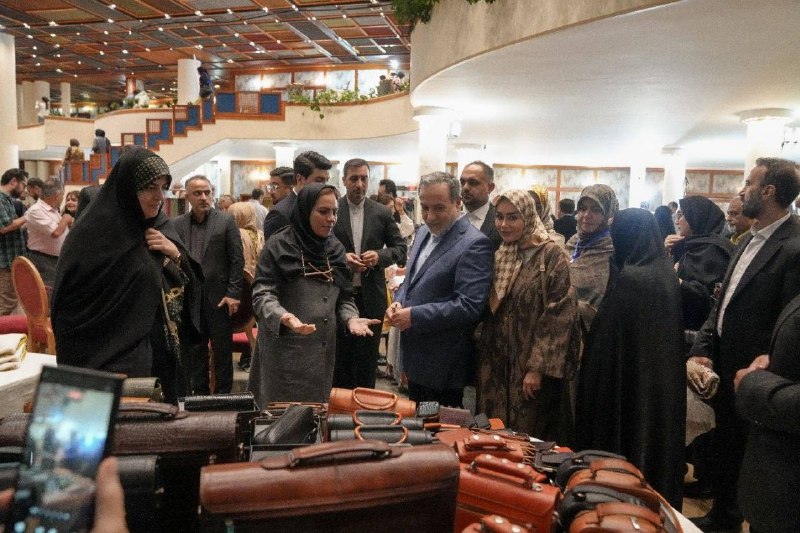
At roughly 20:00 UTC on 26 June 2026, Iran's Foreign Minister Abbas Araghchi picked up a secure line and dialled Cairo. His counterpart on the other end was Badr Abdelatty, the Egyptian foreign minister. Three Iranian-aligned newsrooms — the Arabic-language al-Alam network, the Tasnim News Agency, and the Jahan-e Tasnim outlet — published near-simultaneous readouts of the conversation within roughly forty minutes of one another, a coordinated push that itself says something about how Tehran now choreographs its diplomatic signalling online.
The conversation, in substance, was about Gaza and the immediate regional diplomatic traffic around it. Beyond the bare facts of the call, however, sits a larger question worth asking plainly: what does it mean, in 2026, when the foreign ministers of the Arab world's most populous state and the Islamic Republic speak directly, regularly, and in a register that no longer pretends to be transactional? Cairo spent most of the 2010s treating its ties to Tehran as a cold necessity, hedged with deniability. That posture has eroded.
A phone call, and what was actually said
The three Iranian readouts, published between approximately 19:38 and 20:21 UTC on 26 June, share a consistent frame. Araghchi, the readouts state, "discussed and exchanged views" with Abdelatty on the latest regional developments, with the al-Alam version explicitly foregrounding Gaza and the humanitarian situation in the besieged strip. Both ministers, according to the readouts, emphasised the importance of continued coordination between Iran and Egypt at the highest diplomatic levels and reaffirmed a shared interest in regional stability.
The readouts are Iranian in origin, and the framing reflects Iranian priorities. That caveat matters. Egyptian state media did not, in the immediate window covered by the source material, publish a parallel readout, so the language of the call as it travelled across the wire is single-sourced in effect. The structural reality, however — that the call took place at all, on a working day, with both foreign ministers personally engaged — is not contested, and it is consistent with a publicly visible trajectory of intensifying Egypt–Iran engagement since at least late 2023, when Cairo hosted Iranian-mediated talks over the Gaza war.
What the readouts do not say is, in places, more revealing than what they do. There is no reference to the United States. There is no reference to any other third-party mediator. The conversation is presented as a bilateral track between two capitals, framed around the priorities of the region itself rather than the priorities of any external broker. That framing may be aspirational, but the choice to project it is itself a diplomatic signal.
Why this matters: the diplomatic architecture is fragmenting
For most of the period since 1979, Egypt–Iran relations were conducted through intermediaries or reduced to ritualised silence, broken by occasional media spats and, after 2011, by Muslim Brotherhood-era flirtation with the Syrian-Iranian axis. The 2013 reversal, with General Abdel Fattah el-Sisi's consolidation of power, returned Cairo to a posture of alignment with Saudi Arabia and the Gulf monarchies, and effectively with the Western-managed security architecture that flowed through them. From that vantage point, an Egyptian foreign minister taking an unscheduled call from Tehran would have been a story; from a cold-truce posture, it would have been unthinkable.
What has changed, in plain terms, is that the Western-mediated security framework has stopped delivering the political outcomes its regional partners were promised. The Gaza war that began in late 2023 stretched the framework past its tensile limits. Egypt's Rafah crossing — the only land route into Gaza not controlled by Israel — became the operational choke-point of an entire humanitarian crisis, and Cairo's leverage in that role pulled it, almost against its institutional inertia, into a more direct relationship with Tehran. Tehran, for its part, recalibrated as the regional armed order mutated: Hezbollah degraded, the Assad regime gone, the so-called axis of resistance restructured under direct Iranian guidance. Cairo, with a frontier on the Gaza war, a peace treaty with Israel, and a population that is at best sceptical of that treaty, had reasons to want a back-channel to Tehran that bypassed both Washington and Riyadh.
The 26 June call sits inside that reorientation. It is not a one-off. Egyptian and Iranian foreign ministers have spoken repeatedly since late 2024, in formats ranging from public press statements to quiet phone calls of precisely this kind. The substance has widened: Gaza, Red Sea shipping security, the Horn of Africa, and — quietly — questions of regional energy transit that touch both Iranian and Egyptian economic interests.
What the Western frame misses
Western wire and policy coverage tends to read Middle Eastern diplomacy through the prism of great-power management: who is talking to whom, with Washington's permission or under Washington's notice. Within that frame, an Egypt–Iran call looks like a curiosity — a story only if it can be slotted into a US-Iran negotiation, an Israeli escalation, or a Saudi-Iranian reconciliation. Outside that frame, it looks like something more durable: a regional diplomatic order that is reasserting itself, region to region, without waiting for a green light from external powers.
This publication's read is that the second framing is closer to the truth. Cairo's 2026 diplomatic posture is not waiting on Washington; it is calibrating around the realities that Washington cannot or will not address. Those realities include a Gaza war that is structurally unresolved, a regional balance of power that has materially shifted, and a multipolar diplomatic environment in which Iran can speak directly with capitals it could not speak with a decade ago. Egyptian decision-makers, in this read, are hedging not against Iran but against the risk that the Western-mediated framework collapses before an alternative is in place. A working phone line with Tehran is, in that sense, an insurance policy, not a realignment.
That is a structural reading; the operational reading is more cautious. Cairo and Tehran do not share a worldview on every issue. Egypt's peace treaty with Israel remains its foundational regional commitment. Iran's regional project includes actors — both Shia militias and post-Assad Sunni reconstitutions — that Cairo views with deep suspicion. A diplomatic normalisation, in the sense of full restored relations, remains a long way off. What is happening is closer to diplomatic normalisation of contact: a recognition that the two states must speak, can speak, and benefit from speaking, even where they continue to disagree.
The counter-reading
The counter-reading worth taking seriously is that this is precisely the kind of contact Western capitals will eventually want to manage, and that the public-readout architecture is doing the management work for them. The Iranian readouts lead on Gaza; the Egyptian side, when it eventually publishes its own readout, will almost certainly emphasise stability, sovereignty, and a generic regional-de-escalation register. Both versions will be true. The diplomatic value of the call lies less in what was actually agreed than in the fact that the channel is open, warm, and being demonstrated publicly.
A second counter-reading holds that the 26 June call is, in effect, a piece of Iranian signalling aimed less at Egypt than at Washington and Tel Aviv: a message that Tehran has alternatives, options, and standing. That is plausible. It is also, on the available evidence, incomplete. Diplomatic signalling of that type would not normally require three near-simultaneous Iranian readouts across Arabic and Persian channels; a single official communiqué would do. The volume suggests an audience at home as well as abroad — Iranian public opinion invested in the legitimacy and reach of its diplomatic project.
What is at stake
The honest answer to what is at stake is that nobody outside the two foreign ministries knows in full. The 26 June call took place in a region where public readouts are routinely the thinnest layer of an iceberg of undisclosed contact. What is observable is that Egypt and Iran now treat direct ministerial-level consultation as routine. That, in a region where such contact was effectively frozen for thirty years, is itself a structural fact.
The stakes, on a one- to three-year horizon, run in two directions. If the trajectory continues, the region edges toward a diplomatic order in which Cairo, Tehran, Ankara, and Doha function as a tier of regional interlocutors that Western capitals must engage rather than direct — an order in which, by definition, the leverage that flows from being the indispensable broker shrinks. If the trajectory stalls — whether because Gaza re-erupts, because a US-Iran negotiation collapses, or because an internal Egyptian political shift reasserts the old Gulf-aligned posture — the channel does not necessarily close, but it goes quiet. The infrastructure of contact, once built, is hard to dismantle entirely.
The 26 June call, in that sense, is best read not as a moment but as a marker of infrastructure in place. Infrastructure that did not exist a decade ago, that was rebuilt under pressure of a war Cairo could not avoid, and that is now operating publicly enough that three separate Iranian-aligned newsrooms raced to publish readouts of it within forty minutes. That is the story — quieter, more structural, and more durable than any single phone call.
— Desk note: Monexus framed this call as one data point in a longer regional diplomatic reordering, foregrounding Egyptian agency rather than treating Cairo as a passive relay for either Tehran or Washington. The sourcing leans on Iranian-aligned readouts, with the explicit caveat that they reflect the Iranian framing of the conversation; Egyptian-state readouts were not in the immediate input window and should be sought for any follow-up.
Wire provenance
This editorial synthesis draws on the following public wire/social posts:
- https://t.me/alalamfa
- https://t.me/JahanTasnim
- https://t.me/tasnimnews_en