The Ebola Funding Gap That Shouldn't Exist
Africa CDC says the bill to contain the outbreak has tripled to $1.4bn — roughly what Western capitals spend on a single mid-sized defence procurement — and the world's response is still moving at the speed of press conferences.
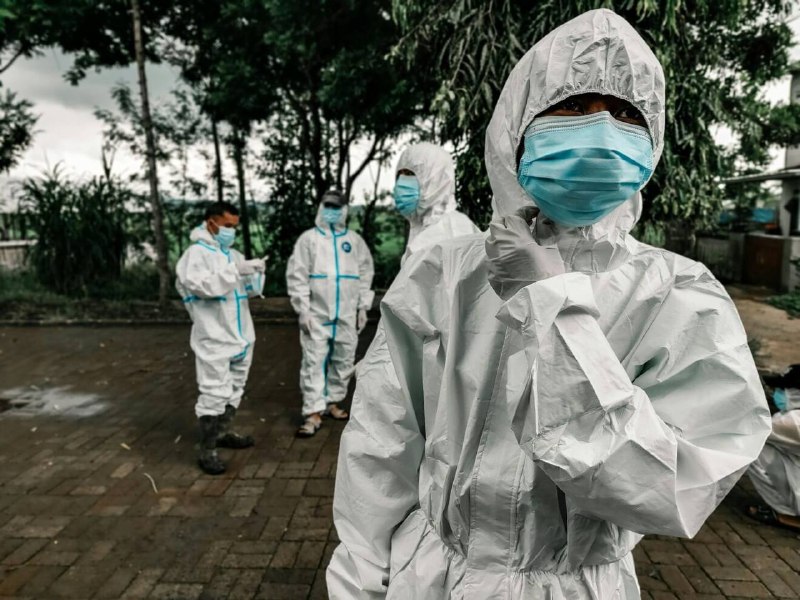
On 26 June 2026, the US Centers for Disease Control and Prevention activated its highest-level emergency response to an Ebola outbreak spreading across the Democratic Republic of the Congo and Uganda. Hours later, the Africa Centres for Disease Control and Prevention put a number on what the world is being asked to pay: $1.4 billion, roughly triple the figure on the table when the crisis was first declared. The same day, Washington announced it would ship an experimental therapy to both affected countries. The pieces are moving — slowly, in the wrong order, and almost entirely on African clinical and logistical labour.
Here is the uncomfortable pattern. When a pathogen of this lethality surfaces, the global script is well-rehearsed: an African ministry confirms cases, the WHO issues a regional alert, donor governments hold technical briefings, vaccine candidates are named, and the funding gap is allowed to widen for weeks while negotiations drag on. The current outbreak has faithfully reproduced that script — except this time, the gap between what African authorities say is required and what is actually in the pipeline has become so wide that even the usually cautious Africa CDC has chosen to name it publicly.
The number, and what it actually means
The $1.4bn figure is not an aspiration. It is a working budget for case isolation, contact tracing, cross-border surveillance, therapeutics deployment, community engagement, and the often-invisible cost of keeping funeral practices from becoming super-spreader events. Africa CDC's warning that the figure has tripled in a matter of weeks is itself the diagnostic finding: outbreaks of this biology grow faster than the financial architecture designed to contain them, and the asymmetry compounds with every reporting cycle. The DRC and Uganda are running the front line with health systems that, in the DRC's case, were already strained by concurrent mpox and cholera responses.
The structural question is not whether $1.4bn is large in absolute terms. It is not. It is roughly what a single NATO member routinely signs off for a mid-sized defence procurement, and a small fraction of what G7 governments mobilised in the first weeks of the 2020 Covid-19 response inside their own borders. The question is why the mobilisation for a continent-sized outbreak has to be begged for in public, on a deadline, while the pathogen is already moving across two national borders.
The counter-narrative Western donors will offer — and why it doesn't hold
The standard donor-side framing is that response funding is conditional on verified case counts, laboratory confirmation, and a credible country-level request funneled through WHO channels. That framing is defensible in principle. In practice it functions as a delay mechanism: by the time the bureaucratic apparatus has satisfied itself that an African outbreak is real, the outbreak has typically moved through two or three transmission generations. The 2014–2016 West African epidemic — which killed more than 11,000 people before the world treated it as a global emergency — is the canonical reference, and the lesson was supposed to be learned.
A second line, more honest, is that African public-health agencies are now expected to do the early-warning work that the WHO and donor governments once performed themselves, and to do it on thinner budgets. Africa CDC, founded in 2017 and operationalised through the African Union, has built genuinely impressive institutional capacity in less than a decade. Naming the $1.4bn figure publicly is itself a sign of that capacity. It is also, plainly, an act of frustration.
The structural frame, in plain language
Ebola is not a difficult disease to interrupt. The biology is well understood; vaccines exist and have been deployed at scale; the playbook for safe burials, case isolation, and contact tracing is established and field-tested. What is difficult is the politics of money at speed across borders that donors do not inhabit. Pandemic response is, in practice, a logistics problem dressed up as a medical one. The bottleneck is almost never the syringe; it is the signed cheque.
What this outbreak exposes — and what the timing of the US activation, the experimental therapy shipment, and the Africa CDC funding warning together expose — is that the early-warning architecture has been substantially Africanised in the last decade, while the funding architecture has not. African institutions are now expected to detect, name, and frame the crisis; external institutions are still the gatekeepers of the response. That gap is the story, not the virus.
The stakes, plainly named
If the $1.4bn materialises within the next reporting cycle, the DRC and Uganda can run the response they have planned, regional spillover into Rwanda, South Sudan, and Burundi is plausibly containable, and the experimental therapy arriving from the United States can be deployed as part of a coherent strategy rather than as a desperate gesture. If it does not — if donor governments treat the Africa CDC figure as a negotiating starting point rather than a working budget — the outbreak enters the phase where it begins to set the terms of its own growth: cross-border community transmission in trading hubs, nosocomial outbreaks in under-resourced hospitals, and the slow internationalisation that eventually forces a far more expensive response at much greater cost in lives.
What remains genuinely uncertain, on the public record, is the case count. The source material confirms the funding warning and the US response activation, but does not specify current case totals or mortality figures in the DRC and Uganda. That opacity is itself a familiar feature of the early outbreak phase, and is precisely the kind of information vacuum that allows the funding gap to widen before the political cost of inaction arrives.
This publication framed the outbreak as a financing problem before treating it as a medical one — a deliberate inversion of the standard wire sequence, in which case counts lead and money follows.
Wire provenance
This editorial synthesis draws on the following public wire/social posts:
- https://x.com/polymarket/status/2026-06-26T05:40
- https://x.com/polymarket/status/2026-06-26T16:42
- https://x.com/polymarket/status/2026-06-26T20:00