Brussels and Beijing are drifting into a managed-friction relationship — and both sides are running out of road
EU leaders say the bloc's daily trade deficit with China has crossed $1bn. New rules on procurement and a Chinese nationwide long-term care insurance rollout are the other side of the same reckoning.
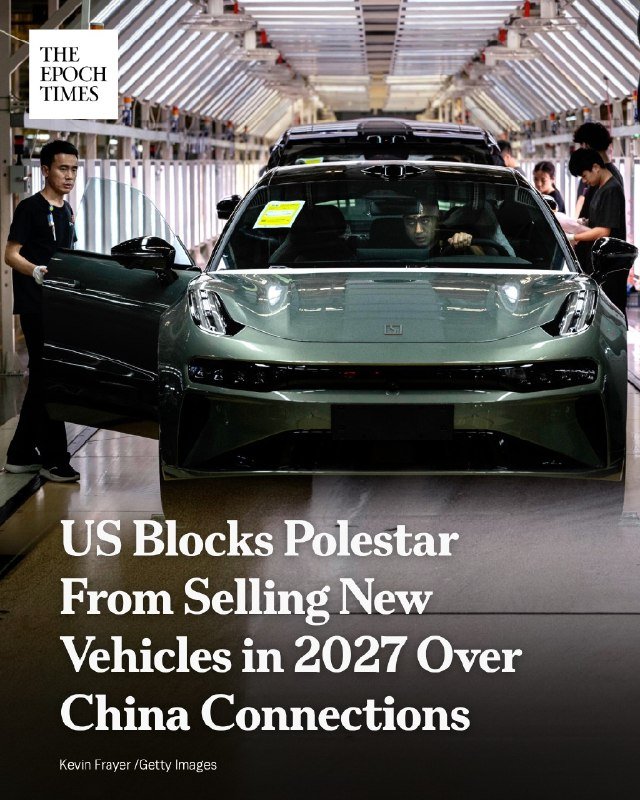
On 26 June 2026, two pieces of economic news landed within hours of each other and, taken together, sketch the shape of the next decade of EU–China relations. The first, reported by Nikkei Asia, is that EU leaders have agreed on the need to act against a Chinese export machine that now runs a trade surplus worth more than $1bn a day. The second, also Nikkei Asia, is that Beijing plans a nationwide rollout of long-term nursing-care insurance by the end of 2028 — a domestic policy with the quiet ambition of socialising the cost of caring for a 1.4-billion-person population that is older than any developed economy has ever had to manage. Read them separately and they look like two unrelated policy streams. Read them together and they describe a managed-friction relationship in which both sides are buying time.
The friction is now structural, not episodic. A daily deficit above $1bn means the bilateral imbalance has settled into a feature of the European economy, not a cyclical irritation. New EU procurement rules and tighter screening of Chinese state-linked bids are the Brussels response, calibrated to slow the bleed without triggering an open tariff war that neither side's export sector can afford. The Chinese response, on the evidence so far, is to deepen the domestic market that absorbs the same industrial overcapacity. A nationwide long-term care programme is, in part, a demand-side industrial policy: it underwrites a service economy large enough to soak up the workforce that low-end manufacturing no longer needs.
What the EU is actually proposing
Brussels is not, despite the rhetoric, decoupling. The Nikkei Asia reporting makes clear that the measures under discussion are procedural: tighter screening of Chinese bids in public procurement, more demanding disclosure for state-subsidised exporters, and reciprocal market-access tests that mirror the instruments Washington has been deploying since 2018. The political signal is that the status quo is over; the legal signal is that European governments want headroom to say no to specific deals without violating their WTO commitments. Chinese firms are "bracing" because the rules raise the cost of doing business in Europe, not because Europe is closing. The distinction matters: a closed market implies political rupture; a more expensive market implies a new operating cost.
The structural pressure is real. A deficit that compounds at $365bn a year reshapes the politics of every industrial policy debate in the Union — from battery manufacturing in Spain to solar assembly in Greece. The Commission now has a defensible reason to condition subsidies on Chinese-content ceilings, and member-state capitals have a defensible reason to ask why their taxpayers are underwriting competitors to Chinese state-owned enterprises. Whether the new rules will actually narrow the deficit is a separate question. The historical record on capital-intensive Chinese export sectors — EVs, batteries, solar, telecoms kit — is that volume discounts and state financing follow the regulation around it. Brussels is buying the right to be slow, not the right to be closed.
What Beijing is doing on the other side
The nursing-care announcement is easy to misread as a soft social-policy story. It is not. China has decided, in writing, that the fiscal cost of supporting a population whose over-60 cohort is projected to surpass 400 million by the end of the decade will be socialised across employers, individuals, and government. The model, in formal terms, resembles Germany's long-term care insurance: a dedicated contribution base, a defined benefit, and a parallel fund outside the general health-insurance architecture. The political theory is that ageing-related fiscal shocks are too large for any single province or household balance sheet to absorb. The economic theory is that the same fund creates a domestic service industry with a politically bulletproof demand floor — home care, rehabilitation, assistive devices, clinical geriatrics — that absorbs labour migrating out of low-end manufacturing and construction.
This is the demand-side complement to the supply-side story that the EU is complaining about. If Chinese consumers, public and private, can absorb a meaningful share of the output of Chinese industry, then export dependence on Europe and the United States becomes optional rather than existential. The programme is a hedge against the managed-friction future the EU is now formalising. A 30-year-old in Hangzhou who today builds components for export to Rotterdam will, in 20 years, plausibly be paid to care for a retired neighbour — and the domestic demand to keep both of them in work will, in theory, be underwritten by an insurance fund that the Chinese state has pre-positioned.
The counter-narrative nobody in Brussels or Beijing is fully admitting
There is a quieter version of the story. The $1bn-a-day deficit reflects, among other things, the success of Chinese industrial policy at producing goods that European producers cannot match on cost without subsidies the EU's fiscal rules do not permit. The new rules will not relaunch a European mid-cap industrial base that has been thinning for two decades; they will, at best, slow the substitution effect. Conversely, the nursing-care programme assumes a contribution base and an administrative capacity that the Chinese fiscal system has not yet had to manage at scale. Local government balance sheets in inland provinces are strained; the central government is signalling that it intends to absorb more of the load, but the political economy of who pays is unresolved.
The Western wire line tends to treat both stories as threats: Chinese exports as a structural surplus to be contained, Chinese demographics as a crisis to be managed. The Chinese counter-line, carried in state media and industry briefings, treats the export side as a sign of competitive success and the demographic side as evidence that the state is acting earlier than Western welfare states did in similar circumstances. Both framings are partial. The honest read is that both economies are running out of low-cost adjustments — cheap European welfare states on one side, cheap Chinese labour on the other — and are now being forced into the harder politics of who subsidises whom.
Stakes for the next 18 months
The concrete test is whether the new EU procurement rules survive the lobbying cycle. Several member states have significant Chinese-linked supply chains in green-tech hardware, and the European renewables deployment targets for 2030 are mathematically dependent on Chinese inputs at current production share. Tightening procurement without a parallel expansion of European mid-supplier capacity means slower rollout and higher costs that ultimately fall on ratepayers. Brussels knows this. Beijing knows it. The negotiation that follows will be about pace, not direction.
For readers, the practical takeaway is that "decoupling" remains a slogan rather than a policy. The 2026 settlement is selective friction, embedded in rules that allow each side to slow the other without declaring a trade war. Whether that arrangement holds depends on the second-order question the nursing-care announcement raises: whether China can re-orient enough of its industrial machine toward its own ageing population to reduce its dependence on external demand. The sources do not, yet, allow a confident answer. The Nikkei Asia reporting documents both intentions clearly. The outcome will depend on fiscal execution in Beijing and political discipline in Brussels — two of the harder variables in modern economic statecraft.
Desk note: Monexus framed this as managed friction rather than decoupling — the daily-deficit and long-term care stories only cohere if read together. The wire framing has tended to run them as separate items; we ran them as one.
Wire provenance
This editorial synthesis draws on the following public wire/social posts:
- https://t.me/NikkeiAsia
- https://t.me/nikkeiasia
- https://t.me/NikkeiAsia
- https://t.me/nikkeiasia