Finland's Stubb puts nuclear storage, Ukraine endgame on the table
Helsinki signs off on hosting allied nuclear weapons as its president argues Moscow cannot afford to lose — and cannot afford to stop.
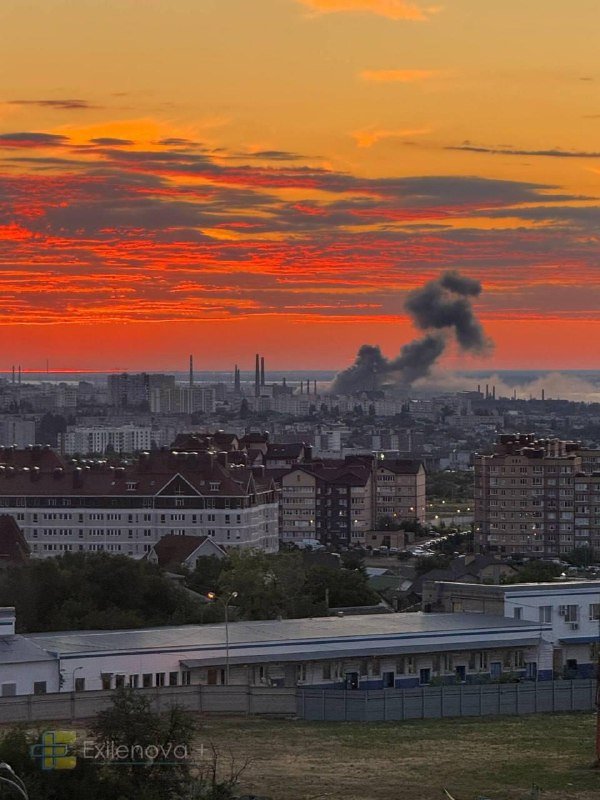
Helsinki has spent most of its post-Cold War history describing itself as a non-nuclear country on Russia's doorstep. On 26 June 2026, that posture formally changed. Finnish President Alexander Stubb approved amendments permitting the import and storage of nuclear weapons in Finland, according to a NEXTA wire at 16:38 UTC — a decision that puts the country's 1,340-kilometre border with Russia inside the operational footprint of the Atlantic alliance's most sensitive weapons.
This is not a small adjustment to Finnish defence doctrine. It is the country telling Moscow, in the bluntest legal language available, that the airspace, rail corridors and Baltic coastline it shares with Russia are now formally available as a forward base. The decision lands on the same afternoon Stubb laid out, in unusually direct terms, his read of how the war in Ukraine ends. The two moves belong to the same argument.
What Stubb actually said
In comments relayed by Clash Report at 16:24 and 16:22 UTC, Stubb offered a deliberately unromantic prognosis. "Russia is not going to end this war because of economic complexities," he said. "It's not going to end this war because of the death of Russian soldiers." He then reached for a historical yardstick: in the Second World War, he noted, the Soviet Union marched on Berlin across roughly 1,400 kilometres in under four years — a distance he compared to the front line Ukraine is contesting today. The implication is uncomfortable for any reader hoping for a quick Russian withdrawal driven by cost or casualty pressure. Moscow, on Stubb's reading, has absorbed those costs before and is willing to absorb them again.
He was more confident on the destination than on the timing. Ukraine, he said, "is going to be European … an EU member state and eventually a NATO member state." The sourcing on this line is Politico, as cited in the Clash Report wire at 16:20 UTC, and the framing matters: a Finnish head of state is publicly underwriting Kyiv's full integration into the Western institutional order as a fixed endpoint, not a negotiating chip.
Why the nuclear decision is bigger than the headline
Finland already joined NATO in April 2023, ending decades of formal military non-alignment. Hosting US or allied nuclear weapons is a separate and older category of commitment — the kind of arrangement that turned West Germany, Italy, Belgium and the Netherlands into forward tripwires during the Cold War. The amendments Stubb signed do not, on the available reporting, announce an imminent deployment; they remove the legal obstacles to one. That distinction is real but narrow. Once the legal architecture exists, the political signal has already been sent.
For Moscow, the read is straightforward. A new NATO member on the Russian border is shifting from a country that hosts allied exercises and air policing missions to one that could host tactical nuclear gravity bombs within flying range of St Petersburg, the Kola Peninsula and the Murmansk rail links. The Kremlin's response pattern in this kind of situation is well established: rhetorical escalation first, force-posture adjustments second. Watch for movement of Iskander units to Leningrad and Murmansk oblasts over the summer.
The structural argument behind Stubb's caution
Stubb's pessimism about Russian staying power rests on a particular view of how Moscow calculates. The first element is economic. Sanctions have bitten unevenly — defence production has been insulated, civilian import-substitution programmes have produced some visible results — but the longer the war runs, the more the Russian budget is forced to choose between guns and the social contract that keeps the system stable. The second is human. Russia has tolerated casualty figures in this conflict that would be politically intolerable in most Western democracies, partly because the burden has been shouldered disproportionately by provincial, non-ethnic-Russian and contracted-military communities. Stubb's point is that neither lever has produced a political constituency inside Russia strong enough to override the war's strategic logic.
A reasonable counter-read exists. The Russian economy has now been on a war footing for more than four years; defence plants are running three shifts; inflation has cooled from its 2024 peak. Moscow can in principle keep grinding for years if it is willing to accept a permanently lower growth trajectory and a permanently elevated defence share of GDP. Stubb's framing treats that as a cost; a different reading treats it as a strategic choice Moscow has already made and sees no reason to reverse.
Stakes
If Stubb is right about both halves of his argument — the war grinding on and Ukraine joining the Western institutions regardless — the next eighteen months will be defined by hardening tripwires rather than negotiations. Finland's nuclear-storage decision is the first such hardening. Expect Poland and the Baltic states to make complementary moves; expect Sweden, already inside NATO, to revisit its own nuclear posture in quieter terms. The risk calculus in Kaliningrad shifts in ways that are difficult to model and easy to misread by automated early-warning systems on both sides.
For Kyiv, the consolation is that the destination Stubb describes is being underwritten by an expanding base of allies willing to take political and military risks that would have been unthinkable in 2022. The cost is that those same allies are now openly preparing for a war that runs longer than the political clock in most Western capitals.
What remains uncertain
The sources do not specify which state's weapons would be hosted, under what bilateral arrangement, or on what timetable. NEXTA's wire reports the legal approval; the operational follow-through — basing sites, guard arrangements, consultation protocols — is not on the public record as of 26 June 2026. Stubb's Politico-sourced line about Ukraine's NATO future also sits in tension with the alliance's own open-door language, which is deliberately agnostic on timing. Both pieces of caution belong on the same page as the headlines.
Desk note: this publication frames the Finnish decision as a deliberate tripwire hardening rather than a routine basing update, and reads Stubb's prognosis as a strategic forecast from a frontline head of state rather than a Western analyst's extrapolation. Telegram wires are used here for what the actors themselves said; the policy substance still requires primary-source confirmation from Helsinki and the alliance.
Wire provenance
This editorial synthesis draws on the following public wire/social posts:
- https://t.me/nexta_live
- https://t.me/ClashReport
- https://t.me/ClashReport
- https://t.me/ClashReport
Follow the event.
These dated source records provide context. They do not retrospectively verify this archive article.
A dated voting record is evidence of one decision. Use the original UN record before turning it into an alignment label.
Visual explainer · historical vote of 2022-03-02 →