Gaza's information fog: when every Telegram channel is a newsroom
Two parallel Telegram feeds on 26 June carried contradictory frames on the same Jabalia strike. The episode exposes a deeper crisis: how Gazans themselves source the news when every wire is contested.
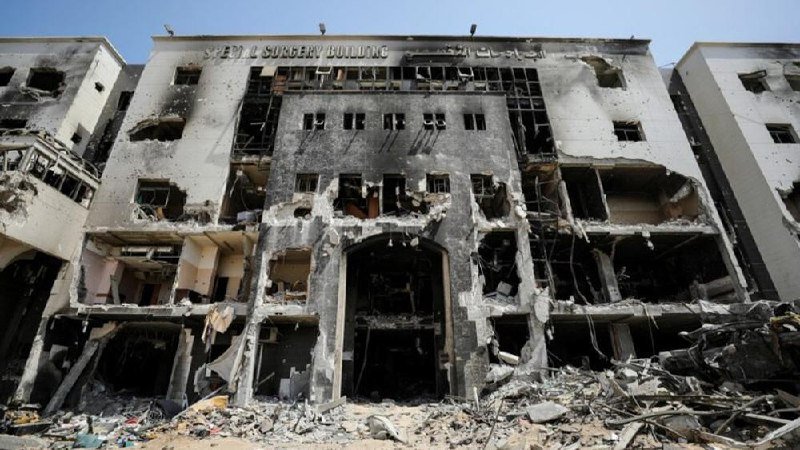
At 08:56 UTC on 26 June 2026, a channel affiliated with an Iranian state-aligned news agency posted that an Israeli drone had struck Jabalia al-Balad in the northern Gaza Strip, with two people injured. Forty-three minutes later, at 09:37 UTC, a separate Telegram feed — one affiliated with an Arabic-language outlet tied to the regional Iran-aligned information ecosystem — posted that "an Israeli march" had thrown a bomb at a group of citizens in the same town, again with two injuries. Same town, same casualty count, same day. Different verbs. Different weapons. Different accounts of who threw what at whom.
The juxtaposition is not a glitch; it is the operating environment. Inside Gaza, the population that most needs accurate, minute-by-minute information about its own survival is now sourcing that information from a layered cake of Telegram channels: outlets tied to one political faction, outlets tied to another, outlets tied to regional state actors, and a thin layer of Western wire reporting that arrives hours late, mediated through translators with their own alignments. The latest exchange — an exchange that the wire services have not yet picked up — is a small case study in how the information infrastructure of a war zone now works.
Two channels, one strike, no agreed story
The first message, at 08:56 UTC, frames the incident as a drone strike by Israeli forces on Jabalia al-Balad. The second, at 09:37 UTC, frames the same incident as a march — implying a ground incursion or patrol — throwing a bomb at a group of citizens. The grammar of the two reports is telling. The first is structurally passive: "the Israeli drone attack on the north of the Gaza Strip." Agency sits with the platform. The second is explicitly attributed: "Israeli march throwing a bomb." A drone strike is mechanised, deniable, statistical. A march throwing a bomb is intimate, kinetic, personal. The same two injuries, told two ways, produce two different publics.
These are not fringe accounts. They sit inside a media ecosystem that has, for two years, replaced the wire services for many Gazans as the primary ledger of what is happening in their own neighbourhoods. International reporters are restricted from entering much of the Strip; local journalism has been devastated by the loss of journalists, communications infrastructure, and physical access. The vacuum has been filled, channel by channel, by political and partisan outlets. Read together, the two messages are less a contradiction than a refraction: a single event split into the interpretive light of two competing information systems.
What "resistance security" tells you about who runs the channel
The second cluster of messages in the same hour, between 09:09 and 09:11 UTC, is more revealing than the strike reports. A source inside what the channel calls "resistance security in Gaza" issues a public statement to the strip's population: watch for rumours, report anything suspicious, do not undermine internal stability, treat unity of ranks as a red line. The framing — "inflammatory calls aimed at undermining internal stability" — and the addressee — "everyone" in the Strip — make clear who the channel believes it speaks to and on whose behalf.
This is press release, intelligence bulletin, and community policing folded into one Telegram post. It is not journalism in the wire-service sense. It is a parallel governing voice, broadcasting into the same information space where the strike reports travel. A reader of the channel will read the casualty report already knowing, three minutes later, who is being asked to suppress dissent and why. The casualty and the security bulletin are not separate stories; they are the same package.
What the wires are not telling you
The absence is the story. As of midday UTC on 26 June, no major Western wire — Reuters, AP, AFP, BBC — has published a confirmed account of the Jabalia incident that would let an outside reader independently verify either the drone framing or the march framing. The wire services in this conflict have lost something they used to possess: a near-monopoly on first-line confirmation. They rely increasingly on local stringers, on imagery posted to social media, and on statements from the IDF Spokesperson, UN OCHA, or the Gaza health authorities — each of which is itself a politically positioned source. Where the wires once triangulated, they now transmit.
That shift has structural consequences. When the wires transmit rather than triangulate, the editorial filter they used to perform — weighing sources, flagging claims, demanding second-source corroboration — moves into the hands of the reader, or it does not get performed at all. For a literate reader in Beirut or Cairo, the layered Telegram feed is workable; they can cross-check, discount, weight. For most Gazans on most days, the feed is the wire.
The stakes, plain
What this episode illustrates is not that Telegram channels lie — most of the time they report the events they can see, with the spin their political principals require. What it illustrates is that the architecture of war reporting has permanently fractured. The bundle of casualties + security bulletin that arrived on this channel on 26 June is, for the people it speaks to, the morning news. It is what they will tell their children happened yesterday. The two injuries in Jabalia al-Balad are real. The frame around them — what kind of weapon, what kind of attacker, what kind of response — is now an editorial product, assembled in real time by political actors for a captive audience.
The international press freedom organisations that used to descend on a war zone to "support local journalism" are, in the Gaza case, supporting something more complicated: a media ecosystem in which the line between reporting and factional address has effectively dissolved. Until Western wire services restore first-line physical access for reporters, and until the political principals behind the various Telegram channels accept something resembling a shared evidentiary standard, the population of Gaza will continue to receive its own war as a sequence of partisan bulletins, each describing the same two injuries in a different grammar of violence. The wire has not gone away. It has merely been replaced, channel by channel, by something that looks like it and serves a different master.
Desk note: Monexus framed this piece around the divergent Telegram reporting rather than treating either channel as authoritative, and flagged explicitly that Western wires have not independently confirmed the 26 June Jabalia incident at time of publication. Source attribution is held to the two named Telegram feeds and the framing they provide; no casualty figure has been promoted above what the channels themselves report.
Wire provenance
This editorial synthesis draws on the following public wire/social posts:
- https://t.me/alalamarabic/
- https://t.me/alalamarabic/
- https://t.me/tasnimplus/
Follow the event.
These dated source records provide context. They do not retrospectively verify this archive article.
Separate what the nuclear watchdog reported from what it could not determine after the June 2025 strikes.