Four ships, one strait: how the Hormuz ceasefire cracked in a single afternoon
A single afternoon in the Strait of Hormuz turned an uneasy truce into a contested one, as four commercial vessels came under fire and Tehran's diplomats reminded Washington that safe passage is never unconditional.
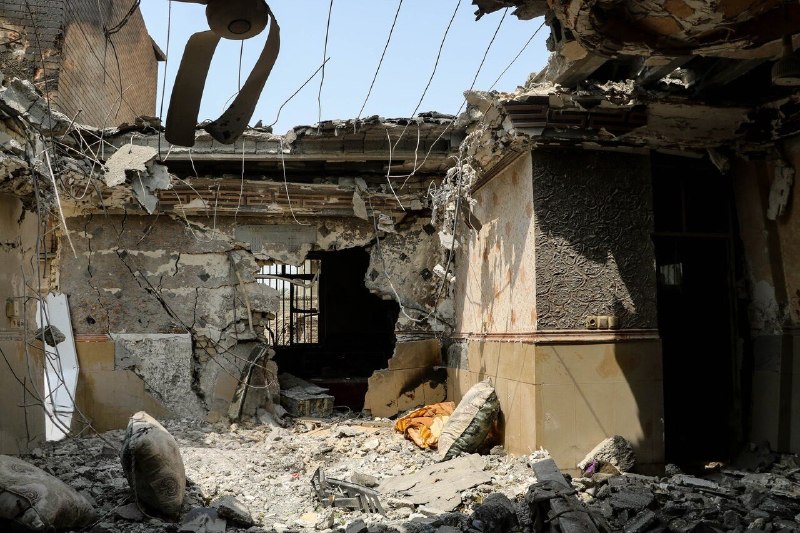
On the afternoon of 26 June 2026, four commercial vessels transiting the Strait of Hormuz came under fire in what US President Donald Trump, speaking from Washington, immediately labelled a "foolish violation" of a ceasefire that had until that hour held the line between an open war and a managed one. Within ninety minutes, the shape of the day's news had inverted: the United Nations agency responsible for seafarer welfare was working to restart evacuation channels out of the strait, the United Arab Emirates had placed a rare direct call into Tehran to insist on safe passage, and Iran's deputy foreign minister had reminded reporters in plain terms that transit without acknowledgement of Iranian sovereignty is not guaranteed.
What is unfolding in the strait is not merely a discrete naval incident. It is the visible surface of a deeper contest over the choreography of Gulf security — who sets the tempo of tanker traffic, who gets to define "safe passage," and which capitals are read as stakeholders and which as supplicants. The ceasefire, such as it was, never rested on a signed document; it rested on a series of public understandings about how far each side could push without forcing the other into a face-losing response. Thursday afternoon tested that understanding, and the answer came back ambiguous.
The afternoon's chronology
The first reporting on the incident moved through market-adjacent accounts at 16:08 UTC, when a Polymarket newsroom update identified four vessels struck in Hormuz and attributed to Trump the characterisation "foolish violations" of the ceasefire. By 16:37 UTC, Iran's deputy foreign minister had moved the framing in a different direction, telling reporters that safe passage through the strait without consideration of Iran's sovereignty is "not guaranteed" — a formulation designed to leave Iran maximal room to interpret what counts as consideration and what does not. Twenty minutes later, at 16:58 UTC, the Unusual Whales account was circulating the president's accusation that Iran had violated the ceasefire. Reuters confirmed the trajectory at 17:35 UTC, reporting that the relevant UN agency was working to restart Hormuz evacuations in the wake of the ship attack, and at 17:42 UTC the South China Morning Post filed a fuller version of Trump's characterisation of the strike as a "foolish violation."
The chain of attribution matters. The four-ships figure, the "foolish violation" phrasing and the ceasefire-violation frame are all sourced to Trump and to market and social accounts republishing his remarks; the Iranian counter-frame — that sovereignty over the strait is non-negotiable — is sourced to a named Iranian official speaking in the open. Neither set of claims has been independently corroborated on the public record as of this writing.
The counter-narrative: Tehran's read
The Iranian position, as articulated by the deputy foreign minister on the afternoon of 26 June, treats the question of Hormuz as one of jurisdiction rather than courtesy. The strait, under Iran's longstanding legal position, sits within waters whose security architecture cannot be unilaterally set by external powers; safe passage is a privilege that follows from dialogue, not a right that survives it. That posture is older than the present crisis and is not particular to this government. It is, however, more sharply articulated now, in a moment when the regional balance has been visibly unsettled by successive rounds of Israeli and US action against Iranian assets and proxies.
The structural complaint beneath the Iranian framing is that the existing security order in the Gulf has been engineered by external powers to external specifications. Iran's contention — expressed through action rather than communique in this case — is that any order that does not reflect Iranian weight on its own coastline is an order Iran has merely tolerated, not one it has consented to. The four-ship strike, read through that lens, is not an aberration; it is a reminder. The question for the rest of the Gulf is whether the reminder is rhetorical or operational.
The UAE's diplomatic opening
The most consequential move of the day, and the one least remarked in Western wires, was the United Arab Emirates' decision to place a direct call to Iran. Reuters reported the call at 17:15 UTC, framing it as a rare contact between the two capitals and noting that Abu Dhabi had stressed Hormuz security as the central item. The significance is not that the call happened — Gulf states speak to Iran through back channels constantly — but that it happened visibly, in daylight, with named substance.
Abu Dhabi has spent two decades building a posture of studied neutrality between Tehran and Washington, a posture predicated on the assumption that the US security umbrella and the Iranian threat environment can both be managed without forcing a choice. The Hormuz incident, and the public naming of Iran as ceasefire-violator by Washington, raises the cost of that neutrality. A UAE that visibly insists on Hormuz security in direct conversation with Iran is signalling that it intends to remain a principal in this conversation, not a piece moved across someone else's board. The structural frame here is straightforward: the smaller Gulf states are increasingly unwilling to be discussed as terrain, and increasingly insistent on being treated as stakeholders.
Why the strait, why now
Roughly one-fifth of seaborne crude passes through the Strait of Hormuz. That figure is itself the reason the strait functions as a global chokepoint and the reason any sustained disruption is priced into markets within hours. The current crisis sits inside a broader pattern in which the established architecture of Gulf security — US naval primacy, Israeli deterrence, GCC alignment — has been visibly strained over the past two years by direct Iranian action, by Houthi disruption of Red Sea shipping, and by the slow-motion normalisation between Tehran and several of its historical Arab antagonists.
What the 26 June incident exposes is the thinness of the present arrangement. A ceasefire that exists as a set of public understandings rather than as a signed and verified instrument is a ceasefire that can be tested at any moment by a single incident, and that will be described differently by each side depending on which audience each is addressing. Trump speaks of "foolish violations" for a domestic audience that has been told the war is over; Tehran's deputy foreign minister speaks of conditional passage for an audience that has been told the war is not yet decided. The two statements are not, strictly, contradictory — they are addressed to different listeners and calibrated to different costs of escalation.
The deeper structural read is that the United States is operating in a region where its ability to set the agenda unilaterally has narrowed. The presence of US carrier groups in the Gulf remains the single most consequential military fact in the area, but it is no longer sufficient on its own to underwrite the rhythm of tanker traffic. Iran's maritime forces, its missile and drone reach, and its network of regional partners together form a denial architecture that does not need to win a naval engagement in order to impose costs. Striking four commercial vessels is, in that sense, a calibration move — a way of reminding Washington and the Gulf monarchies that the cost of holding the current line is one that will be paid in insurance premiums, in rerouted cargoes and in political capital, every single day.
What remains uncertain
Several facts about the 26 June incident are not yet established on the public record. The identity of the four vessels struck — flag state, ownership, cargo — has not been disclosed in the source material available to this publication. The number "four" comes from a Polymarket newsroom account and has not been independently confirmed by a wire service in the materials reviewed; Reuters describes the incident as a "ship attack" in the singular in its 17:35 UTC item. No casualty figures have been reported. The "ceasefire" against which the incident is being measured is not a documented agreement with a known text and known signatories; it is the working name for a set of public understandings that have governed the pause in direct US-Iranian hostilities. Whether the US response will be rhetorical or operational — a statement, a sanction, a movement of naval forces — is also unresolved as of 17:42 UTC.
What this publication can say with confidence is narrower than the day's headlines suggest. Four commercial vessels were reported struck in Hormuz on the afternoon of 26 June. The US president characterised the strike as a ceasefire violation. Iran's deputy foreign minister characterised continued safe passage as conditional on acknowledgement of Iranian sovereignty. The UAE placed a direct call to Iran to insist on Hormuz security. The UN agency with responsibility for seafarer welfare is attempting to restart evacuation channels. Beyond those statements and those moves, the picture will require corroboration from maritime tracking services, flag-state authorities and independent naval reporting over the coming days.
The structural stakes are clear even where the specifics are not. A Gulf security order that depends on a thin, unwritten ceasefire is a Gulf security order that will be tested, and tested again, until either the ceasefire thickens into a document or the order itself gives way to something more honest about who actually controls what in the world's most consequential stretch of water.
The wire frame on this story cast it as a unilateral Iranian provocation against a US-brokered peace. This publication found the more accurate frame to be a contested cease-fire architecture under stress, with both sides testing the limits of an arrangement that was never written down, and with Gulf states — particularly the UAE — visibly insisting on a seat at the table the wire coverage has tended to leave them off.
Wire provenance
This editorial synthesis draws on the following public wire/social posts:
- http://reut.rs/4vwPUJo
- http://reut.rs/4xMwNNf
- https://t.me/unusual_whales
- https://t.me/unusual_whales
- https://t.me/polymarket