A ceasefire by another name: the Strait of Hormuz incident and the limits of a Trump-Iran truce
A drone strike on a cargo vessel in the Strait of Hormuz has reopened the question of whether the Trump-Iran ceasefire ever amounted to anything more than a press-release pause.
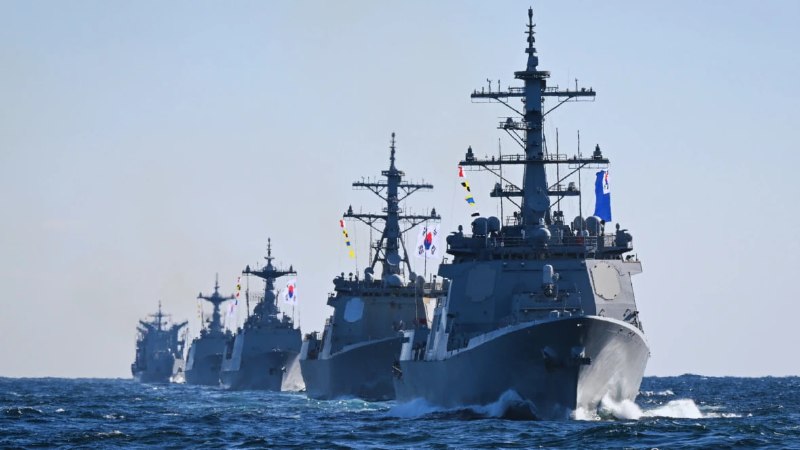
At roughly 16:20 UTC on 26 June 2026, US President Donald Trump accused Iran of launching four one-way attack drones at commercial shipping in the Strait of Hormuz, with one striking a cargo vessel and US forces intercepting the remaining three, in what he described as a "foolish violation" of a ceasefire between Washington and Tehran [Cointelegraph, 2026-06-26T16:20 UTC; Unusual Whales via X, 2026-06-26T16:58 UTC]. Within ninety minutes, the South China Morning News was carrying Trump's characterisation of the strike as a "foolish violation" of an arrangement that, until that moment, had been sold to oil traders, Gulf monarchies, and Western insurers as a de-escalation between two states that had spent the previous weeks shooting at each other [SCMP, 2026-06-26T17:42 UTC]. The incident does more than briefly spike tanker insurance. It exposes the structural weakness of a ceasefire that was always more rhetoric than architecture — and it forces a reckoning with a question Gulf states and global commodity markets had been quietly postponing: what, exactly, is being enforced, and by whom, when the United States and Iran claim to have stopped fighting?
The answer, on the evidence of 26 June, is "very little." The US claim rests on Trump's statements alone. No independent maritime authority, no Iranian official, and no third-party naval command has, as of the time of writing, publicly corroborated that four drones were launched, that three were intercepted, or that one vessel was hit. Polymarket, tracking the wagering market on the conflict's trajectory, recorded the accusation within minutes of Trump's remarks [Polymarket via X, 2026-06-26T16:08 UTC]. The Russian-aligned Telegram channel "Two Majors" — operating in its customary counter-claim register — pushed back within hours, suggesting that Iran should respond by noting the supposed ceasefire was, in its framing, "just a proposal" [Two Majors, 2026-06-26T18:05 UTC]. What the incident lacks, more than anything else, is a referee.
The shape of the accusation
Trump's account, as relayed by Cointelegraph from his remarks, is granular: four drones, one-way profile, four targeted ships, three intercepted, one hit, US forces credited with the interceptions. That level of specificity is unusual for an accusation delivered by a head of state within an hour of the alleged event, and it implies a forensic intelligence picture that the White House has not, in this round, chosen to publish. The SCMP report is consistent on the headline — a strike, a ceasefire, a violation — but offers no evidentiary detail beyond Trump's own characterisation [SCMP, 2026-06-26T17:42 UTC]. The absence of a CENTCOM briefing, an Iranian denial, or an International Maritime Organization incident report leaves the event sitting in a peculiar limbo: contested in framing, unverified in fact, and consequential regardless.
The Russian-aligned read of the event is more interesting than the headline suggests. "Two Majors," a channel that has spent much of 2026 narrating the war in Ukraine through a sceptical, sometimes sardonic Russian-military lens, here pivots to Iran with what amounts to a legalistic defence: if the underlying agreement was never ratified, never codified, and never given the trappings of a binding instrument, then any Iranian action is not a "violation" in any meaningful sense [Two Majors, 2026-06-26T18:05 UTC]. It is a frame that would be laughed out of a Western legal briefing — and yet it tracks a real ambiguity in the public record. The ceasefire has been described in Trump administration statements and in Gulf-state readouts as a fait accompli. It has not been published as a signed document. Iran has, through various channels, hinted at its existence without ever quite endorsing its terms.
What the Gulf actually wants
The United Arab Emirates broke its customary diplomatic reserve on the same day. Reuters reported that Abu Dhabi had held a rare direct call with Iran, framing the conversation around Hormuz security and the imperative of keeping the strait open for commercial traffic [Reuters via X, 2026-06-26T17:15 UTC]. For a Gulf monarchy to publicly acknowledge a security dialogue with Tehran is itself news: the UAE and Iran broke relations in 2016 and have only intermittently restored working-level contact since. The fact that the call happened on the same day as the alleged strike suggests two things in parallel. First, the Gulf states — Saudi Arabia and the UAE above all — are no longer willing to outsource Hormuz security to a Washington-Tehran bilateral that may or may not exist. Second, the diplomatic move is also a hedge: if the US-Iran arrangement collapses, the UAE wants to be seen to have tried to manage the fallout independently.
This is the structural shift that the headline obscures. The traditional Gulf security architecture — US Fifth Fleet forward-deployed, Iranian asymmetric capability deterred by American carrier presence — assumed a US-Iran relationship defined by managed hostility, not by managed peace. A ceasefire, if it ever existed, inverts that logic. It promises peace; it does not deliver the surveillance, interdiction, and attribution infrastructure that managed hostility enjoyed for decades. The drones, real or alleged, are a stress test of an architecture that was never built.
The market read
The Polymarket wager on the conflict's trajectory moved on the news. That it did so within minutes of Trump's accusation, before any independent verification, tells its own story about which actors in global finance currently price geopolitical risk: a small number of traders with direct feeds to the White House communications operation, and a much larger group of bookmakers tracking them [Polymarket via X, 2026-06-26T16:08 UTC]. For the rest of the market — tanker operators, oil traders, insurers — the operative question is whether the strait remains commercially navigable, regardless of whose drones are flying. A single confirmed hit on a cargo vessel, even an unmanned one, reprices war risk premia across the Persian Gulf for the rest of the quarter. A non-event, conversely, allows the market to discount the alarm.
The current state of the evidence does not permit a confident call either way. The SCMP report cites no shipping source, no insurer, and no port authority [SCMP, 2026-06-26T17:42 UTC]. The Cointelegraph relay attributes the four-drone, one-hit, three-intercepted account entirely to Trump himself [Cointelegraph, 2026-06-26T16:20 UTC]. The Reuters report on the UAE-Iran call makes no reference to a specific incident, framing the conversation as standing-dialogue rather than emergency [Reuters via X, 2026-06-26T17:15 UTC]. The Unusual Whales alert corroborates only Trump's words, not the underlying events [Unusual Whales via X, 2026-06-26T16:58 UTC]. On the evidentiary ledger as it stands, what is verified is the accusation. What is unverified is everything else.
What a real ceasefire would have to look like
The deeper story is that there is no published instrument. There is no mutually-recognised document, no third-party guarantor, no incident-at-sea mechanism, and no agreed communications architecture between US Naval Forces Central Command and the Islamic Republic of Iran Navy. The 1988 ceasefire in the Iran-Iraq war, often invoked as a template, was a UNSC-brokered arrangement with a published text, a clear bilateral counterparty structure, and an observer mission. The 26 June arrangement has none of that. What it has is a series of statements by Trump, a series of elliptical acknowledgements from Iranian officials, and a Gulf-state diplomatic apparatus scrambling to retrofit a security framework onto an event that may not even have occurred.
A serious ceasefire between the United States and Iran would require, at minimum: a written text, signed by a named principal on each side; a defined geographic scope; a verification mechanism (maritime, signals, satellite); and a guarantor — most plausibly Oman or Qatar, both of which have historically mediated. None of these are present. In their absence, the incident of 26 June can be read in either direction: as an Iranian provocation testing the limits of a paper-thin arrangement, or as a US framing operation intended to reset the political clock on a deal that has otherwise stalled. The Russian-aligned Two Majors channel offers the second reading with characteristic sarcasm; the US president offers the first with characteristic bluntness. The truth is that, on the public record, there is not yet enough to adjudicate.
The stakes, narrowly and broadly
In the narrow sense, the stakes are about a single strait through which roughly a fifth of seaborne oil transits every day. A closure of Hormuz for any sustained period would, on historical patterns, push Brent crude above 120 dollars a barrel within a fortnight. Insurance war-risk premia for tankers transiting the Gulf have already been creeping upward across the past quarter; a confirmed kinetic event would reprice them overnight. Gulf-state sovereign wealth funds would face a liquidity shock; Asian importers — China, India, Japan, South Korea — would face an immediate supply question; and European refiners would confront the same with a longer logistics chain and no spare capacity to absorb a sustained disruption.
In the broader sense, the stakes are about the credibility of US commitments in the Middle East at a moment when Gulf monarchies are actively diversifying their security partnerships — with China as a major oil customer and increasingly as a diplomatic interlocutor, with Russia as a tested arms supplier to Iran, and with a range of middle powers including Turkey, India, and the Omani-Qatari axis as mediation channels. If the United States cannot enforce a ceasefire that it claims to have agreed with Iran, the implicit message to Riyadh and Abu Dhabi is that Washington remains the indispensable security partner in the Gulf — but only for arrangements that have real operational substance, not for those that exist as press releases. The UAE's call to Tehran on 26 June is, on one reading, the first operational manifestation of that recalibration.
What remains uncertain
The honest ledger, on 26 June at 19:00 UTC, looks like this. Verified: Trump's accusation; the UAE-Iran call; the Polymarket repricing. Unverified: that four drones were launched; that three were intercepted; that a cargo vessel was hit; that the vessel was Iranian-controlled or Iranian-crewed; that the interception was carried out by US forces rather than, say, by the vessel's own security team or by a Gulf-state navy operating independently. Counter-framed but not contradicted: the Two Majors suggestion that the underlying arrangement was a "proposal" rather than a binding instrument, a claim that has not been formally rebutted by Tehran or by Washington in any public document this publication has located.
Until CENTCOM publishes an incident summary, until the Iranian mission to the UN either confirms or denies, until the vessel owner issues a statement, and until Lloyd's or a comparable insurer updates its Gulf war-risk bulletin, the prudent position is that something happened in the Strait of Hormuz on 26 June 2026 — and that the architecture for explaining what it was, and for enforcing whatever was supposed to prevent it, is thinner than the rhetoric around it.
This article maps the public record as of 19:00 UTC on 26 June 2026. The reporting task here is not adjudicating whether the strike occurred; the available sourcing does not yet permit that. The reporting task is noting that the gap between accusation and corroboration is itself the story — and that the gap is widening, not narrowing, as the principals involved continue to talk past each other.
Wire provenance
This editorial synthesis draws on the following public wire/social posts:
- http://reut.rs/4xMwNNf
- https://t.me/two_majors
- https://t.me/Cointelegraph
- https://x.com/unusual_whales/status/
- https://x.com/Polymarket/status/
- https://t.me/SCMPNews
- https://t.me/cointelegraph