Hormuz red line meets drone line: the 26 June flashpoint and what it exposes
A single afternoon in the Strait of Hormuz — drones, a presidential accusation, a discreet communication channel — has turned a declared red line into a test of credibility for both Washington and Tehran.
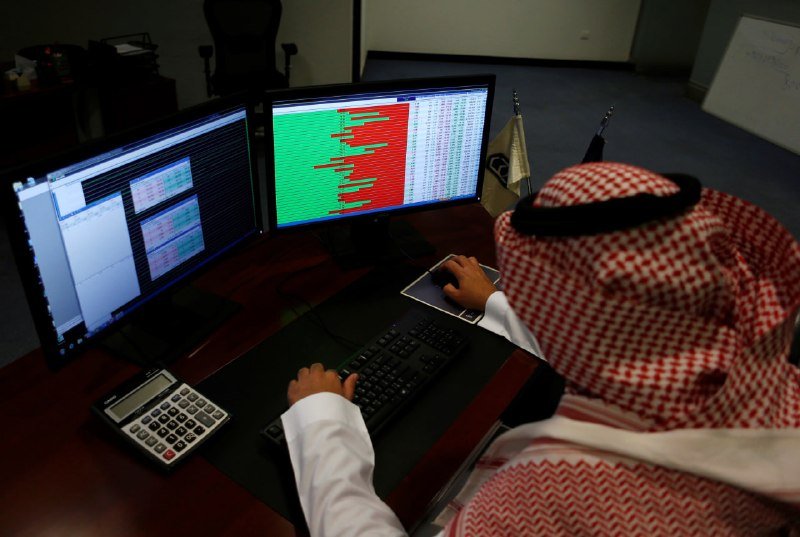
The Strait of Hormuz is back on the front page, and the choreography is familiar enough to be unnerving. On the afternoon of 26 June 2026, at 16:04 UTC, Iran's Al-Alam Arabic channel carried an urgent statement framing the country's missile and drone forces — and the management of the strait itself — as a "serious red line" that must not be crossed. Roughly twenty-three minutes later, at 16:27 UTC, the same outlet logged a separate urgent broadcast: a US accusation, attributed to Donald Trump, that Iran had launched at least four attack drones at vessels transiting the waterway. By 16:08 UTC the same claim had already migrated to Polymarket's market-feed account on X, packaged as a "ceasefire violation." Inside a half hour, three distinct readings of the same incident were circulating in parallel: Tehran's red-line framing, Washington's provocation framing, and the betting-market framing that turns geopolitics into a binary.
What matters today is not which frame wins the news cycle. It is that the chokepoint — through which a meaningful share of the world's seaborne oil moves on any given day — is again being treated as a signalling surface rather than a commercial route. The Strait of Hormuz is narrow, shallow, and asymmetrically easy to harass. A handful of fast boats, a few drones, and a well-placed mining campaign can move the price of Brent before any tanker has been touched. That structural fact is older than any of the current protagonists, and it is the reason the strait returns to the headlines every time the US-Iran relationship cools.
What the wire says, and where it disagrees
The factual spine of the afternoon is thin. The US claim — that Iran launched at least four drones at ships in the strait — was carried by Al-Alam Arabic at 16:04 UTC and attributed to Trump. No casualty count, no vessel names, and no independent visual evidence appears in the available reporting; the framing rests on the US statement alone. Polymarket's market-feed account at 16:08 UTC amplified the claim and added the political gloss, characterising the incident as a "foolish violation" of an existing ceasefire agreement. The existence of that ceasefire is itself worth pausing on: it implies a prior arrangement that the sources do not document in detail, and a US administration willing to characterise an Iranian action as a violation rather than a probe.
Iran's own framing, transmitted via Al-Alam Arabic at 16:27 UTC, runs in the opposite direction. It restates the missile and drone forces, and "the management of the Strait of Hormuz," as red lines — language that establishes a deterrent posture before any counter-accusation is offered. Iranian state media have not, in the available reporting, denied or confirmed the specific drone-launch allegation; they have responded in the register of strategic warning. That is consistent with how Tehran has historically handled ambiguous maritime incidents: concede nothing operational, signal everything doctrinal.
The communication channel — and why it matters more than the drones
At 14:57 UTC, more than an hour before the Trump accusation was broadcast in Arabic, Iran's Press TV reported that a direct communication line between the United States and Iran, focused on the Strait of Hormuz, had been established. Press TV is state media and should be read with that caveat attached. But the underlying claim — a working deconfliction channel in the world's most combustible waterway — is the kind of detail that, if accurate, is the single most consequential piece of information in the entire cluster.
A hotline does three things at once. It gives both sides a way to pull back from an incident without publicly climbing down. It establishes that, despite the rhetoric, two governments consider a miscalculation in Hormuz dangerous enough to warrant a private telephone. And it implicitly confirms that whatever "ceasefire" Polymarket referenced does in fact have an operational scaffolding behind it. The presence of that channel is the strongest argument against reading 26 June as the start of an escalation cycle. Its absence — if subsequent reporting walks back the Press TV line — would be the strongest argument that it is.
Structural frame: chokepoint politics in the age of cheap drones
The deeper pattern here is not new, but its inputs have changed. Seaborne energy has always been hostage to the geography of the Persian Gulf. What is different in 2026 is the cost and reach of the weapons available to the weaker side. Attack drones that would have required state-level airframes a generation ago are now off-the-shelf systems; a single launch from a coastal position can generate a global news cycle, a Brent move, and a White House statement before noon. The strait is no longer a question of fleets; it is a question of who can credibly threaten a $200 million tanker with a $200,000 weapon and a camera.
That asymmetry is precisely why red-line language persists on both sides. Tehran's red line is a deterrent: it tells Washington and the Gulf monarchies that escalation has a ceiling, and that ceiling is the closure of the waterway. Washington's red line, expressed via Trump and amplified via the prediction markets, is the inverse: it tells Tehran that harassment has a price, and that price is diplomatic and economic. Both lines cannot be absolute. A chokepoint that is genuinely closed hurts everyone; a chokepoint that is credibly threatened is a permanent bargaining chip.
What remains uncertain, and what to watch
Three things are unresolved as this piece publishes. First, the identity and fate of the vessels reportedly targeted: the available reporting names no ship, no flag, no owner, and no cargo. Second, whether the Press TV communication-line report is corroborated by US or Gulf sources; as of 26 June 2026, the channel's existence is on the Iranian side of the ledger. Third, the precise scope of the "ceasefire" Polymarket referenced — whether it is a formal arrangement with text and signatories, or a working understanding between two governments that prefer not to call it that.
The market has already priced something. Within minutes of the Trump accusation, prediction-market commentary was treating the incident as a binary event. That is the tell: Hormuz is now legible to retail traders in five-minute intervals. Whatever restraint the two governments retain, they are negotiating inside a feedback loop that did not exist a decade ago — and that loop rewards the loudest frame, not the most accurate one.
Desk note: Monexus read four items — two from Al-Alam Arabic, one from Polymarket's market feed on X, and one from Press TV via Unusual Whales — and treated the Iranian state-media line with the same procedural weight as the US political line, including the explicit caveat that state provenance carries. Where a claim could not be independently corroborated from the cluster, the article either hedged or named the gap. The structural argument — chokepoint politics under cheap drones — is editorial; the factual spine is the four timestamps above.
Wire provenance
This editorial synthesis draws on the following public wire/social posts:
- https://t.me/alalamarabic
- https://t.me/alalamarabic
- https://x.com/polymarket/status/
- https://x.com/unusual_whales/status/